
What You'll Find in This Article
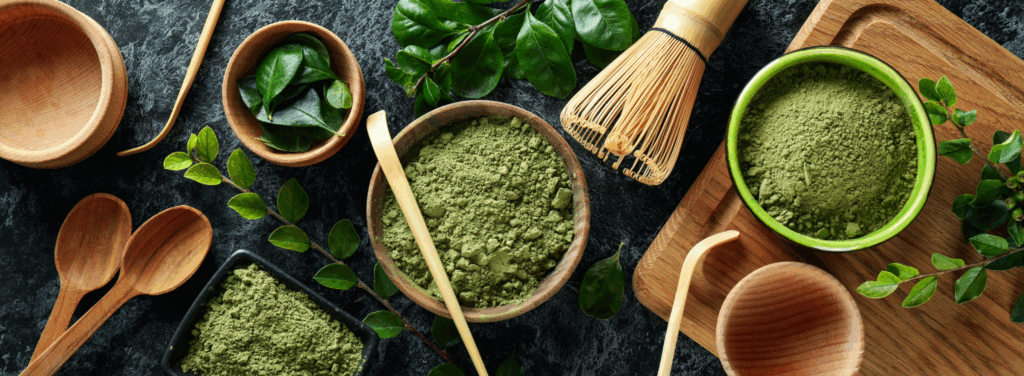
Matcha is all the rage these days in parts of the US. Besides matcha latte, ice cream and chocolates (yum), you’ll also find matcha in chips, pizza, burgers, pasta, cola and beer (erm, why??).
If you thought that matcha is a Japanese thing, you would be mostly right, since that is a Japanese word.
What you might not know is that in Korea, it’s called malcha (말차).
And Jeju, with its volcanic terrain, clean air and water, and moderate climate with distinct seasons, is the tea powerhouse of Korea that is catching up with Japan’s Uji tea region.
For consistency, we’ll use the Japanese “matcha” since that is more common internationally. But if you want to impress the Korean tea community, say “malcha” rather than “matcha”.
Jeju tea vs Coffee
On our first trip to Jeju, I took my tea-loving wife to a ceremony at Orteas Tea Farm, one of Jeju’s many tea fields. Unlike the madhouse that can be Osulloc, this one was quiet and tranquil–everything a teahouse should be.
Personally, I am a coffee person, preferring Americanos like many Koreans. Except Koreans seem to have a diehard attachment to their Iced Americanos in all seasons, even winter. There’s even a saying that translates to something like “Even if I freeze to death, iced americano!” (얼죽아 | eoljug-a, short for 얼어 죽어도 아이스 아메리카노).
But despite my preference for coffee, I gotta say, I really liked the teas that were served up at Orteas, especially the matcha. I’ve found that Jeju’s matcha has a distinctively different note than Japanese matcha. It’s lighter, less bitter, and more subtle.
Since Jeju has so many tea farms that open their doors to visitors, I thought it might be helpful to share what we learned at Orteas, in case you might want to add a tea farm to your DIY itinerary.
Why Jeju Tea Tastes Different
Before we get into where to go and what to do, let’s talk about why Jeju tea is worth seeking out in the first place.
You already know from the Hallasan article that this island is basically a giant volcano. That volcanic soil — porous, mineral-rich, slightly acidic — turns out to be ideal for tea cultivation. The same geology that means you can’t grow rice in most parts of Jeju also means you can grow exceptional tea.
Add to that:
- Clean water filtered through layers of volcanic rock (yes, the same water that becomes Samdasoo)
- Ocean mist rolling in from all sides, naturally humidifying the tea leaves
- Hallasan’s shadow — the mountain creates microclimates and fog that shade the tea plants without human intervention
The result? Jeju tea tends to be smoother and less astringent than Japanese varieties. Where Uji matcha can hit you with that intense, almost seaweed-like vegetal punch, Jeju matcha is gentler — lighter, subtler, with less bitterness on the finish.
Is it better? That’s subjective. But it’s definitely different, and if you’ve only ever had Japanese green tea, tasting the Jeju version is worth doing.
A Quick Tea Primer

If you’re not a tea person, here’s what you need to know before visiting a tea farm.
All true tea — green, black, oolong — comes from the same plant: Camellia sinensis. The difference is in how the leaves are processed after harvest. Green tea is minimally oxidized, which keeps it, well, green.
Within the green tea world, matcha is special because:
- The plants are shaded for 15-20 days before harvest, which boosts chlorophyll and gives the leaves a richer, sweeter flavor
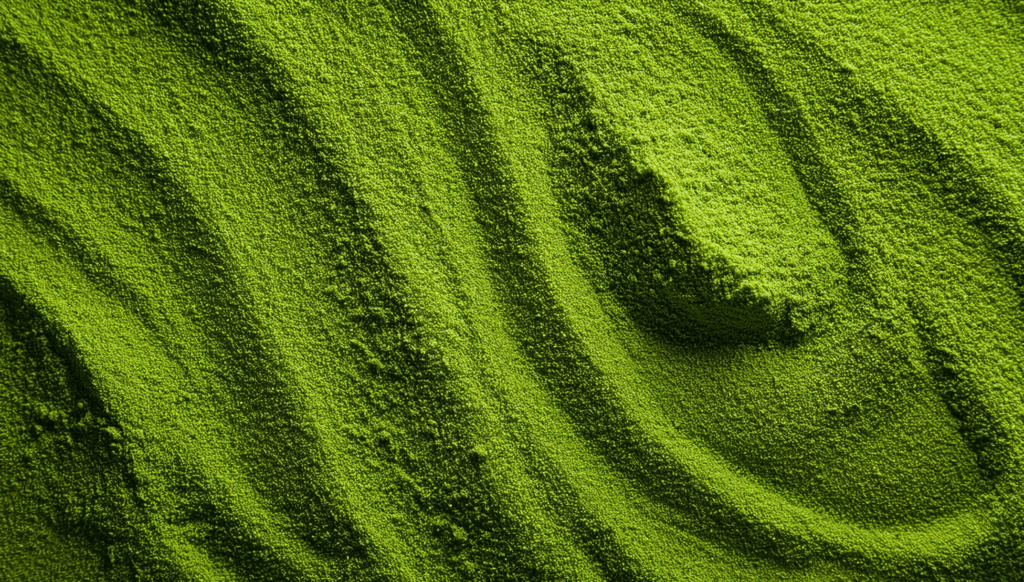
- The leaves are stone-ground into a fine powder
- You consume the whole leaf, not just an infusion of it
That last point matters. When you drink regular green tea, you’re steeping leaves in water and then discarding them. When you drink matcha, you’re whisking the powder directly into the water and consuming everything — more flavor, more caffeine, more nutrients.
Where to Experience Jeju Tea
O'Sulloc Tea Museum (오설록 티뮤지엄)
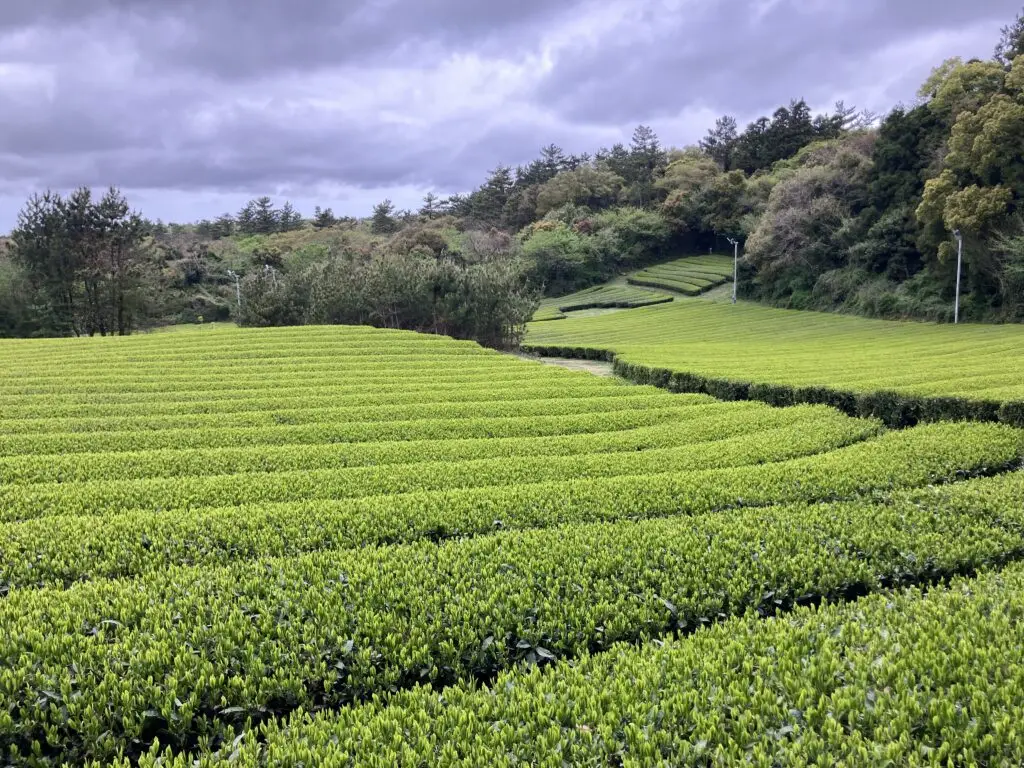
Let’s get this one out of the way first. O’Sulloc is the biggest name in Jeju tea — owned by Amorepacific, the cosmetics giant behind Innisfree. Their tea fields are the largest on the island, covering over 330 hectares.
The good: The fields are genuinely beautiful. Rolling rows of tea bushes against the backdrop of Hallasan, especially in spring when everything is impossibly green. Entry is free. The matcha soft-serve is excellent. You can walk through the fields and take all the photos you want.
The bad: It’s a zoo. Tour buses disgorge school groups by the dozen. The “museum” is really just a gift shop with a few tea-related displays. The café line can take 20 minutes. Finding a seat is a competitive sport.
The vibe: Less “tranquil tea ceremony” and more “food court at a popular mall.”
If you go, go early — like, when it opens at 9 AM — or late in the afternoon when the tour buses have moved on. And don’t expect a meditative experience. Expect crowds, noise, and pack a bunch of patience.
Practical info:
- Location: 15 Sinhwayeoksa-ro, Andeok-myeon, Seogwipo-si
- Hours: 9 AM – 6 PM daily
- Entry: Free (you’ll spend money on tea and snacks)
- Getting there: About 30 minutes from Jeju Airport by car. Bus 755 from Jeju City stops nearby.
Orteas (오르티스)
This is where my wife and I had our tea ceremony, and it’s the opposite of O’Sulloc in every way. Small family operation. Quiet. Reservation required.
The owner, Wonhee Lee, selected a site 300 meters above sea level in Seonheul-ri specifically for its microclimate — the elevation creates temperature swings between day and night that concentrate flavor in the leaves.
The tea ceremony here includes four varieties: green tea, black tea, hojicha (roasted green tea), and matcha. Each is grown and processed on-site. The experience is unhurried, educational, and about as far from the O’Sulloc madhouse as you can get.
Practical info:
- Location: Seonheul-ri, Jocheon-eup, Jeju-si (east side of the island)
- Reservations: Required — we booked through AirBnB but you could also book through their website or VisitJeju
- Experience: Tea ceremony with multiple tea tastings
Onulun Green Tea House / 오늘은 녹차 한잔
This one has a hook that O’Sulloc and Orteas can’t match: a natural lava cave right beneath the tea fields.
Onulun (the name translates to “A Cup of Green Tea Today”) is a family-run operation in Pyoseon-myeon, on the southeastern side of the island. The tea fields sit at the foot of Hallasan, about 250 meters above sea level, growing organic green tea in the same volcanic soil that makes all Jeju tea distinctive.
The draw here is the above-mentioned cave — a natural volcanic cave hidden beneath the fields that’s become an Instagram hotspot. You walk through the tea plants, descend into the cave, and shoot photos looking outward through the cave entrance. The silhouette effect is striking, and there’s no admission fee.
The café on the second floor overlooks the fields and serves the usual lineup: green tea lattes, matcha ade, green tea ice cream. Thankfully, they do not yet have matcha pizza and beer, but who knows what the next trend in Korea is going to be!
If you’re traveling with kids, there’s a go-kart track on-site for an extra charge. This seems a bit off-brand to me, but then again, my kids are in their 20s and 30s. Suffice to say, we’re not in the target demographic!
Practical info:
- Location: 4772 Jungsangandong-ro, Pyoseon-myeon, Seogwipo-si (Southeast Jeju)
- Hours: 9 AM – 5 PM (some sources say 6 PM — confirm before going)
- Entry: Free (food and drinks extra; go-kart is extra)
- No reservation required
Seogwi Dawon (서귀다원)
If you want the quiet tea farm experience but don’t need a cave or a ceremony, Seogwi Dawon is about as simple and unpretentious as it gets.
This small organic farm sits at 250 meters elevation on Hallasan’s southern slopes, in Seogwipo’s Sanghyo-dong district. The owners converted the land from tangerine groves to tea fields in 2005. The fields are split into smaller plots — nothing like O’Sulloc’s sprawling rows — which gives the place a quieter, more intimate feel.
The teahouse sits in the center of the fields, with large glass windows framing views of the tea plants and, on clear days, Hallasan’s summit. You pay ₩5,000 per person, which includes tea tasting. The menu is simple: green tea or yellow tea. Both are served in small glass jugs that you pour into Korean-style cups.
That’s it. No gift shop gauntlet, no Instagram cave, no go-karts. Just tea, a view, and quiet.
Practical info:
- Location: San 118, Sanghyo-dong, Seogwipo-si (southern Jeju, mid-elevation)
- Hours: 9 AM – 5 PM (closed Tuesdays)
- Entry: ₩5,000 per person (includes tea tasting)
- No reservation required
Wrapping Up
Here’s the thing about Jeju matcha: you don’t have to care about tea to enjoy it.
You can even be a coffee lover – like me – and appreciate a good cup of the green stuff.
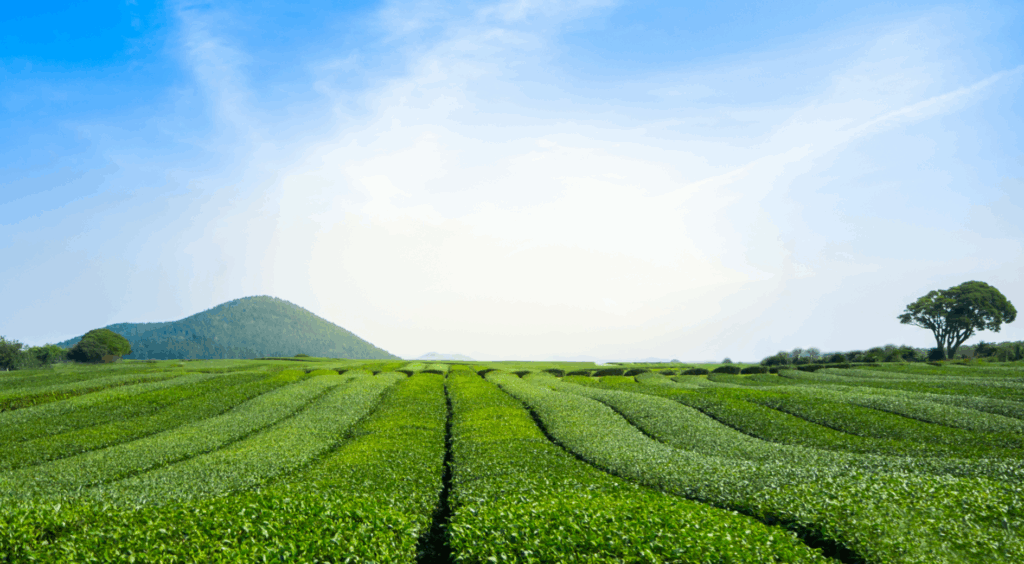
The fields are beautiful. The ceremonies are calming. The matcha ice cream is legitimately delicious. And understanding what makes Jeju’s terroir unique — the volcanic soil, the filtered water, the mountain mist — connects you to the same geological story that explains Hallasan, the lava tubes, the stone walls, and everything else that makes this island what it is.
Go to O’Sulloc if you want the famous fields and don’t mind the crowds. Book Orteas or another small farm if you want something quieter. Or just grab a matcha latte from any café and drink it while looking at the view.
However you do it, you’ll be tasting the volcano.
