
What You'll Find in This Article
So let’s make sure we’re all on the same page here.
What you are not going to find in this post is a list of places to go to. Businesses in Jeju open and close, or move, with surprising rapidity. Sometimes as often as in a couple of years.
So a definitive list of actual restaurants will likely last as long as an ice cube on a summer’s day.
Instead, we’re going to go for something that is more enduring. And that is, we’re going to share the dining experiences that you should try when you are in Jeju.
Forget overpriced tourist markets and Instagram-worthy tourist traps. The best food experiences in Jeju aren’t the ones marketed to visitors, they’re the ones locals dig into in the evenings or weekends with family and friends.
Since no one restaurant or store has a monopoly on these experiences, you’ll be spoiled for choice.
All right, enough preamble! Let’s find out just what makes Jeju’s food culture so unique, and why you’ll cherish these memories long after you go home.
Experience #1: The Butcher Shop BBQ
What It Is
Here’s a scenario that might seem weird at first. It certainly took a bit of getting used to the first time I tried it.
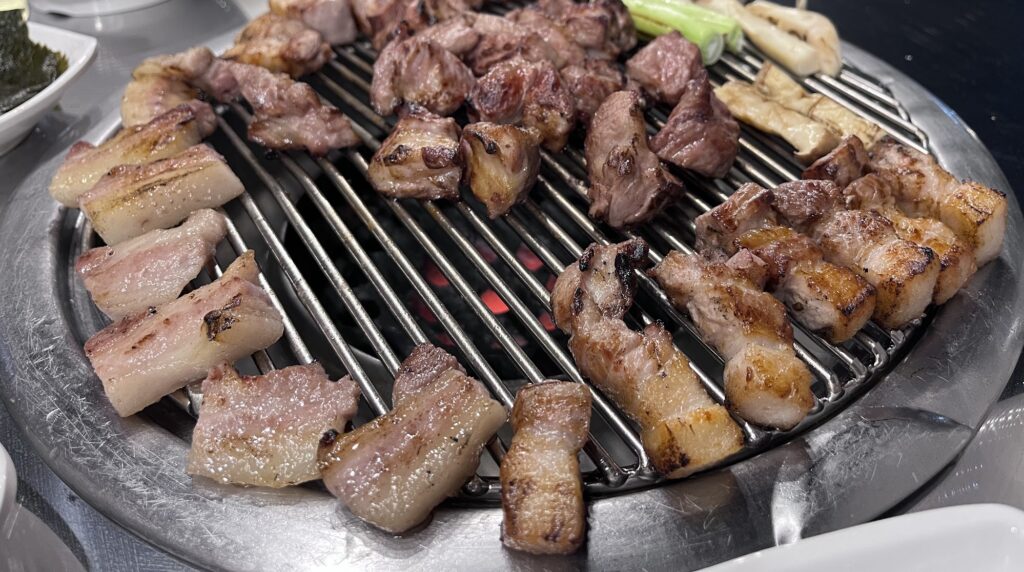
You walk into what looks like a butcher shop. You browse the meat counter like you’re at the grocery store. You point to the cuts you want, the butcher weighs them, you pay, and then you walk to the back of the shop.
There, you’ll find tables with sunken built-in grills strategically placed under smoke vents snaking down from the ceiling.
That’s where you cook the meat yourself. Yup, right there.
Bonus points if the heat source is fiery red charcoal briquettes!
This kind of butcher-to-table dining experience is called a 정육식당 (Jeongyukshikdang), which literally translates to ‘butcher eating place.’
While it’s not exclusive to Jeju, what’s special is that they will have an option for the black pork (흑돼지 | Heugdwaeji) at non-tourist trap prices, along with other cuts of meats, of course.
Even better, the meat is often butchered-that-morning fresh, since many of the animals are actually bred on Jeju.
It’s a hybrid business model that combines a retail butcher shop in front, DIY BBQ restaurant in the back, and cuts out the restaurant markup in the middle.
You’re buying raw meat at butcher-shop prices and paying a small fee, usually under 5,000 won (around US$3.50) per person, for the privilege of using their grill, scissors, tongs, and getting some side dishes (반찬 | banchan) to accompany your meal.
What To Try
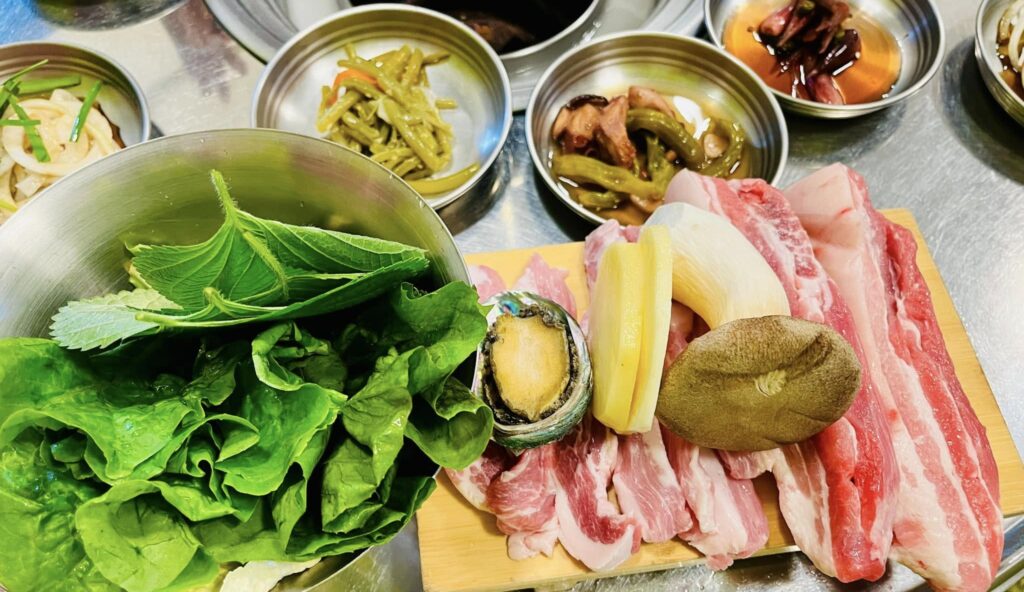
- Black Pork Belly (흑돼지 삼겹살 | Heugdwaeji Sam-gyeob-sal): This is Jeju’s famous heritage pig. Fun fact that might kill your appetite: historically, these pigs were raised in fields under outdoor toilet platforms. They ate human waste as part of an eco-cycle. (Don’t worry, that’s not how it works anymore.) The claim is that black pork is more chewy and juicy. Koreans describe it as ‘쫄깃쫄깃’ (jjolgit-jjolgit). Honestly? Some locals can’t tell the difference from regular pork. Neither can I. But try it once, decide for yourself, preferably at non-tourist trap prices at these Butcher Shop BBQs. If you want to actually see the black fur to prove you’re eating the real deal, order five-layer belly, with skin attached (오겹살 | O-gyeop-sal).
- Regular Pork Belly (삼겹살 | Sam-gyeob-sal): Here’s a local secret – many Jeju people actually prefer this over black pork. It’s a bit cheaper, and some argue it tastes the same. Your call.
- Pork Shoulder or collar butt (목살 | Mogsal ): if you find pork belly a little too rich, this is a leaner option.
- Beef Sirloin (등심 | Deungsim): This version of the sirloin steak is known for being juicy, tender, and rich in flavor, while being more affordable than premium Wagyu-like cuts like Hanwoo (한우).
- Thin-sliced Beef Brisket (차돌박이 | Chadolbagi): These paper-thin slices cook very quickly. And if you’re not paying attention, burn very quickly too!
How It Actually Works
- Walk in, browse the meat counter.
- Point to what you want (or say the name of the cut if your Korean is up to it).
- They weigh it, tell you the price.
- Pay at the counter (meat + small table fee per person).
- Take your tray of raw meat to a table in the back.
- They bring side dishes (반찬 | banchan), lettuce and perilla leaf wraps, sauces, scissors, tongs.
- Grill it yourself.
- Cut with scissors as it cooks, wrap in lettuce with garlic/kimchi/ssamjang, eat, repeat until you can’t move.
Why You Should Give This a Shot
Look, you could go to a regular Korean BBQ restaurant. But this is how locals eat when they want good meat without the markup. The atmosphere is casual, loud, smoky, convivial. You’ll be surrounded by Jeju families and groups of friends, not tourists. That’s the point.
BTW: Skip the tourist-heavy Black Pork Street (흑돼지 거리 | Heugdwaeji Geoli) in Jeju City. It’s easy to find, but you’re going to burn a bigger hole in your pocket than necessary. Instead, ask your accommodation host for recommendations to a neighborhood jeongyukshikdang where locals actually go.
Also: Did you know that our Jeju Trip Planner App lets you add local meals in your custom Jeju itinerary? The food in Jeju and Korea is such a big part of the experience, it just made sense for them to be included in any itinerary.
Experience #2: The Haenyeo Place
What It Is
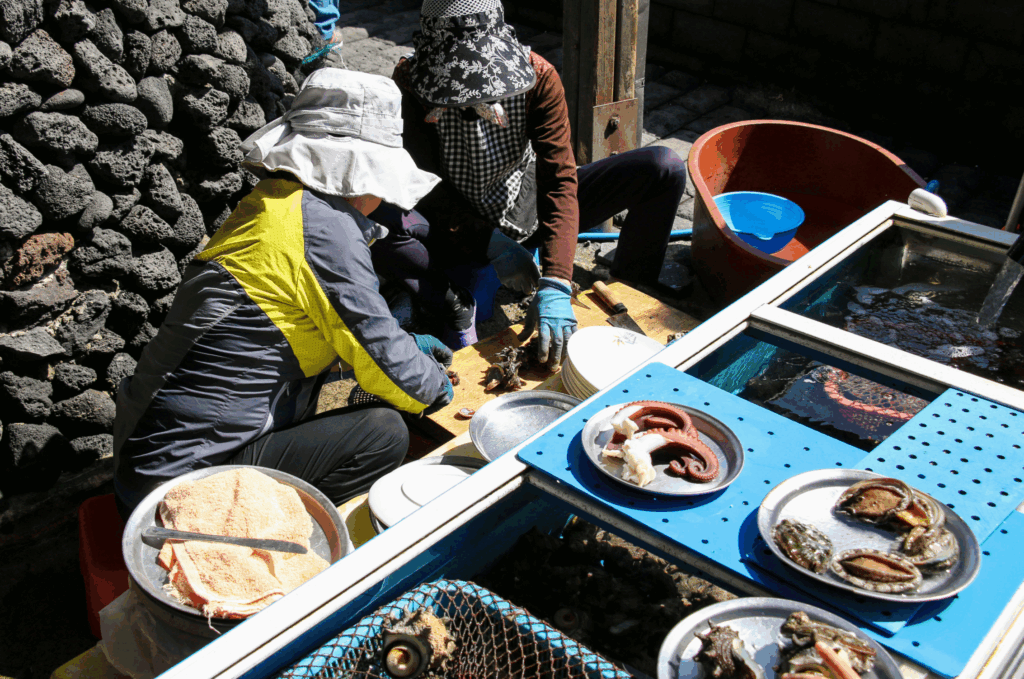
Small, informal restaurants called Haenyeo places (해녀의집 | haenyeo-ui-jib) right on the coast, sometimes literally just shacks, run by (women divers) or their families. The women dive in the morning, bring up seafood, and sell it fresh at lunchtime. What you’re eating was alive in the ocean a few hours ago. Let that sink in.
Now, I need to set your expectations here.
These aren’t polished restaurants with English menus and Instagram-worthy interiors. They’re work spaces that happen to serve food. We’re talking plastic chairs, fluorescent lights, sometimes just picnic tables under a tarp. The aesthetic is ‘functional coastal tent,’ not ‘designed dining chic’.
And don’t expect any but the most basic levels of customer service. The haenyeo have been up since before dawn, made more than 40 dives over 3 hours in freezing water, and labored another hour or two to prepare their catch for sale. By the time you get there, they are already bone-tired.
But the seafood? Absurdly fresh. The prices? Reasonable. The authenticity? Unimpeachable.
Full disclosure: I actually do NOT like raw seafood. So the one time I went to a Haenyeo’s place, it was for my wife – who slurped up every morsel with gusto. Me, I just watched, relieved that the haenyeo allowed me to only order for one (normally every customer is expected to order their own portion).
What To Try
- Abalone (전복 | Jeonbog): Often served as abalone porridge (전복죽 | jeonbogjuk) or grilled. Chewy, oceanic, subtle. Jeju abalone is prized across Korea. What costs ₩30,000-50,000 at a fancy Seoul restaurant might be ₩15,000-20,000 here. That’s not a typo.
- Sea Urchin (성게 | Seong-ge): If you love sushi, this would be called uni in Japanese. Creamy, briny, rich. Often served raw in its shell or mixed into seaweed soup. Peak season is spring.
- Conch/Top Shell (소라 | Sora): Boiled and served in the shell. You pull out the meat with a toothpick. Chewy texture, mild ocean flavor. Sometimes sliced raw as sashimi.
- Sea Squirt (멍게 | Meong-ge): Okay, this is the adventurous choice. Bright orange/yellow, looks genuinely alien, tastes intensely of ocean: iodine, brine, slightly bitter. Texture is firm and rubbery. You’ll either love it or hate it. News flash: I hate it.
- Sea Cucumber (해삼 | Hae-sam): Chewy, gelatinous, mild flavor. Another ‘try it to say you did it’ item.
- Spicy Seafood Stew (해물탕 | Haemultang): This stew with a peppery kick comes with whatever was caught that day. Usually includes abalone, conch, octopus, fish, and vegetables. Serves 2-3 people. The broth is where all the ocean flavor concentrates. This is the safe choice if you’re nervous about the raw stuff.
- Sashimi: (회 | Hwae): Raw fish platter, similar to the Japanese Sashimi but more chewy since it is so fresh and hasn’t been aged yet.
- Might include locally caught sea bass (물메기 | mulmaegi), damselfish (자리돔 | jareedom), or whatever came up in the nets that morning.
Why You Should Give This a Shot
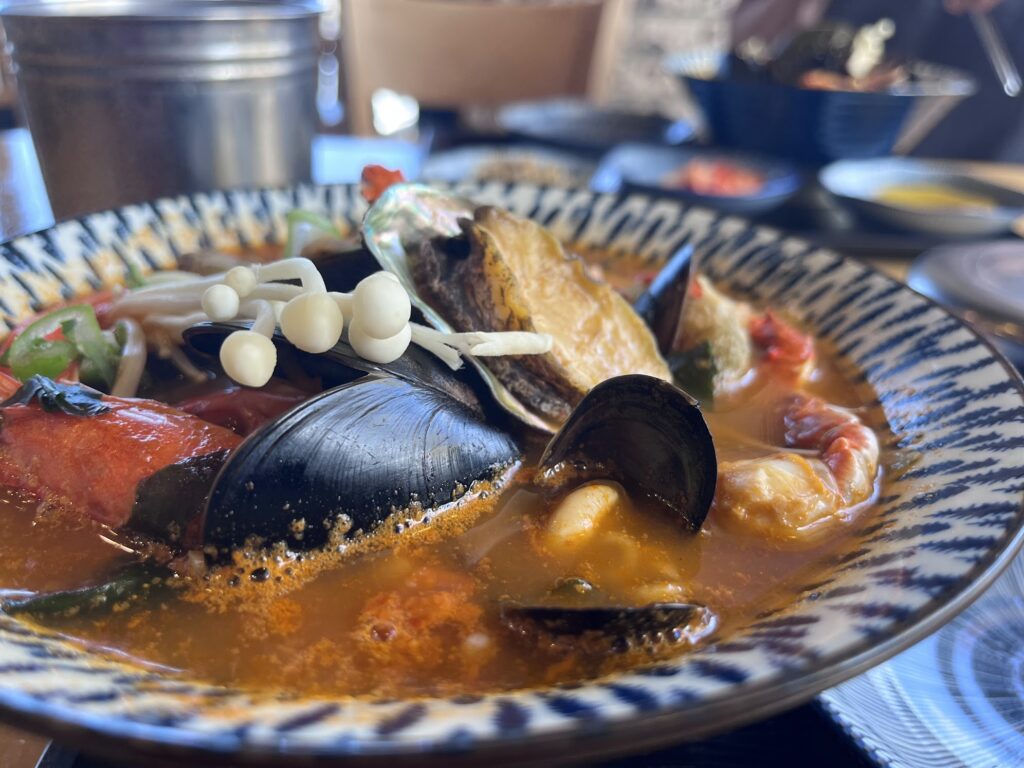
Here’s what makes this special: you’ll often see elderly women in the kitchen, sometimes still in their diving suits – those iconic orange and black wetsuits. They might be 60, 70, 80 years old. These are the women who dove 10-20 meters deep, holding their breath for 2+ minutes, to catch what you’re about to eat. Think about that for a second.
The service is no-frills. They’re not trying to impress you, they’re feeding you the same way they used to feed their family. Point to what you want, they bring it, you eat, you pay. There’s a directness and honesty to this transaction that you simply don’t get at tourist restaurants.
Sometimes there’s no menu. Sometimes they’ll just show you what they caught that day and you pick from that.
Sometimes the elderly haenyeo may prefer to speak in their local dialect, called Jejueo (제주어) or Jejumal (제주말), rendering any Korean you know useless. This can be challenging, but honestly? It’s also deeply authentic. Roll with it.
Where to Find These
Look for signs that say 해녀의집 (haenyeo’s house) along coastal roads. You’ll find some around the Seongsan area on the east coast, Jocheon and Hamdeok on the northeast coast, the Pyoseon and Seogwipo coastal areas in the south, Udo Island, and western coastal villages.
BTW: Peak lunch hours are 11:30am-1:30pm. Some close by 2pm. Some don’t open on days when weather prevents diving. Call ahead if possible, or just show up and see what’s available. That’s half the adventure.
Experience #3: Dried Squid & Beer by the Coast
What It Is
I’m going to be honest with you: this one sounds almost too simple to include on a list like this. But hear me out.
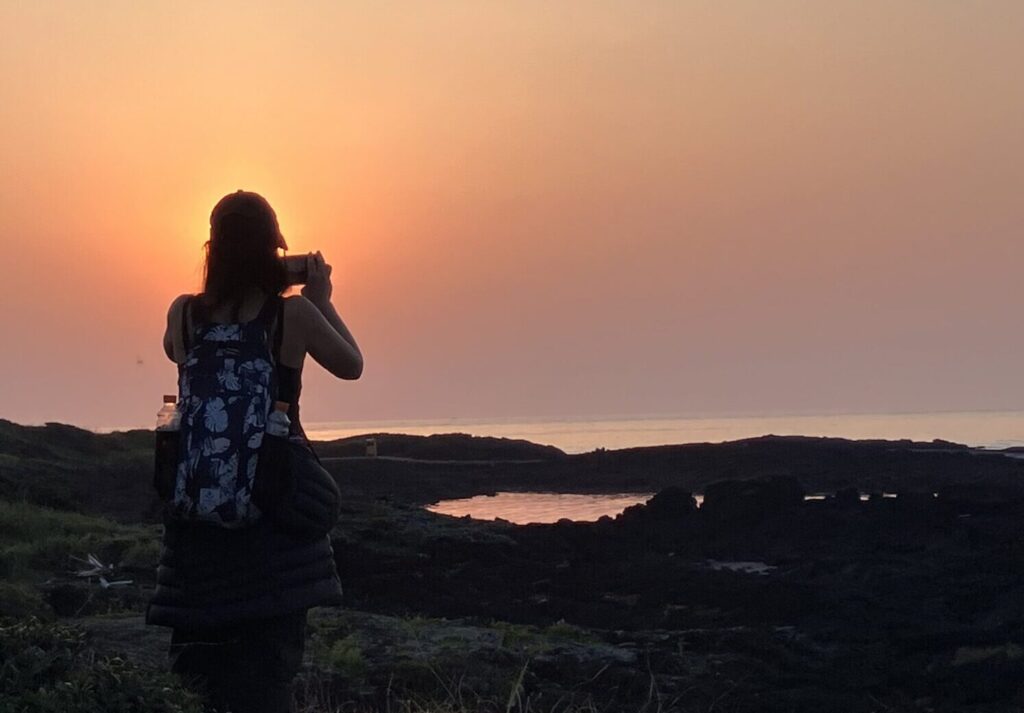
Here’s what you do: buy some dried squid (마른오징어 | mal-euno-jing-eo) from a coastal shop or market. Buy some beer, probably Hite or Cass, those Korean lagers that pair perfectly with seafood. Find a spot by the ocean. Even better if you time it for the sunset.
Sit on rocks, a bench, a seawall, whatever. Tear off strips of dried squid. Chew. Sip beer. Watch the waves. Repeat.
That’s it. That’s the experience.
But here’s why it matters: this is one of the most quintessentially Korean ways to enjoy the coast. You’ll see Koreans doing this everywhere on Jeju: old men sharing bottles of soju on harbor walls, young couples with convenience store snacks watching the sunset, parents with kids chewing squid while the young ones play.
This is ordinary island life, and it’s something to try.
The Squid

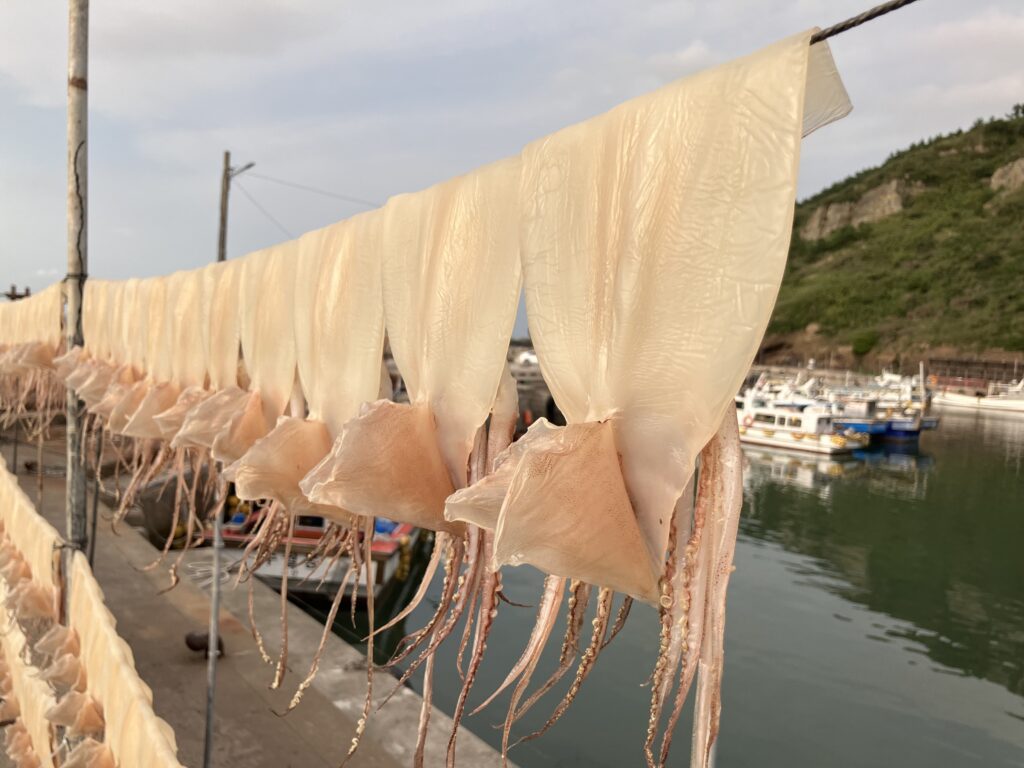
Jeju’s waters produce abundant squid. During squid season (summer into fall), you’ll see fishing boats with bright lights at night. The lights attract squid, which are then netted. The squid is cleaned, split open, and drying in the sun and wind on rows upon rows, like laundry.
When you are ready to order, the vendor would take your dried squid, run it through a machine to flatten it even more, then grill it.
Some vendors offer to add toppings to the squid, but purists prefer it plain.
The result is chewy, savory, intensely oceanic, and slightly smoky and sweet.
Now it’s your turn.
Tear off strips and chew them slowly. The flavor develops as you chew, releasing umami and brine. It’s a textural experience as much as a flavor one: tough enough to require serious jaw work, but not so tough that it’s unpleasant.
Now take a sip of cold beer – which somehow enhances the squid’s flavor. It’s a perfect pairing that someone, somewhere, figured out a long time ago. Genius.
Where and How
Where to buy: Coastal shops near ports and beaches. You can also buy them from markets or even convenience stores, but it’s less authentic, in my opinion.
Where to eat: Any scenic coastal spot like Woljeongri Beach, Hamdeok Beach, Gwangchigi Beach, Seopjikoji, or the seawalls in Jeju City harbor. Or during your Jeju Olle Trail hike when you stop for a break by the ocean. Or on rocks at sunset while waiting for the sun to drop behind Hallasan.
Best time: Late afternoon into sunset. The light is beautiful, the day is cooling down, and drinking beer mid-day feels indulgent in exactly the right way.
Why You Should Give This a Shot
This is participatory rather than consumptive tourism. Well, you are consuming the squid, but you’re not SERVED up the experience, you CREATE it. You choose the squid, buy the beer, find your spot, enjoy it at your own pace. There’s a DIY, independent-traveler ethos to this that aligns perfectly with Jeju island life: self-directed, simple, and connected to place.
BTW: I’ve heard from more than one source that dried squid is good for staving off seasickness. Haven’t tested this myself, but if you’re taking a ferry to a distant island like Chujado or the mainland, and you’re prone to motion sickness, maybe give this a shot?
Experience #4: Tangerine Picking
What It Is
Ok, ok, this is not actually a dining or food experience, and it is a bit touristy, but you can’t go to Jeju and NOT pick tangerines if they are in season!
From November through March, Jeju’s hillsides and valleys turn bright orange with various varieties of tangerine.
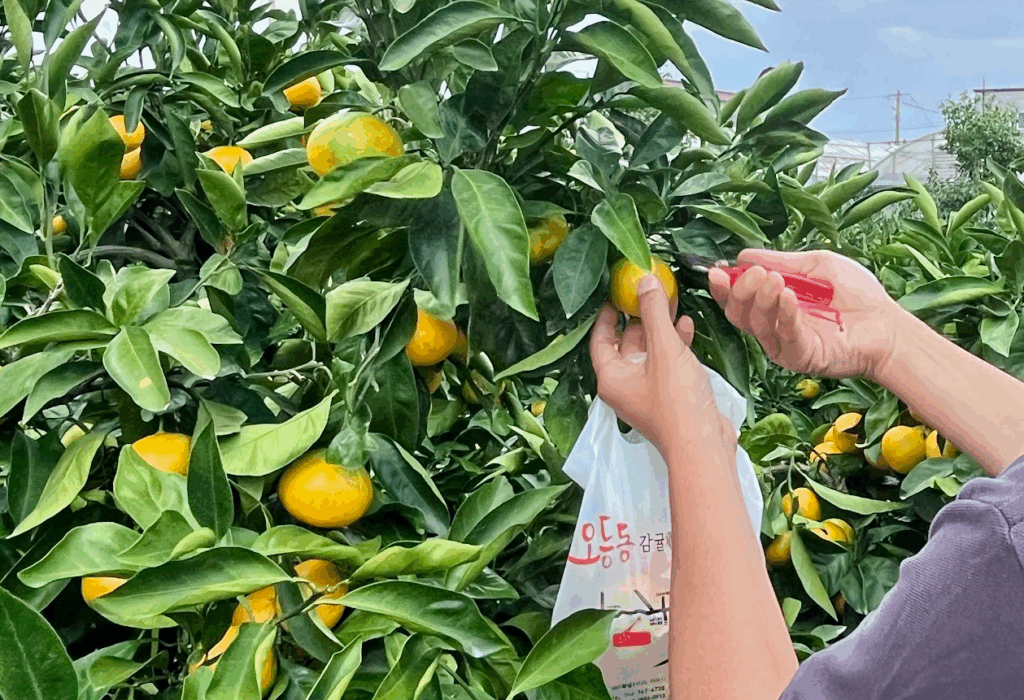
Many farms offer ‘pick your own’ experiences (감귤체험 | Gamgyul che-heom): you pay a set fee, enter the orchard, pick and eat as many tangerines as you want right off the tree, and leave with a bag of tangerines to take back to your lodgings.
This is u-pick farming at its most straightforward. Walk among the trees, choose fruit that looks good, twist it off, peel it, eat it immediately. The fruit is sun-warm, perfectly ripe, and unbelievably sweet because it’s been picked at peak ripeness.
Eating a tangerine 30 seconds after picking it, juice running down your chin, standing in an orchard with Hallasan visible in the distance, is honestly one of the purest pleasures Jeju offers. I’m not being dramatic. It’s that good.
Why Jeju Tangerines Are Special
Jeju produces about 90% of Korea’s tangerines. The volcanic soil, ocean climate, and abundant sunshine create ideal conditions. Korean tangerines, particularly Jeju varieties like 한라봉 (hallabong) and 천혜향 (cheonhyehyang), are sweeter and less acidic than most Western mandarins.
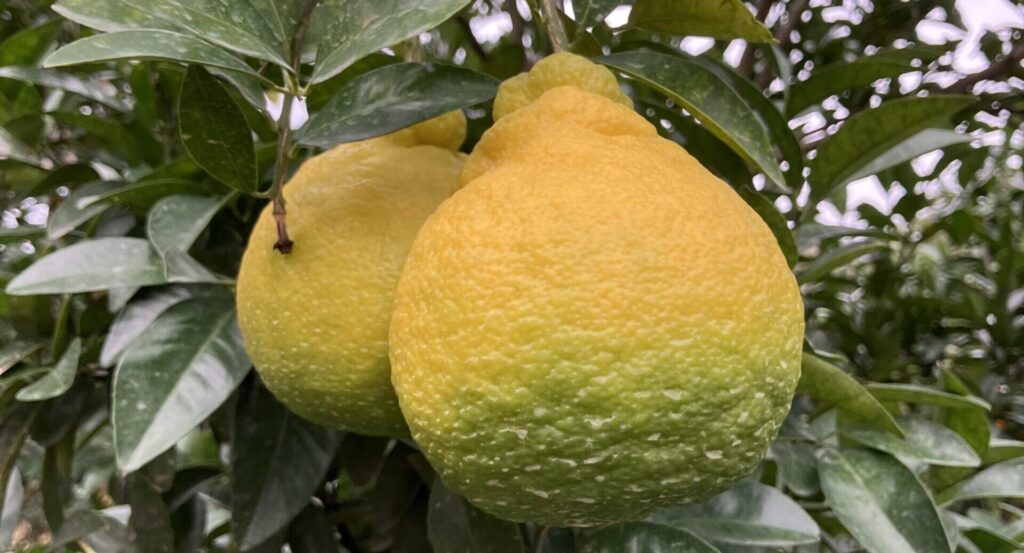
The classic Jeju tangerine (제주 감귤) is small, easy to peel, seedless, intensely sweet with a slightly tart finish. Hallabong (한라봉) has a distinctive bump on top, larger size, very juicy. Cheonhyehyang (천혜향) is incredibly aromatic with a honey-like sweetness.
These varieties can be expensive in Seoul and mainland Korea, but more reasonable on Jeju during harvest season. Stock up.
Why You Should Give This a Shot
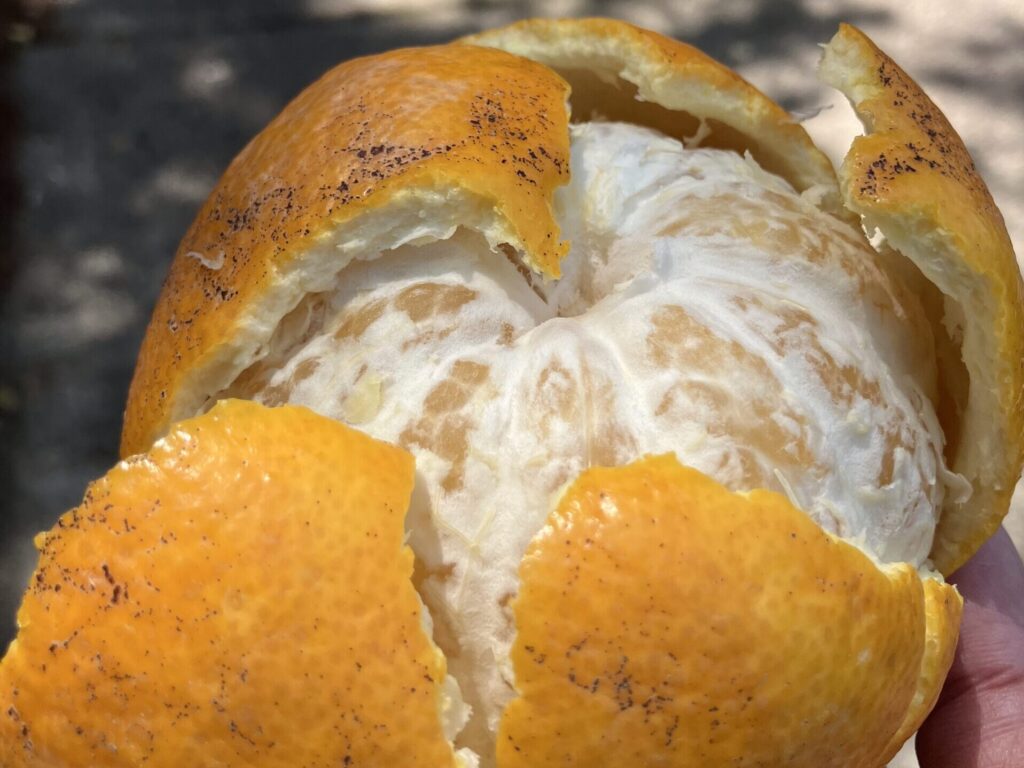
For ₩5,000-10,000 per person, you get to eat as much tangerines as you want in the allocated time (usually 1 hour), plus as much as you can fill in a to-go bag (size varies, but usually 1-2kg)
The farmer will greet you, explain the rules (usually: eat all you want, be careful not to damage trees, fill your bag before you leave), show you the optimal way to clip your tangerines, and set you loose in the orchard. You wander among the trees, testing different tangerines, eating your fill. Most people easily put away 5-10 tangerines without trying.
The smell of the citrus is intoxicating – like some air freshener that only nature can make. The trees are loaded with fruit in peak season; you’re surrounded by orange orbs hanging heavy on branches. Bees buzz. Sun filters through leaves. It’s meditative and delicious at the same time.
Kids love this. Adults rediscover that childhood joy of eating fruit straight from the source. I know I did! It’s wholesome, healthy, simple, and deeply satisfying.
Where to Do This
Tangerine farms with pick-your-own experiences are scattered all across Jeju, but particularly in the Seogwipo area in the south, which has the warmest microclimate and best growing conditions.
Look for the signs – remember 감귤체험 (Gamgyul che-heom)? To recap, that means tangerine picking experience. You can search that up ion KakaoMap or NaverMap, but note that some farms are informal. Just family operations that open during harvest season, so don’t be too surprised if you get to one and it’s not open. Roll with it and just go to the next one!
Best time: December-January for peak harvest. November is early season (some varieties ready, others not). February and March is late season (fewer farms open, but prices drop).
BTW: If you are going to do this, set it up for the beginning of your Jeju adventure, so you can eat your harvest through the rest of the trip.
Experience #5: Korean Sashimi on Demand at a Raw Fish Place
What It Is
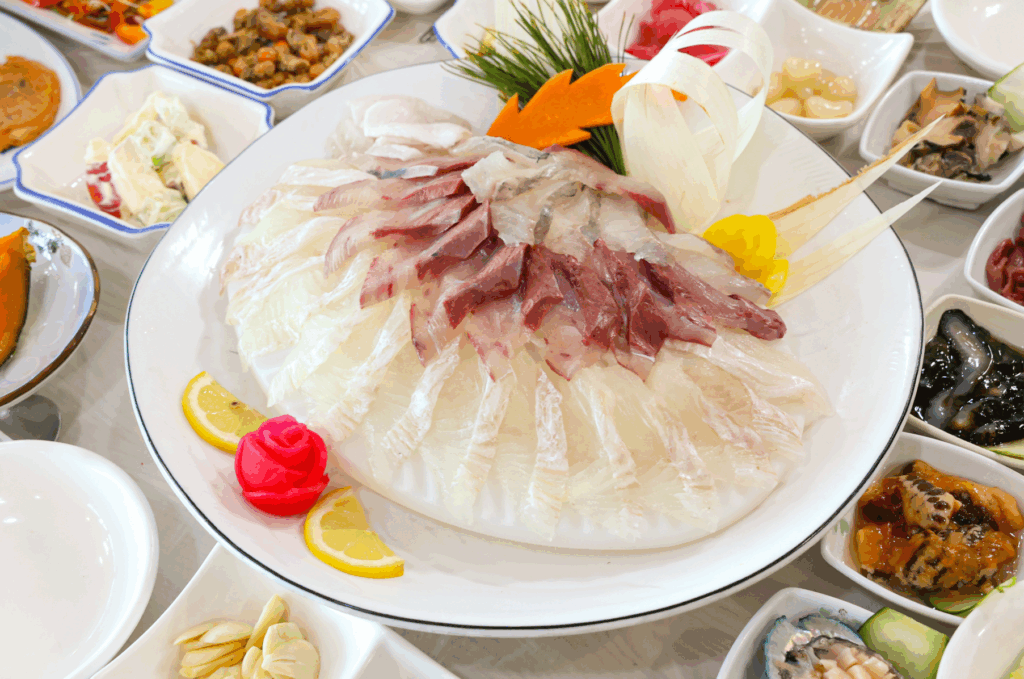
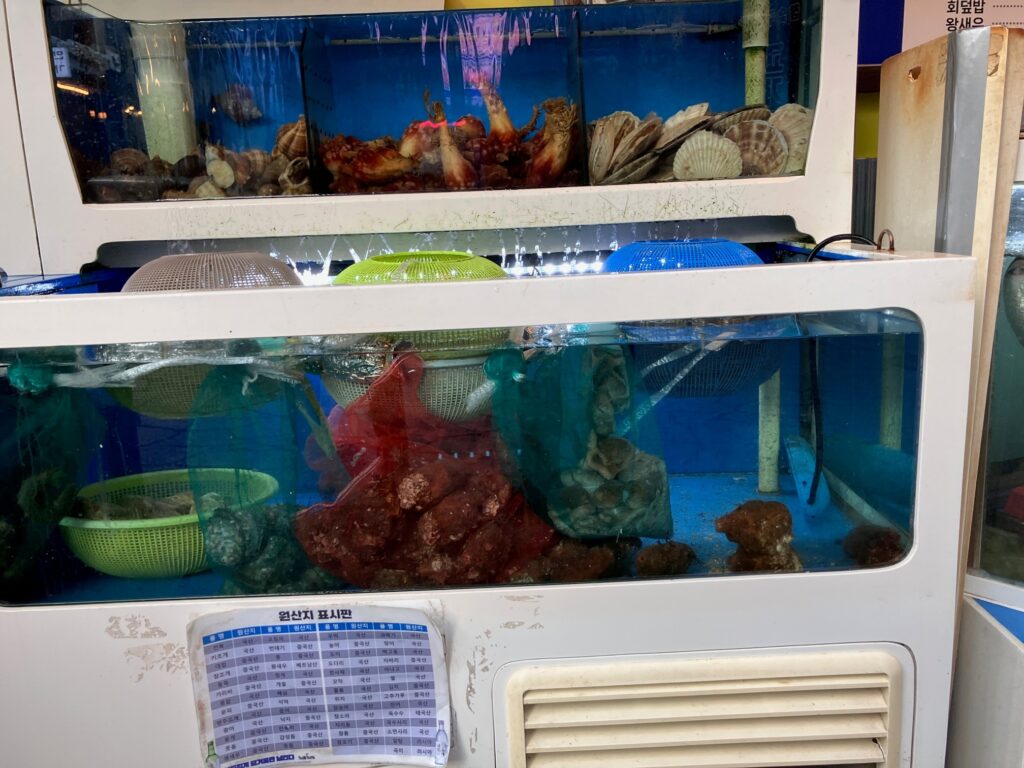
If you go to any city or village in Korea, but especially on Jeju, you will see any number of raw fish places (횟집 | Hwaejib) where they serve super fresh raw fish. Like, the fish is still swimming in tanks.
Because I usually gag a little when I try to eat raw fish, everything that follows in this section is based on the opinions of my friends. And also my incredibly shrewd powers of observation of diners putting raw pieces of stuff in their mouth and looking like they’ve died and gone to heaven.
Here’s how it works: Walk into a coastal seafood restaurant. Look into tanks filled with live fish, lobsters, abalone, and sea creatures still moving. Point to what you want. They net it out, take it to the kitchen, and within 5 minutes bring you 회 (hwae – Korean-style sashimi) sliced from that exact fish.
In the most hardcore version of this experience, found at some ports and fish markets, they’ll prepare it right in front of you at the table. The fish is so fresh it’s still twitching as they slice it. Some people find this disturbing. Others find it the ultimate expression of “fresh”. You’ll have to decide which camp you’re in.
This is Korean live fish (활어 | hwal-eo) gastronomical culture where extreme freshness is the whole point. The less time between ocean and plate, the better. Jeju, being an island surrounded by fishing grounds, takes this to its logical extreme.
What You'll Eat
- Amberjack (방어 | Bang-eo) Jeju’s iconic winter fish is especially famous nationwide for its rich fat content and texture. Peak season is November to February.
- Red Sea Bream (옥돔 | Ogdom): Typically famous as grilled fish, but fresh wild-caught specimens are also eaten raw. A firm, mild white-fleshed variety. Generally high-priced.
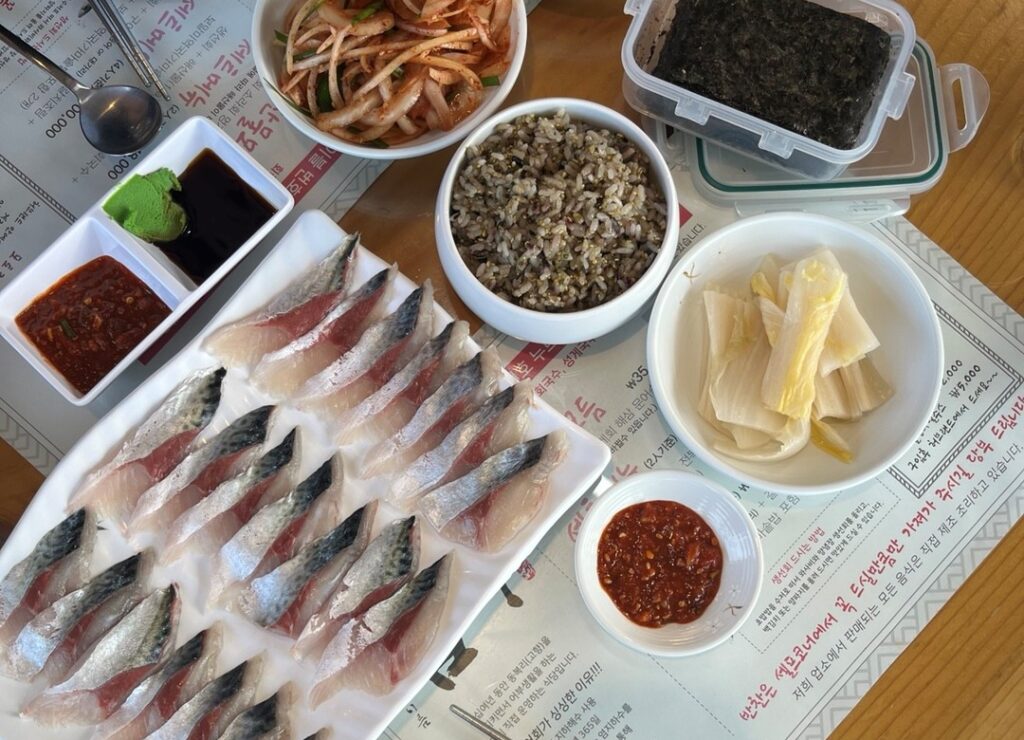
- Mackeral (고등어 | godeung-eo): Known for its unique rich flavor profile when fresh.
- Flounder (광어 | gwang-eo): Popular in Korea and known for its mild flavor that is both firm yet tender to the bite.
- Black Porgy (벵에돔 | Bengehdong): Extremely common and popular locally in Jeju. It’s noted for its chewy texture, highly favored by locals.
- Jajidom (자리돔): A fish unique to Jeju. Typically eaten as mulhoe (fish soup) or jeotgal (salted fermented fish), it’s only served as sashimi when exceptionally fresh.
- Dageumbari (다금바리): Jeju’s premier, top-grade fish species. True dageumbari is extremely rare and expensive; so most establishments substitute it with the more affordable nungsung-eo (능성어) or jabari (자바리). It has a taste profile that is deep and lingering.
Why You Should Give This a Shot
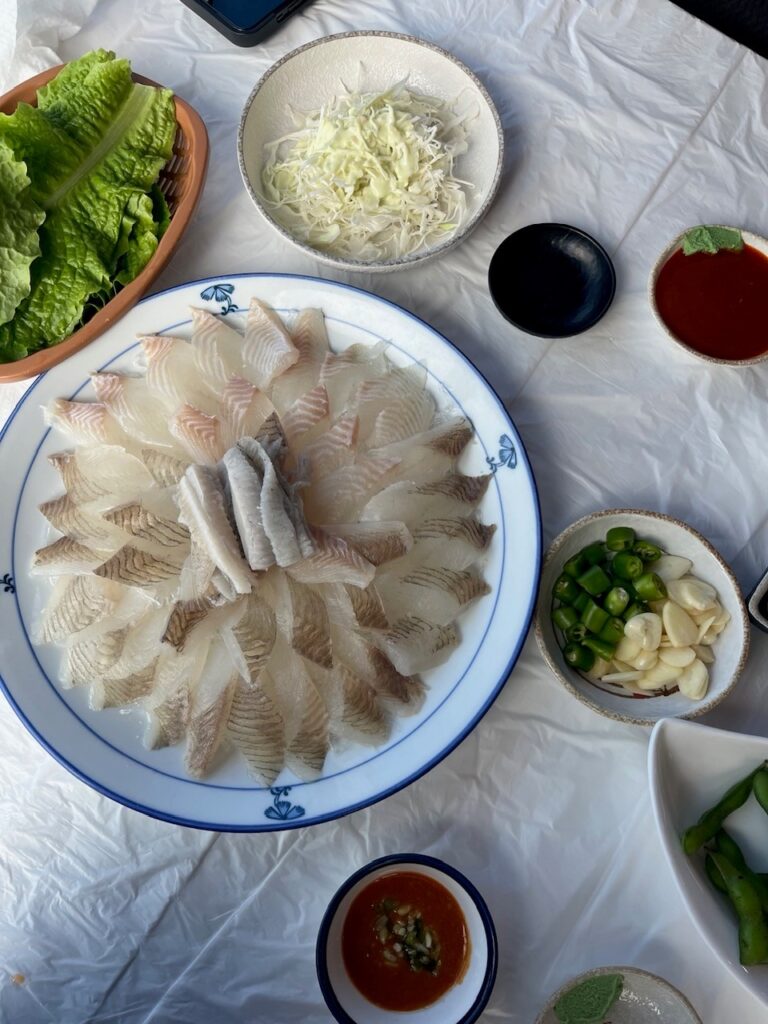
This is participatory dining. You choose your fish from the tank. Some restaurants charge by weight (they’ll weigh the fish before preparation), others have set prices per fish. Expensive items like yellowtail and lobster can run ₩50,000-100,000 or more. Cheaper options like rockfish might be ₩30,000-40,000 for a fish that serves 2-3 people.
According to my raw-fish-loving friends, the texture and flavor are noticeably different from sashimi that’s been sitting on ice. It’s firmer, cleaner, more pure. The fish still has tension in the muscles. Some people describe it as “sweet” or “oceanic” in a way that aged fish isn’t.
This isn’t for everyone. It’s definitely not for me!
If you’re uncomfortable with seeing your food alive moments before eating it, skip this. But if you want to understand Korean seafood culture at its most authentic, this is one way to go.
Where to Do This
Just about any town on Jeju has this. Look for restaurants with large fish tanks visible from outside. Those aren’t pets, they’re dinner.
BTW: Korean and Japanese sashimi are poles apart. The Korean version is a complete meal that comes with side dishes, a soup, and is often meant to be dipped in sauces for a more complex flavor profile, then wrapped in lettuce or perilla leaves. Because it is so fresh, the texture tends to be firmer and chewier. Japanese sashimi is usually a more minimalist experience, paired with premium soy sauce, wasabi, and pickled ginger. The fish tends to have been aged, so it’s more tender.
Experience #6: Eating at an Il-Poom Soondubu Franchise Restaurant
What It Is
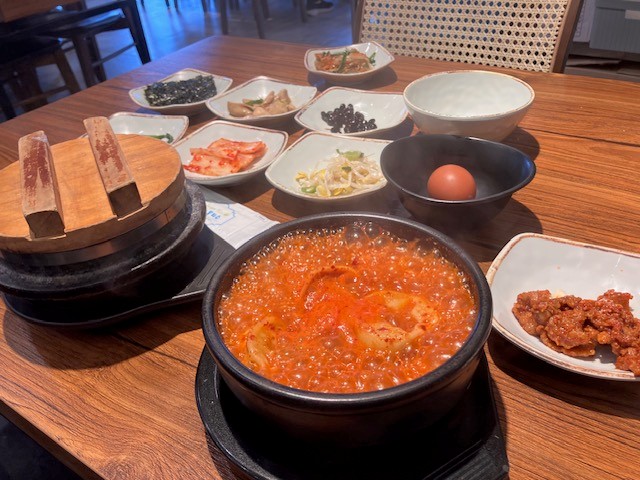
Il-Poom Soondubu (일품 순두부) is a chain of restaurants from Jeju that serves up a perfect combo of taste, value and experience.
But wait! Did I just contradict what I said at the top of this piece and actually recommend a place to go eat? Yes, yes I did, but here’s why.
The food is pretty good, but the value for money is what’s insane. Plus it’s a local chain and you’ll rarely find tourists there.
And because it is a franchise native to Jeju, I feel confident there will always be at least one Il-Poom Soondubu on the island. So I’m less concerned about recommending a place that ends up going out of business in a year or two.
Why You Should Give This a Shot
Ok, let’s try and unpack a few ideas about this chain so we can really understand why this is a must try.
If you like those Korean spicy stews, this place serves a pretty good version with soft tofu in it, called Soondubu Jjigae (순두부찌개). You get to pick from other proteins if you want, like beef, pork, seafood, and so on.
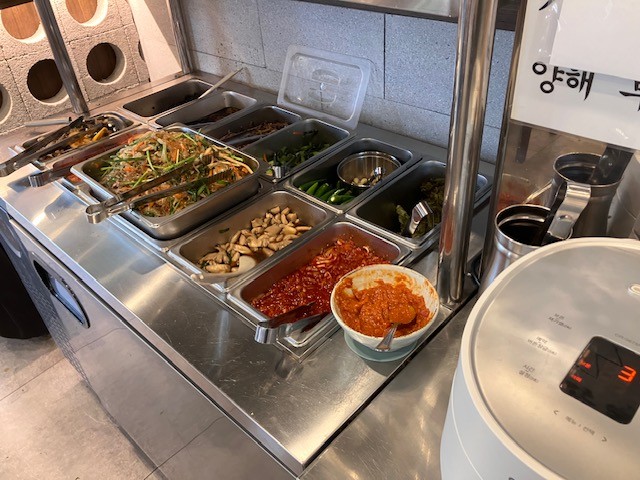
But the thing that really shines here is the all-you-can-eat sidedish (반찬 | banchan) buffet yet! In my opinion, this might even outshine the Soondubu Jjigae.
Every location has a slightly different sidedish buffet bar, and they usually have a couple of seafood items like soy sauce crab, spicy squid, stir-fried anchovies, or even fried corvina.
They almost always have a spicy pork stir fry that you wrap in lettuce leaves and in one branch west of Jeju City you even get Korean fried chicken!
Because each place is usually run by a different franchise owner, the buffet bar varies by location, which is just another way of saying you gotta go to more than one!
Where to Do This
There are more than 10 locations all over Jeju. In Jeju City there is one about 10 minutes walk from Dongmun market. If you search up Naver Maps or Kakao Maps, they’ll pop up!
BTW: You’re going to get served rice in a superhot stone bowl. You know it’s hot because you’ll hear the rice sizzling inside. Don’t eat the rice out of the pot! What should happen next is going to earn you your Korea Authentic Traveler Badge.
- Open the wooden lid and scoop what rice you can into a second bowl.
- Grab the hot water flask that will be on every table and pour a good amount into the stone bowl until all the scorched rice (누룽지 | Nurungji) is submerged.
- Put the lid back on and let the scorched rice soak.
Presto! You now have a brothy traditional infusion (숭늉 | Sungnyung) for when you are done with the meal.
Why These Six Experiences Matter
Look, you could spend your entire Jeju trip hitting up the restaurants that show up first on Google Maps (or Kakao Maps and Naver Maps) or the ones with the most Instagram followers. You’d eat fine food. You’d get decent service. You’d leave with some nice photos.
But here’s what you’d miss: the elderly haenyeo too tired to smile but serving you seafood she dove for at dawn. The chaos and smoke and laughter of families grilling meat they picked out themselves. The meditative simplicity of tearing dried squid while watching waves crash against volcanic rocks. The pure joy of eating a tangerine 30 seconds after picking it, juice running down your chin, standing in an orchard with Hallasan in the distance.
These six experiences aren’t polished. They’re not designed for tourists. Some require navigating language barriers, some require getting your hands greasy (literally, at the butcher BBQ), and at least one requires watching your dinner get netted out of a tank.
But they’re real. They’re how people on Jeju actually eat, celebrate, and connect with the island’s food culture.
The butcher shop BBQ, the haenyeo place, the dried squid by the coast, the tangerine orchard, the live fish restaurant, the local soondubu chain, these aren’t just meals. They’re windows into how an island community has organized itself around food for generations.
That’s where the real Jeju is.
Practical Tips
Language
English is limited at most of these places. Download DeepL,Papago or Google Translate before you go. Learn a few key phrases:
- This one, please – 이거 주세요 (ee-geo ju-se-yo)
- How much? – 얼마예요? (eol-ma-ye-yo): Have your phone’s calculator handy to clarify prices.
- It’s delicious – 맛있어요 (ma-shi-sseo-yo)
Payment
Bring cash for small coastal places and markets. Most restaurants take cards, but not all. Don’t get caught out.
Timing
Haenyeo restaurants: 11:30am-1:30pm (they often close by 2-3pm)
Tangerine picking: 9am-5pm typically, November-January mostly, maybe some places may extend as late as February or March.
Butcher shop BBQ: Peak atmosphere 8-11pm
Etiquette
Don’t take photos of elderly haenyeo without asking
Clean up after yourself (especially when eating by the coast)
At tangerine farms, don’t damage trees or take fruit without paying
At butcher restaurants, help tend the grill, don’t just sit passively
