What You'll Find in This Article
Welcome back!
Two days ago, I told you about Seongsan Ilchulbong—the dramatic volcanic crater you absolutely must climb.
Today, we’re talking about food. Specifically, how to eat Korean BBQ the way locals do, not the way tour groups do.
PART 1: Why You Shouldn’t Miss This
Butcher Shop BBQ (정육식당 Jeongyukshikdang)
Forget Black Pork Street. Forget the tourist BBQ restaurants with English menus and tourist prices.
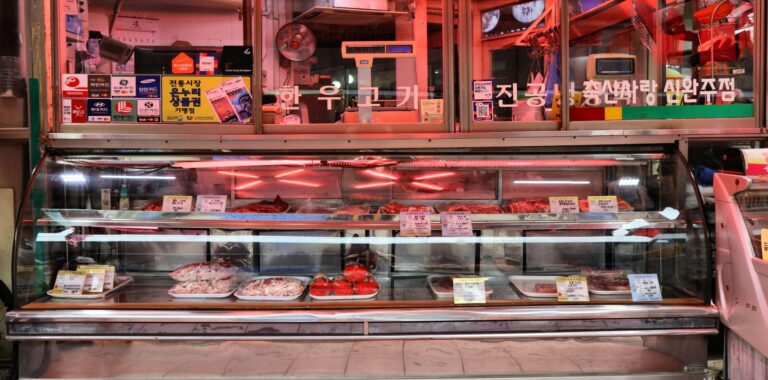
Walk into a butcher shop, choose your meat from the refrigerated cases like you’re at a grocery store, pay butcher-shop prices, then walk upstairs to grill it yourself.
This is brilliant because you’re paying retail meat prices (₩15,000-25,000 per person) instead of restaurant markup (₩35,000-50,000). The meat is exactly as fresh as what locals buy. And the experience is 100% authentic—this is how many Koreans used to do BBQ.
How it works:
- Walk into the butcher shop on the first floor
- See the refrigerated cases full of pork and beef
- Point at what looks good (don’t worry, I’ll tell you what to get)
- They weigh it and you pay at the counter
- Take your meat upstairs to the restaurant
- Pay a small table fee (₩3,000-5,000/person = approximately $2-$3.50)
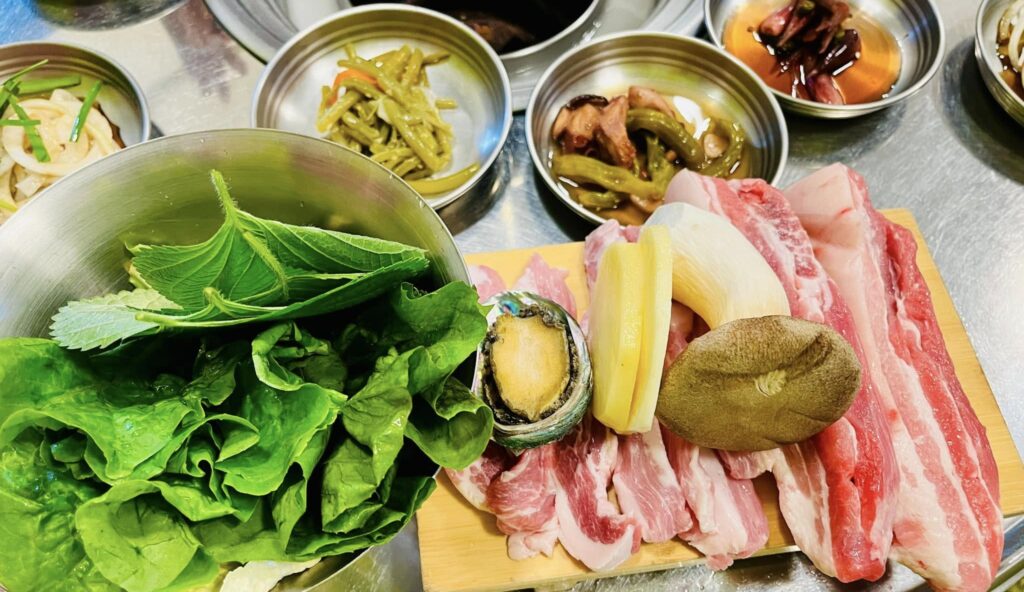
- They bring you lettuce wraps, side dishes (banchan), sauces, and set up your grill
- Grill it yourself, eat, repeat
The meat quality is excellent because it’s the same meat locals buy to take home. The vibe is casual and fun—families and friends grilling together, smoke filling the air, scissors cutting meat on the grill (yes, scissors—we’ll get to that). No pretense, no tourist show, just good food.
The cost structure:
Butcher shop prices vary day by day, but generally they are half the price of KBBQ restaurants. Depending on your choice of meat and your appetite, you can expect to pay between ₩8,000 to ₩14,000 a person for pork, and up to double that for beef.
Finding a Butcher Shop BBQ
Search “정육식당” (jeongyukshikdang) on Kakao Map or Naver Map. You’ll find dozens. They’re in residential neighborhoods, not tourist areas.
No reservations needed. Just walk in.
Choosing Your Meat (The Intimidating Part Made Easy)
For pork (most popular, best value):
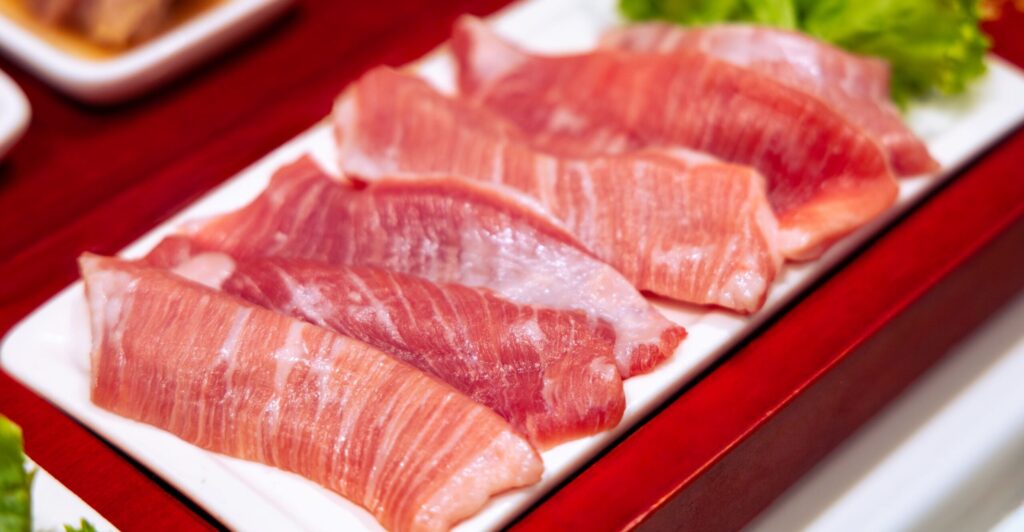
삼겹살 (Samgyeopsal) = Pork belly, three layers of meat. The same cut of meat as bacon.
오겹살 (Ogyeopsal) = Five layers, includes the skin
목살 (Moksal) = Pork neck/shoulder, leaner than belly
Start with: Samgyeopsal. It’s what everyone eats. Can’t go wrong.
How much: 200-300 grams per person is standard. They’ll recommend amounts.
For beef (more expensive but delicious):
갈비살 (Galbisal) = Rib meat
채끝살 (Chaekkeut-sal) = Top Sirloin
안심 (Ansim) = Tenderloin
Hanwoo (한우) vs. imported: Hanwoo is Korean beef—significantly more expensive than Australian/American imports.
The Non-Verbal Ordering Method (For Non-Korean Speakers)
- Walk to the meat case
- Point at the meat you want and say 주세요 (ju-se-yo). Remember that from last time? It’s pronounced: “JOO-seh-yo”.
- Hold up fingers for how many people (2 people = two fingers)
- They’ll show you a portion size
- Nod yes or shake head no
- They weigh it and write the price
- Pay at the counter
- Take your receipt upstairs
Works every time. Even with zero Korean.
Upstairs in the Restaurant
Table setup includes:
- Gas grill (already on your table), or sometimes they may have charcoal briquettes
- Lettuce leaves for wraps (상추 sangchu)
- Perilla leaves (깻잎 kkaennip)
- Ssamjang (쌈장) – fermented soybean paste, slightly spicy
- Garlic, peppers, kimchi, and various banchan
- Scissors (yes, scissors—keep reading)
- Tongs for flipping meat
The smoke ventilation: There’s a suction hood above your grill. It pulls smoke up so you don’t leave smelling like a campfire. Well, you’ll still smell a bit, but not terrible.
Hidden jacket storage: Lift your seat cushion—there’s often a compartment underneath where you can store your jacket/bag away from the smoke smell.
How to Grill (Korean Style)
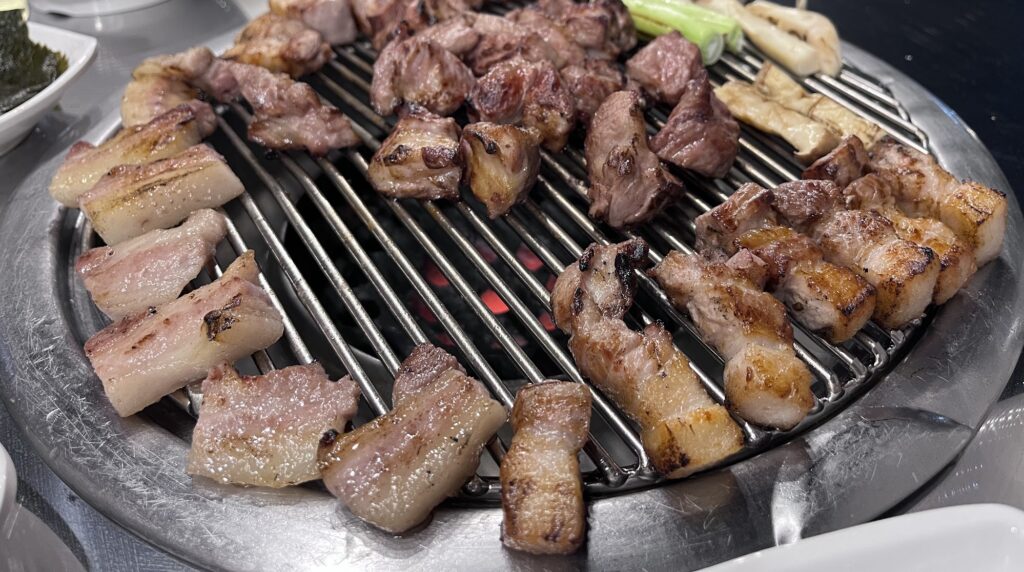
Step 1: Place meat on the grill
Step 2: Wait until it starts sizzling and changing color
Step 3: Use scissors to cut the meat into mid-sized chunks while it’s cooking
This is the most Korean thing ever. In the West, cutting meat while cooking is sacrilege. In Korea, it’s part of the communal dining experience.
Step 4: Flip pieces with tongs, cut into smaller bite-sized pieces, keep cooking
Step 5: When almost cooked, push to the sides. When cooked, take pieces off the grill
How to Eat It
The wrap (쌈 ssam):
- Take a lettuce or perilla leaf. Or both if you prefer.
- Add a piece of grilled meat
- Add a bit of ssamjang
- Optional: Add garlic, pepper, rice
- Fold it up
- Put the whole thing in your mouth at once
Don’t:
- Take bites out of it (too messy, defeats the purpose)
- Overfill the wrap (it’ll fall apart). Plus, you might choke.
- Forget to try the perilla leaves too
When You Need More
More meat: Go back downstairs, point, buy more. They know the drill.
More lettuce/banchan: Help yourself at the buffet bar. Usually unlimited refills.
More soju/beer: Order from staff (I’ll teach you how in the language section). There may be a button you can press to get their attention.
Cultural Notes
Grilling is communal: Usually one person tends the grill for everyone. Offer to help if someone’s doing all the work.
Side dishes are unlimited: But start with small portions. You can always get more.
Don’t be afraid to mess up: You’re a visitor. Locals are generally very kind to foreigners trying to navigate this. If you burn the meat or make a weird wrap, nobody cares. It’s all part of the experience.
PART 3: Korean You’ll Actually Use
At the Butcher Counter
This one, please: “이거 주세요” Romanization: I-geo ju-se-yo When: Pointing at the meat you want
A two-person portion please: “이인분 해주세요” Romanization: i-inbun haejuseyo Options:
- 일인분 해주세요 (i-rinbun haejuseyo) = 1 person
- 삼인분 해주세요 (sa-minbun haejuseyo) = 3 people
- 사인분 해주세요 (sa-inbun haejuseyo) = 4 people
- 오인분 해주세요 (o-inbun haejuseyo) = 5 people
Or, just hold up fingers if you forget the numbers.
One bottle of soju please: “소주 한 병 주세요” Romanization: So-ju han byeong ju-se-yo
Two bottles of beer please: “맥주 두 병 주세요” Romanization: Maek-ju du byeong ju-se-yo
It’s delicious!: “맛있어요!” Romanization: Ma-shi-sseo-yo!
Please help me: “도와주세요” Romanization: Do-wa-ju-se-yo When: If you’re confused about grilling or need assistance
Or just make eye contact with staff and look helpless. They’ll come help.
Building Your Korean
Notice how we’re using “주세요” (ju-se-yo) again? It means “please give me” and it’s the most useful phrase in Korean.
Pattern: [Thing you want] + 주세요 (ju-se-yo)
- 이거 (yi-gor) 주세요 = This please
- 물 (mul) 주세요 = Water please
- 맥주 (maek-ju) 주세요 = Beer please
Why the Butcher Shop Matters
The butcher shop BBQ gives you something tourist restaurants don’t: you’re eating what locals eat, paying what locals pay, sitting next to Koreans having the same experience, and learning how Korean social dining actually works.
Black Pork Street serves overpriced meat to tourists who don’t know any better. The butcher shop is where you actually experience Korean food culture.
What’s Next?
In two days, I’ll send you Email 3 about something you definitely won’t find in guidebooks: watching wild dolphins from the coast. For free. No boat tour required.
You’re going to love it.
— Ed
P.S. — The table fee includes unlimited lettuce and banchan. Don’t be shy about getting refills. That’s what you paid for.
