
What You'll Find in This Article
Welcome to Email 6!
So far you’ve learned about:
- Seongsan (volcanic crater you can climb)
- Butcher BBQ (how locals eat)
- Dolphins & Coast (natural beauty)
- Hallasan (the volcano that created everything)
- Haenyeo (disappearing sea women tradition)
Today: Walk inside the volcano itself.
Headsup: the Manjanggul Lava Tube was closed for restoration work and is expected to be re-opened mid-2026. Check before planning a trip out!
PART 1: Why You Shouldn’t Miss This
Manjanggul Lava Tube (만장굴) – Hallasan’s Underground Legacy
In Email 4, I told you Hallasan created almost everything on Jeju.
The black rock walls. The basalt cliffs. The beaches. The fields. Everything came from volcanic eruptions over millions of years.
What you don’t see from the surface: an extensive underground network of lava tubes—tunnels formed when molten rock drained from beneath the island.
Manjanggul is one of these tubes. And you can walk through it.
What it is: A lava tube 7.4 kilometers long total (one of the world’s longest). Only 1 kilometer is open to the public, but that’s plenty.
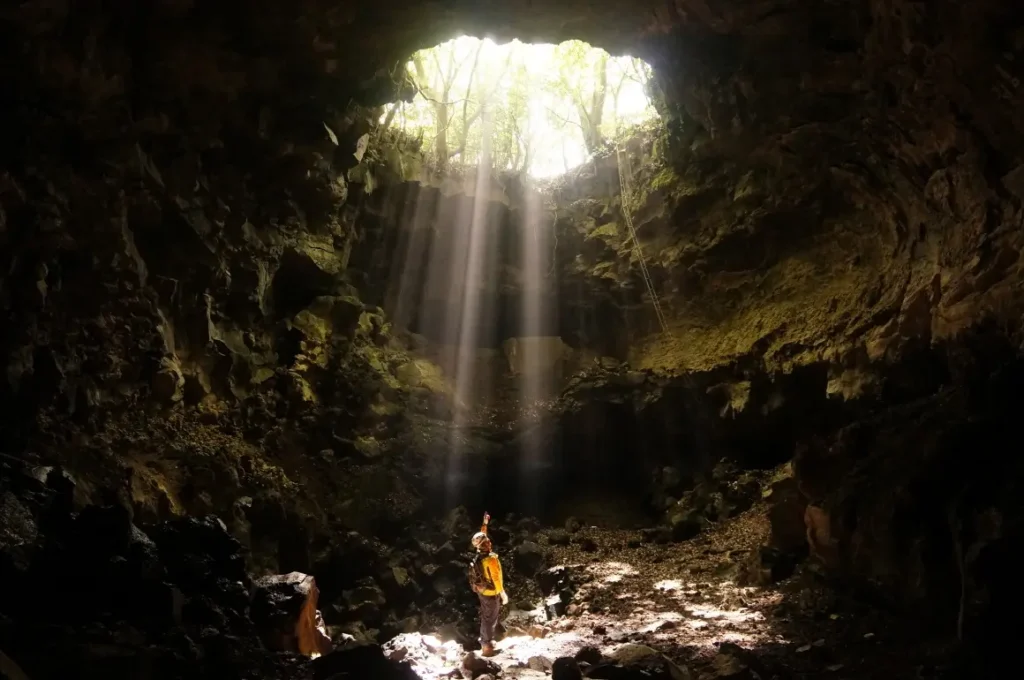
How it formed: At least 100,000 years ago, during one of Hallasan’s eruptions, lava flowed downslope in a channel. The surface of the flow cooled and hardened into a crust. Beneath that crust, molten lava kept flowing. Eventually the eruption stopped and the liquid lava drained out. What remained: a hollow tunnel with solidified lava walls.
Many lava tubes collapse over time or fill with debris. Manjanggul remained intact for 200,000+ years. The geological features inside—lava stalactites, flow marks, secondary mineral formations—are exceptionally well-preserved, making it a UNESCO World Heritage Site that Koreans seem pretty proud of.
What you’ll see inside:
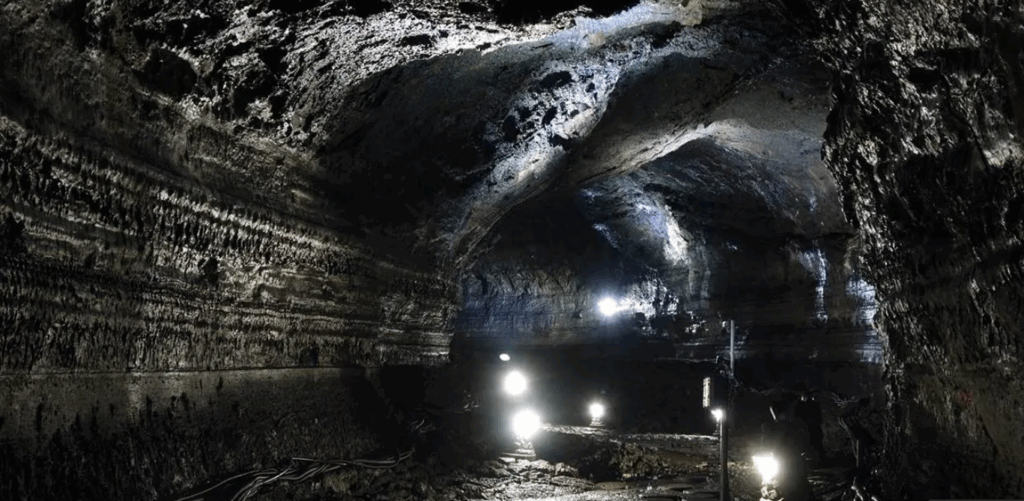
- Lava tube ceiling: 10-20 meters high in places, formed rock crust
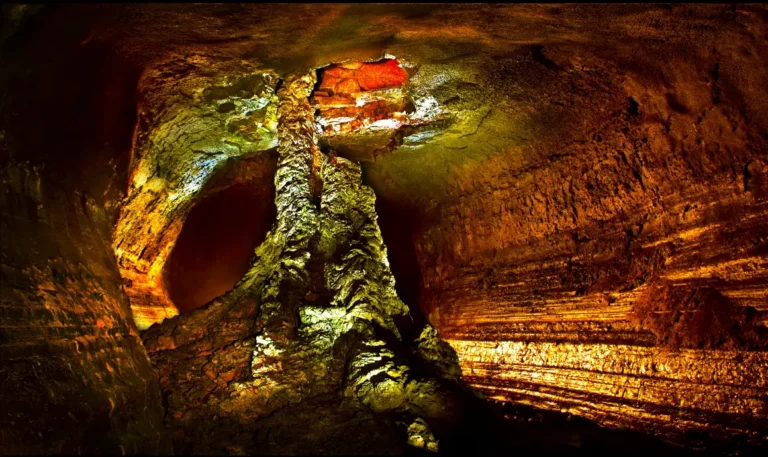
- Lava pillars: Where dripping lava hardened mid-fall (like stone icicles)
- Flow marks: Patterns in the walls showing how lava moved
- Multi-tiered structure: Multiple lava flows created layered floors
- Stone Turtle: Massive lava column formation (highlight of the walk)
- Temperature: 11-21°C year-round (cool even in Jeju summer heat)
Remember how I said almost everything visible on Jeju came from Hallasan? Manjanggul shows you what happened underground while those eruptions were creating the island above. It’s the other half of Jeju’s volcanic story.
The Walk: What to Expect
Distance: 1km one way (2km round trip)
Time: 40-60 minutes total (20-30 min each direction)
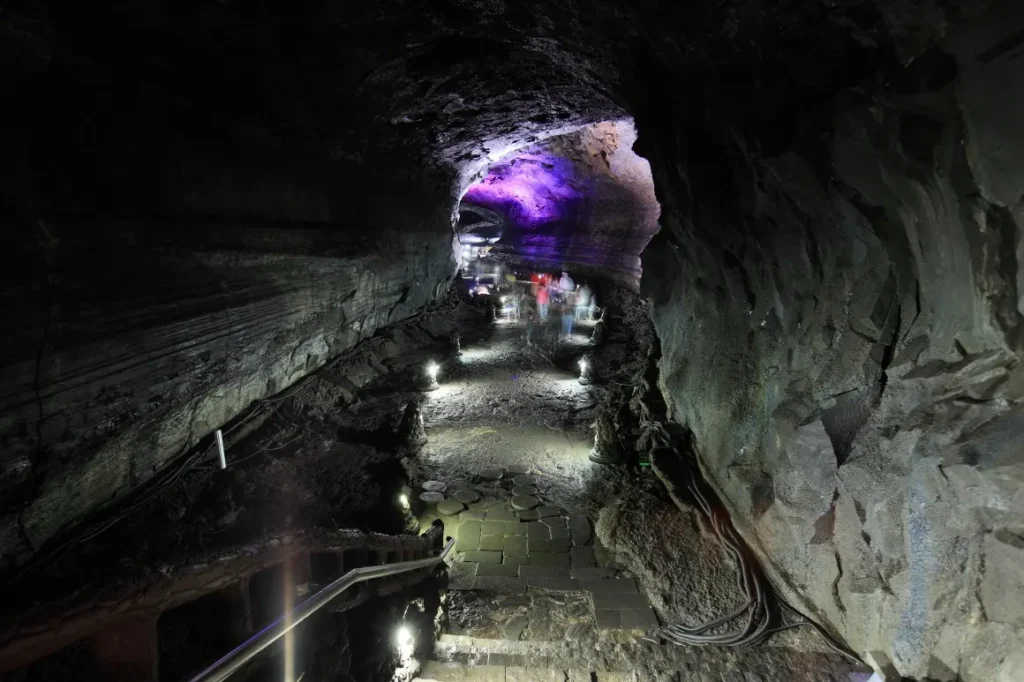
Difficulty: Easy – paved pathway, minimal elevation change
Ceiling height: Varies 5-20+ meters (plenty of headroom)
The route: Entrance to descend stairs into tube to walk paved path through tunnel to reach “Stone Turtle” formation at end to turn around to walk back to exit
Temperature inside: 11-21°C (52-70°F) year-round
What this means:
- Summer: Refreshingly cool (bring light jacket)
- Winter: Warmer than outside (still bring jacket)
Humidity: High (it’s a cave). Walls can be wet.
Lighting: Pathway is lit, but bring flashlight for better views of formations and taking photos.
The Stone Turtle (Lava Column)
The grand finale of the walk.
What it is: A massive lava column formed by dripping lava that built up over time—a stalactite made of basalt.
Size: 7.6 meters tall (3-story building height)
Age: At least 100,000 years old, up to 300,000.
Why it’s special: It’s one of the largest lava columns in the world. The fact that it’s still intact after hundreds of thousands of years is remarkable.
Photo op: Everyone takes photos here. The scale is impressive—you standing next to this 3-story lava pillar really drives home the geological forces at work.
Don’t touch it. Oils from human hands damage the formations. Look, photograph, marvel—don’t touch.
PART 2: How to Make it Happen
Getting There
Location: East coast, relatively close to Seongsan area
By bus: As always, check KakaoMap or NaverMap.
By car:
- Approximately 40 minutes from Jeju City
- Approximately 1 hour from Seogwipo
- Large parking lot (free)
At the Site
Hours: Typically 9:00 AM to 6:00 PM (last entry 5:30 PM)
Check official website for current hours and closures.
The lava tube was closed for a few years and is expected to reopen in 2026.
Entrance fee: ₩4,000 adults (approximately $3), ₩2,000 youth/children
Closed: First Wednesday of each month (maintenance)
Also closes occasionally for safety inspections—check website before visiting
Facilities:
- Parking lot (free)
- Ticket office
- Bathrooms (before you enter—no bathroom inside tube)
- Small information center
- Benches and rest areas
Accessibility: Paved pathway throughout, but approximately 450 stairs down to tube entrance and back up at exit. Not wheelchair accessible.
What to Bring
Light jacket or long sleeves (essential): The tube stays cool year-round.
Comfortable walking shoes: Pathway is paved but can be slippery when wet. Some areas have water dripping from ceiling. Athletic shoes or hiking shoes work fine.
Water: Easy walk but you’ll want hydration. No water available inside tube.
Camera: The formations are impressive. Low light, so bring camera with good low-light performance. Or use phone camera with flashlight.
Safety & Etiquette
Watch your head. Ceiling height varies. Most areas have plenty of clearance (5+ meters), but there can be occasional low spots. Just be aware.
Watch your step. Pathway is wet in places. Walk carefully. No running.
Don’t touch formations. Oils from hands damage the lava rock. Look, don’t touch.
Stay on pathway. Don’t wander off the paved path. It’s dangerous and damages the cave.
No littering. Pack out everything. It’s a UNESCO site.
Respect the quiet. It’s not a loud, boisterous experience. The tube is serene and echoey.
How Long to Budget
Minimum: 1 hour total
- 10 min walking down stairs to entrance
- 20 min walk through tube to Stone Turtle
- 10 min at Stone Turtle
- 20 min walk back
- 10 min walking up stairs to exit
Recommended: 1.5 hours
- Allows time to stop, look at formations, take photos
- Not rushed
Maximum: 2 hours (if you’re really into geology)
Add time for:
- Bus waiting (if using public transport)
- Visiting information center
- Restroom break
PART 3: Korean You’ll Actually Use
Buying Tickets
One Adult ticket: “어른 한 명 주세요” Romanization: Eo-reun han myeong ju-se-yo
For two people: “어른 두 명 주세요” Romanization: Eo-reun du myeong ju-se-yo
For two adults, one child: “어른 두 명, 어린이 한 명 주세요” Romanization: Eo-reun du myeong, eo-ri-ni han myeong ju-se-yo
Can I take a photo: “사진 찍어도 돼요?” Romanization: Sa-jin jji-geo-do dwae-yo?
I need help: “도와주세요” Romanization: Do-wa-ju-se-yo
Where’s the exit: “출구 어디예요?” Romanization: Chul-gu eo-di-ye-yo?
I’m not feeling well: “몸이 안 좋아요” Romanization: Mom-i an jo-a-yo When: If you feel dizzy, claustrophobic, or sick in the tube
Useful Vocabulary
만장굴 (Man-jang-gul) = Manjanggul Lava Tube
용암 (Yong-am) = Lava
동굴 (Dong-gul) = Cave
석주 (Seok-ju) = Stone pillar/column (the “Stone Turtle”)
입구 (Ip-gu) = Entrance
출구 (Chul-gu) = Exit
Why Manjanggul Completes the Picture
You’ve now covered Jeju’s volcanic story from three angles:
- Email 1: Seongsan Ilchulbong – Above-ground volcanic crater
- Email 4: Hallasan – The source volcano creating the island
- Email 6: Manjanggul – Underground lava tube showing how magma moved through the island
Together, these three sites show you Jeju’s volcanic origins from every perspective: how explosive eruptions created tuff cones (Seongsan), how the shield volcano grew over millions of years (Hallasan), and how lava flowed beneath the surface during eruptions (Manjanggul). All three are UNESCO World Heritage Sites.
Most tourists only visit one or two of these. If you visit all three, you’ll understand that this entire island is one massive volcanic complex.
What’s Next?
In two days, Email 7: Jeju’s beach culture. White sand beaches. Black volcanic sand beaches. Turquoise water. Cafes overlooking the ocean. And how to navigate Jeju’s beach scene without hitting the overcrowded tourist spots.
But first: add Manjanggul to your east coast itinerary once it re-opens in 2026. And bring a jacket.
You’re going inside a natural refrigerator.
— Ed
