
What You'll Find in This Article
Jeju has two daily markets that show up on every tourist itinerary. Dongmun Market in Jeju City and the Olle Daily Market in Seogwipo are well-known, photo-friendly, and priced accordingly. They are fine. They are also not what we are talking about here.
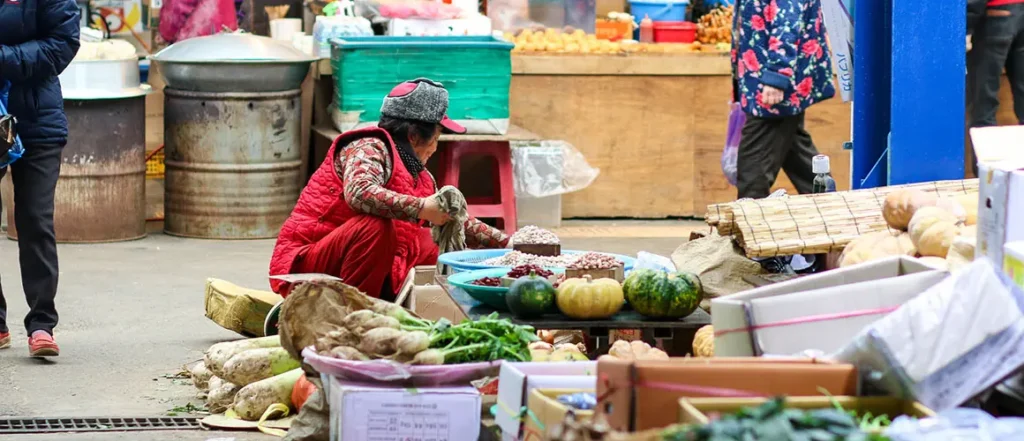
The five-day market (오일장, o-il-jang) is something else entirely. There are nine of them and each appears every five days at a fixed facility, running from early morning until mid-afternoon. The stalls are operated almost entirely by older locals selling produce, seafood, and snacks that they grew, caught, or made themselves. There is almost no tourist infrastructure, prices are low, and on a good day you will be surrounded by Jeju people doing what they have done for centuries.
Here is what you need to know.
A Brief History of a Very Old Idea
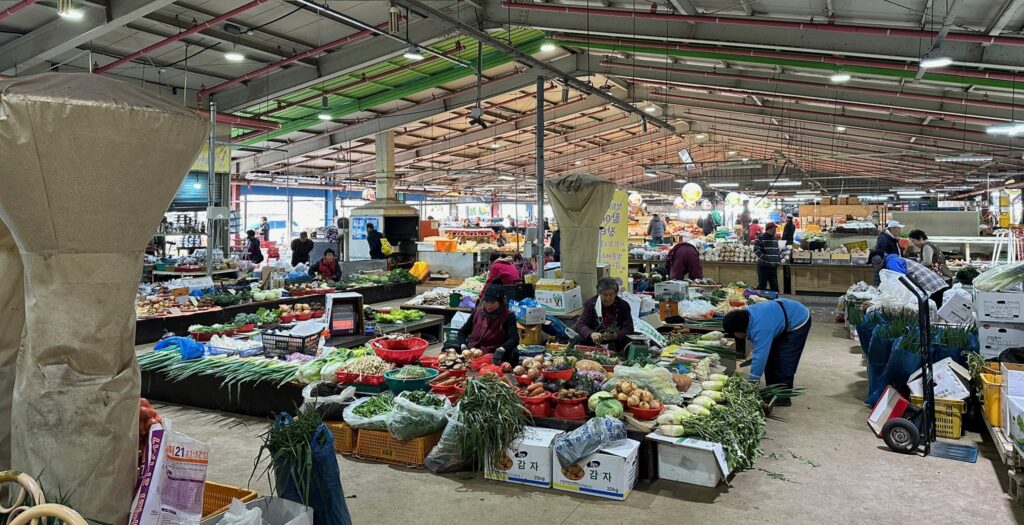
The five-day market system in Korea predates the Joseon dynasty. The concept is rooted in geography: before modern transportation, vendors traveled on foot between towns, and the five-day interval was based on how long it took to cover a reasonable circuit of markets. The system became standardized during the late Joseon period after the 15th century.
What to Know Before You Go
The official hours indicate when the facility is open. They do not indicate when the vendors will be there. Most vendors arrive by 6 or 7 AM and start packing up in the early afternoon when their stock runs out. If you want the full experience, and especially if you want the best produce and the freshest food, go in the morning.
Parking at the larger markets can be tight. You may need to park further away and walk. Or, if you are near enough, take the bus.
Four Markets Worth Planning Around
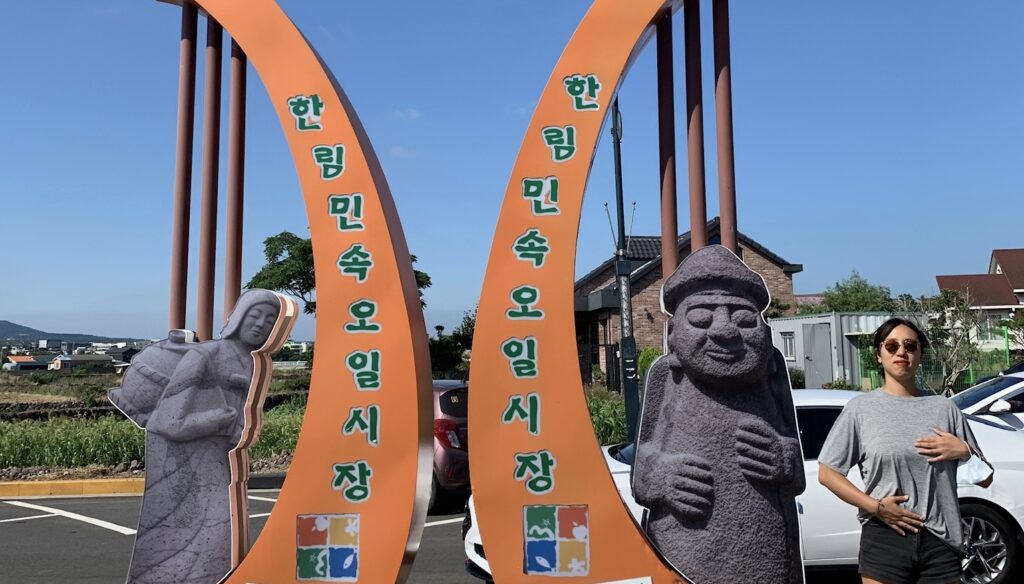
The Jeju City Five-Day Market (제주민속오일시장) is the largest on the island. It offers the widest range of goods: produce, seafood, clothing, household items, snacks, and sit-down food stalls. If this is your first five-day market experience, start here.
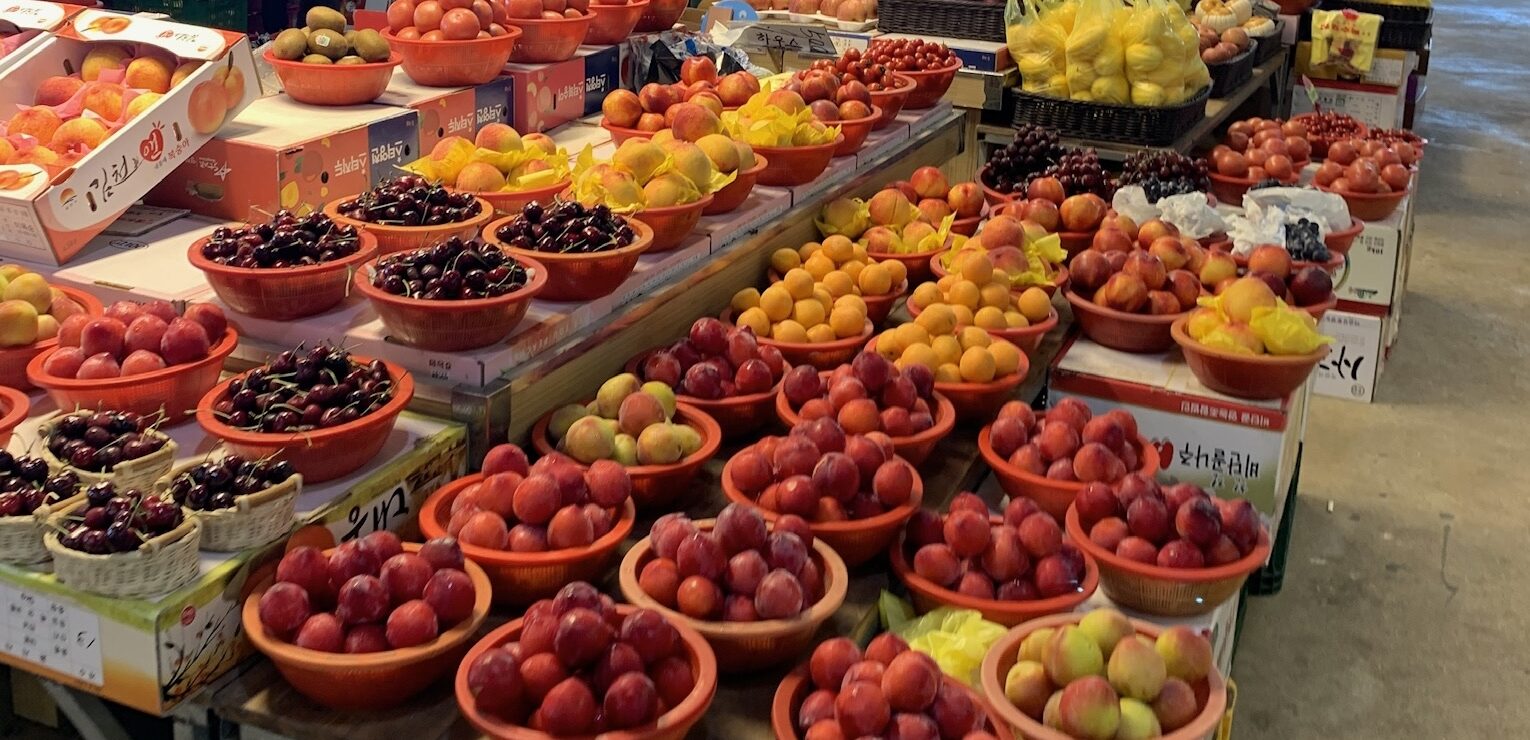
The Hallim Five-Day Market (한림오일장) is on the western side of the island. It is a smaller market, very much a community affair, with vendors who know each other and return every five days. The fruit quality is exceptional, and the gimbap 김밥 vendor here reportedly draws a waiting list. If you go, find the gimbap stall first, put your name in, and browse the rest of the market while you wait.
The Sehwa Five-Day Market (세화오일장) is on the northeast coast, a short walk from the Haenyeo Museum. This market has historical weight: Sehwa and the neighboring village of Hado were the starting point of the haenyeo 해녀 resistance against Japanese occupation in the 1930s. The statue in front of the market commemorates that movement. If you are already visiting the Haenyeo Museum or walking the Sumbisuri-gil coastal path, timing your visit to a Sehwa market day gives you a full picture of that part of Jeju’s story in a single morning.
The Goseong Five-Day Market (고성오일장), near Seongsan Ilchulbong 성산일출봉, is a small, very local market. It is not known for size or variety, but it appeared in the K-drama Our Blues, and the market itself has the feel of a working village gathering rather than any kind of attraction. Combine it with a visit to Seongsan sunrise peak if you are in the area.
Location & Operating Times
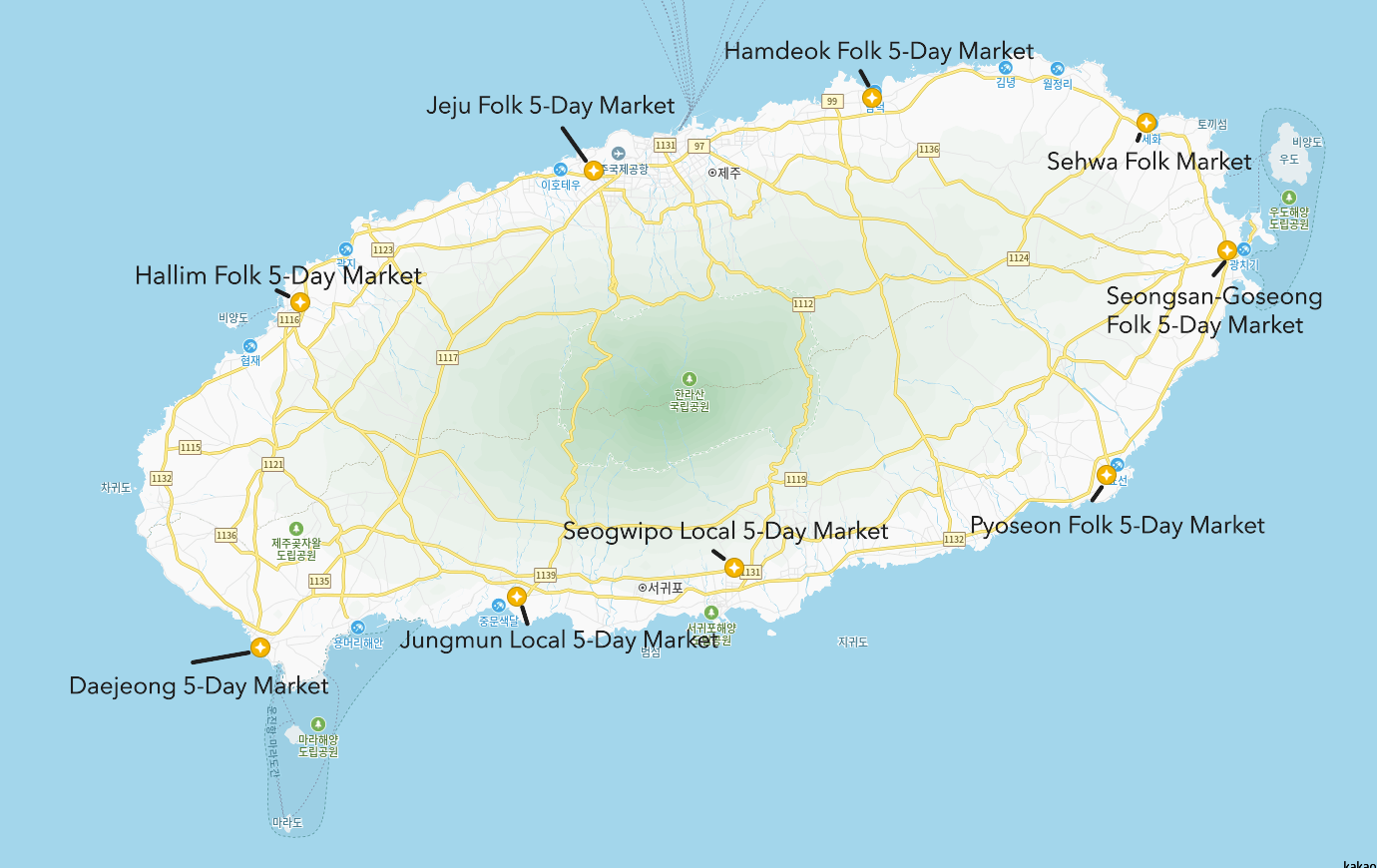
Here’s the KakaoMap link to the locations of all 9 of Jeju’s 5-day markets.
On mobile, you’ll need to first download the KakoMap App. On desktop, it should open even without a Kakao account.
But practically speaking, you’ll need KakaoMap to navigate to the markets, so might as well download the app!
The nine five-day markets operating today open on fixed dates as follows:
North
Jeju Folk 5-Day Market Days: 2nd, 7th, 12th, 17th, 22nd, 27th Hours: 8:00 AM – 8:00 PM
Hamdeok Folk 5-Day Market Days: 1st, 6th, 11th, 16th, 21st, 26th Hours: 8:00 AM – 2:00 PM
Northeast
Sehwa Folk Market Days: 5th, 10th, 15th, 20th, 25th Hours: 8:00 AM – 2:00 PM
East
Seongsan-Goseong Folk 5-Day Market Days: 5th, 10th, 15th, 20th, 25th Hours: 8:00 AM – 2:00 PM
Southeast
Pyoseon Folk 5-Day Market Days: 2nd, 7th, 12th, 17th, 22nd, 27th Hours: 8:00 AM – 2:00 PM
South
Seogwipo Local 5-Day Market Days: 4th, 9th, 14th, 19th, 24th, 29th Hours: 8:00 AM – 9:00 PM
Jungmun Local 5-Day Market Days: 3rd, 8th, 13th, 18th, 23rd, 28th Hours: 8:00 AM – 2:00 PM
Southwest
Daejeong 5-Day Market Days: 1st, 6th, 11th, 16th, 21st, 26th Hours: 8:00 AM – 2:00 PM
Northwest
Hallim Folk 5-Day Market Days: 4th, 9th, 14th, 19th, 24th, 29th Hours: 8:00 AM – 5:00 PM
Location & Operating Times
Here’s the KakaoMap link to the locations of all 9 of Jeju’s 5-day markets.
On mobile, you’ll need to first download the KakoMap App. On desktop, it should open even without a Kakao account.
But practically speaking, you’ll need KakaoMap to navigate to the markets, so might as well download the app!
The nine five-day markets operating today open on fixed dates as follows:
North
Jeju Folk 5-Day Market Days: 2nd, 7th, 12th, 17th, 22nd, 27th Hours: 8:00 AM – 8:00 PM
Hamdeok Folk 5-Day Market Days: 1st, 6th, 11th, 16th, 21st, 26th Hours: 8:00 AM – 2:00 PM
Northeast
Sehwa Folk Market Days: 5th, 10th, 15th, 20th, 25th Hours: 8:00 AM – 2:00 PM
East
Seongsan-Goseong Folk 5-Day Market Days: 6th, 11th, 16th, 21st, 26th Hours: 8:00 AM – 2:00 PM
Southeast
Pyoseon Folk 5-Day Market Days: 2nd, 7th, 12th, 17th, 22nd, 27th Hours: 8:00 AM – 2:00 PM
South
Seogwipo Local 5-Day Market Days: 4th, 9th, 14th, 19th, 24th, 29th Hours: 8:00 AM – 9:00 PM
Jungmun Local 5-Day Market Days: 3rd, 8th, 13th, 18th, 23rd, 28th Hours: 8:00 AM – 2:00 PM
Southwest
Daejeong 5-Day Market Days: 1st, 6th, 11th, 16th, 21st, 26th Hours: 8:00 AM – 2:00 PM
Northwest
Hallim Folk 5-Day Market Days: 4th, 9th, 14th, 19th, 24th, 29th Hours: 8:00 AM – 5:00 PM
Location & Operating Times
Here’s the KakaoMap link to the locations of all 9 of Jeju’s 5-day markets.
On mobile, you’ll need to first download the KakoMap App. On desktop, it should open even without a Kakao account.
But practically speaking, you’ll need KakaoMap to navigate to the markets, so might as well download the app!
The nine five-day markets operating today open on fixed dates as follows:
North
Jeju Folk 5-Day Market Days: 2nd, 7th, 12th, 17th, 22nd, 27th Hours: 8:00 AM – 8:00 PM
Hamdeok Folk 5-Day Market Days: 1st, 6th, 11th, 16th, 21st, 26th Hours: 8:00 AM – 2:00 PM
Northeast
Sehwa Folk Market Days: 5th, 10th, 15th, 20th, 25th Hours: 8:00 AM – 2:00 PM
East
Seongsan-Goseong Folk 5-Day Market Days: 5th, 10th, 15th, 20th, 25th Hours: 8:00 AM – 2:00 PM
Southeast
Pyoseon Folk 5-Day Market Days: 2nd, 7th, 12th, 17th, 22nd, 27th Hours: 8:00 AM – 2:00 PM
South
Seogwipo Local 5-Day Market Days: 4th, 9th, 14th, 19th, 24th, 29th Hours: 8:00 AM – 9:00 PM
Jungmun Local 5-Day Market Days: 3rd, 8th, 13th, 18th, 23rd, 28th Hours: 8:00 AM – 2:00 PM
Southwest
Daejeong 5-Day Market Days: 1st, 6th, 11th, 16th, 21st, 26th Hours: 8:00 AM – 2:00 PM
Northwest
Hallim Folk 5-Day Market Days: 4th, 9th, 14th, 19th, 24th, 29th Hours: 8:00 AM – 5:00 PM
What to Eat
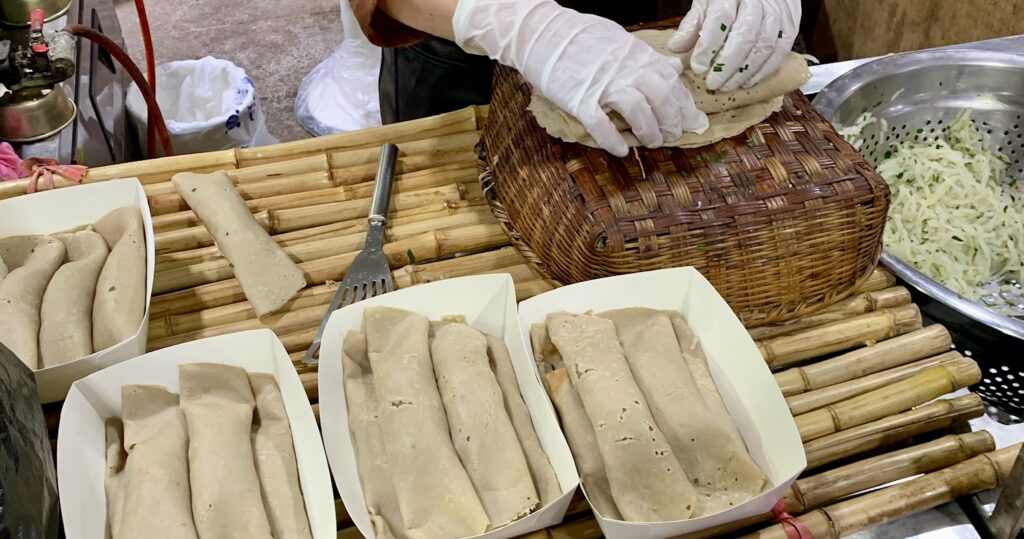
Bingtteok 빙떡 is the one food that exists only in Jeju. It is a savory buckwheat crepe filled with seasoned radish. You will not find it on the mainland. Get it.
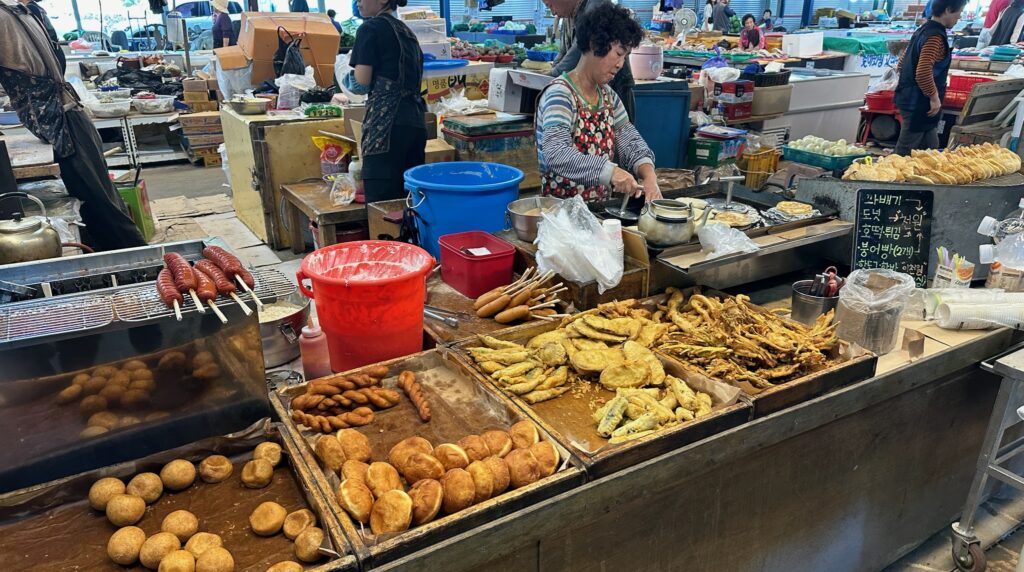
Tteokbokki 떡볶이 (spicy rice cakes) and sundae 순대 (Korean blood sausage) are common market staples. Note: sundae is spelled the same as the ice cream dessert in English. It is not ice cream. It is blood sausage. Now you know.
Kkwabaegi 꽈배기 are twisted fried dough donuts covered in sugar. Think of them as a Korean churro. Usually sold alongside regular glutinous rice flour donuts and croquettes from the same vendor.
Jajangmyeon 자장면 (noodles in black bean sauce) at the Jeju City market has been spotted for around 5,000 won, roughly half the price of a restaurant serving the same dish. Market food is consistently cheaper than the equivalent in a sit-down restaurant.
Puffed rice discs (뻥튀기, bbeong-twi-gi) are made on the spot in a machine that ejects them with a loud pop. Free samples are common.
Wrapping Up
The five-day market is not a tourist attraction. It was not designed for you, and that is exactly what makes it worth going to. Nobody is trying to sell you a refrigerator magnet or a T-shirt that says Jeju on it. The grandmothers and grandfathers running these stalls have been doing this for decades, and they will be back in five days regardless of whether any visitors show up.
If your timing works out, go. Order something you cannot identify, sit down at a plastic table, and watch Jeju happen around you. That is the whole point.
So plan your Jeju itinerary using the Trip Planner and get the KakaoMap locations for easy navigation.
