What You'll Find in This Article
No fancy restaurant on Jeju can fake this. The best seafood on the island is whatever a grandmother in a wetsuit pulled off the seabed this morning. The haenyeo (해녀), Jeju’s free-diving sea women, spend their working lives harvesting abalone, sea urchin, conch, octopus and seaweed by breath alone. The best way to honor that work also happens to be the cheapest: eat it, fresh and in season, bought straight from the women themselves whenever you can.
This guide covers what the haenyeo actually catch, which dishes to order, and where to find the real thing. The words to look for are 해녀의 집.
Want to see them work before you eat? Read Where to See Haenyeo on Jeju first, then come back hungry.
The quick answer
| Dish | What it is | Where / when |
|---|---|---|
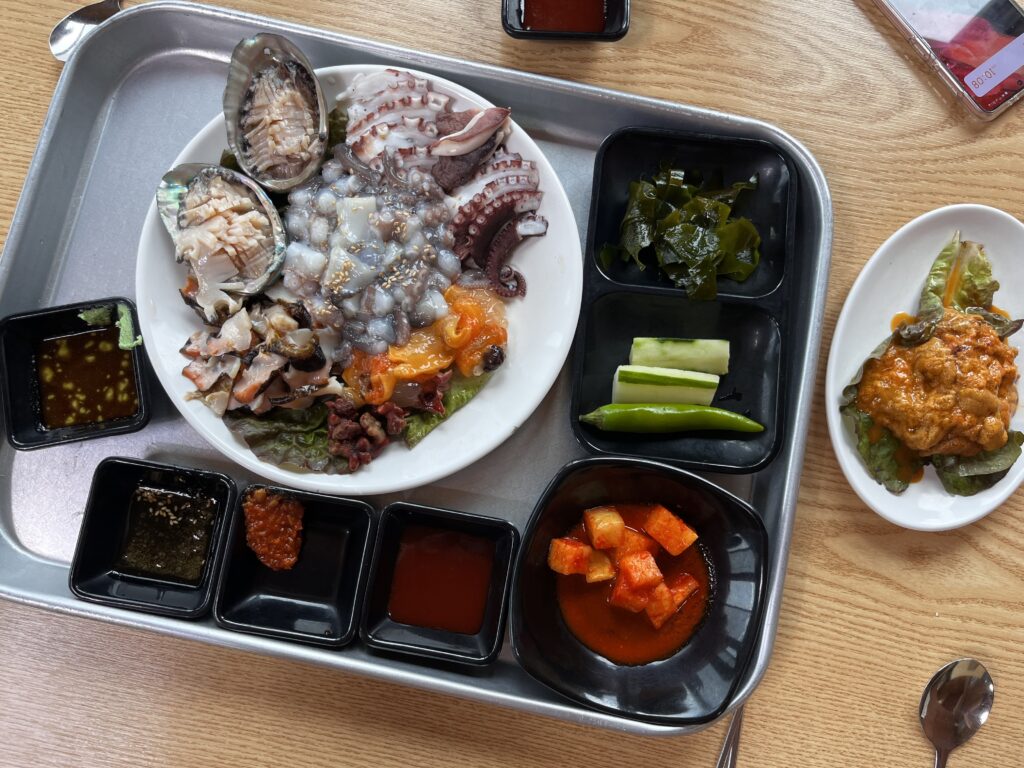
| 전복죽 (jeonbok-juk) | Abalone rice porridge, rich with the green innards | Any 해녀의 집, year-round |
| 성게미역국 (seonggae-miyeokguk) | Clean kelp soup full of fresh sea urchin | Haenyeo houses, best in June and July |
| 보말 (bomal) | Sweet top-shell sea snail, served as 죽 / 국 / 칼국수 | South and west coast spots |
| 물회 (mulhoe) | Icy raw-seafood soup, sweet-tangy broth | Coastal restaurants, summer |
| 전복 (abalone) | Raw (회), grilled (구이), or hot-pot rice (돌솥밥) | Gujwa abalone spots |
| 소라, 오분자기 | Conch and baby abalone, grilled or in 뚝배기 stew | Haenyeo houses and stalls |
1. The freshest option: buy it straight from the divers
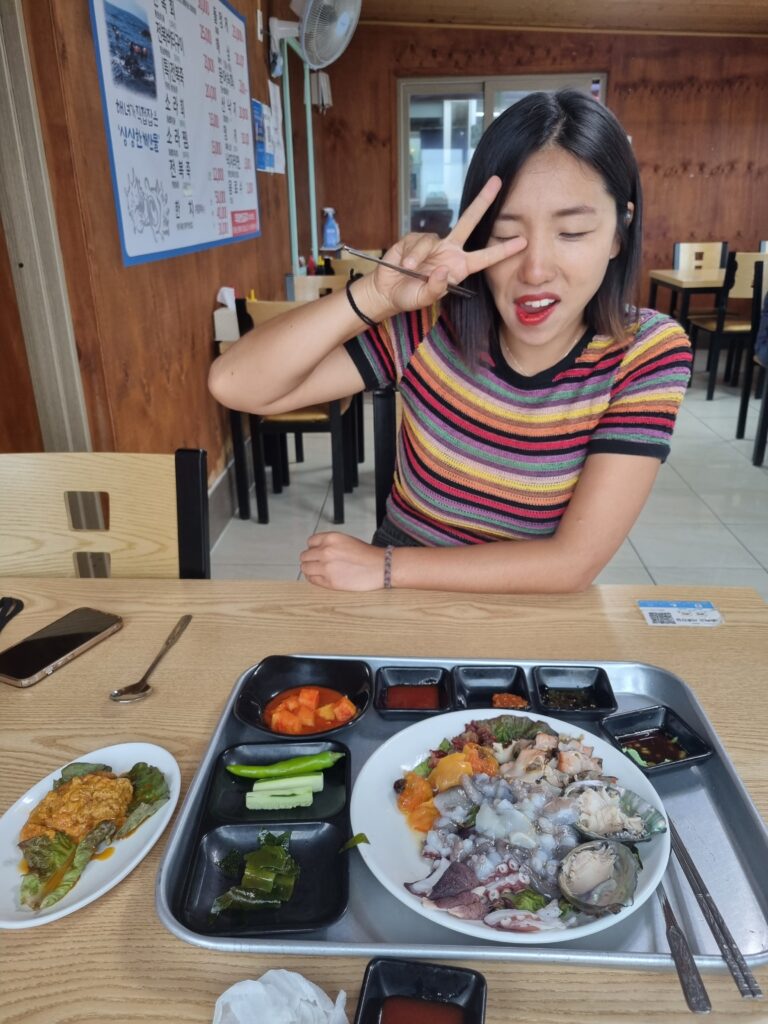
After a morning dive, haenyeo often sell their catch right where they surface, from a cooler on the rocks, a tarp by the harbour, or a little stall near popular spots like Seongsan Ilchulbong and the ports of the east and south coasts (Beophwan, the village with Jeju’s largest haenyeo community, is a classic). You point and they slice: sea urchin (성게) spooned straight from the shell, a conch (소라) cut open in front of you, sometimes an abalone (전복) that is still moving.
It’s the freshest seafood you will ever eat, at a fraction of restaurant prices, and every won goes directly to the woman who dove for it. A few manners:
- Pay the asking price, and please don’t haggle a 70-year-old who just held her breath at 5 metres. It’s already a bargain.
- Bring cash. The women selling off the rocks usually can’t take cards.
- Eat it right there on the spot. This is street-side fresh, meant for the moment you buy it, so skip the idea of saving it for later.
2. 해녀의 집, the village "haenyeo houses"
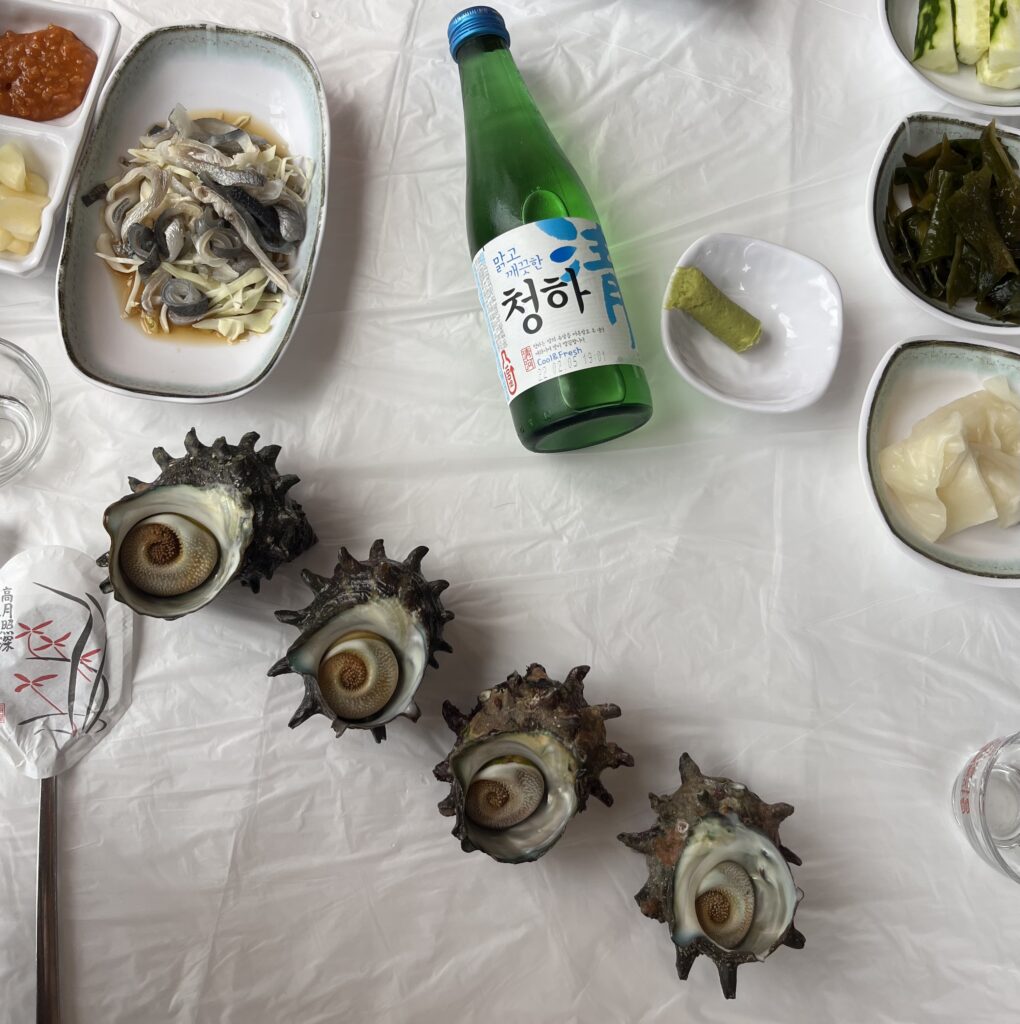
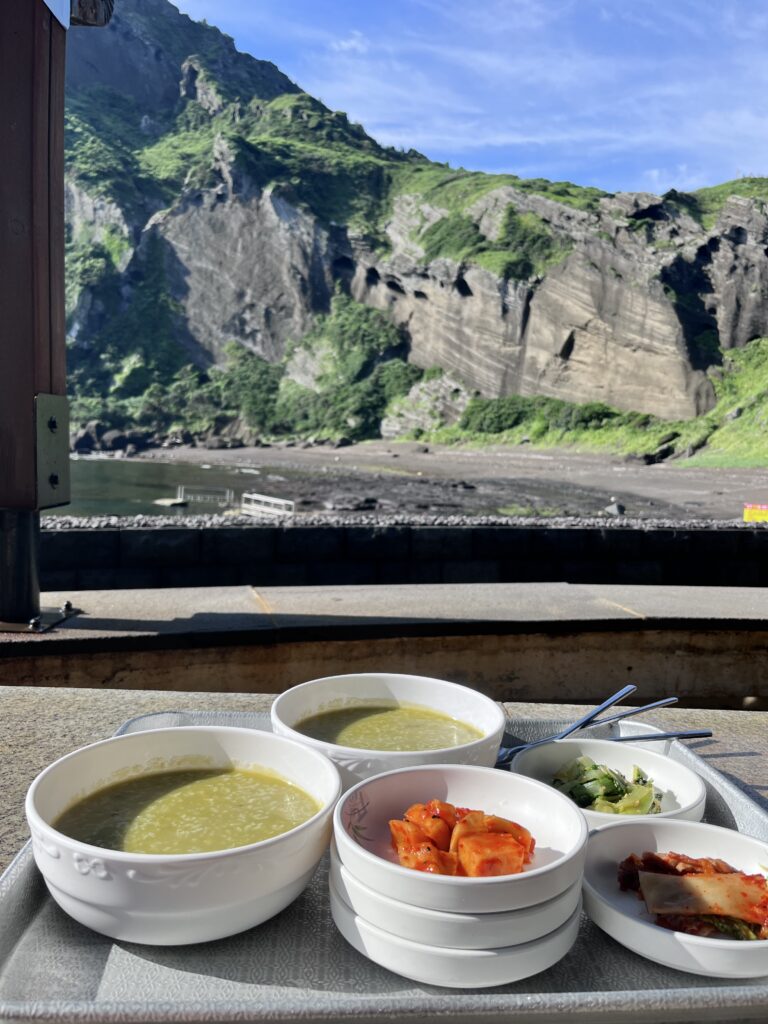
This is the phrase to memorise. A 해녀의 집 (Haenyeo-ui Jip, “Haenyeo’s House”) is a restaurant run by the village’s 어촌계 (eochonge, fishing cooperative), staffed by the very women who dive that stretch of coast, with the profits going back to them. Set your expectations right, though. These are bare-bones places: plastic stools, a few tables, a TV in the corner, often nothing more. People come for the catch, and the plainness is part of the charm. You’ll find them tucked beside harbours and beaches all around the island, almost always serving whatever came up that day.
A few well-known ones to give you the idea (hours and days shift seasonally, so confirm before you drive out):
- 도두해녀의집 (Dodu) sits minutes from Jeju City and is famous for a rich, savoury 전복죽 and a fragrant 성게미역국.
- 섭지해녀의집 (Seopjikoji) is perched above the sea near Seopjikoji and run by actual working divers.
- 애월해녀의집 (Aewol) is on the west coast, with big windows and ocean-view tables.
- 신엄해녀의집 (Sineom), also on the west coast, is run by a friend from my own haenyeo school. The sea view is the real draw, a Stray Kids member once stopped in and posted a photo from here, and there’s a dolphin viewpoint nearby.
- 시흥해녀의집 (Siheung) is on the east coast, near the start of Olle Trail 1.
- 동복리 해녀촌 (Dongbok-ri) is beloved for its sea-urchin noodles and abalone porridge.
Search “해녀의 집” on KakaoMap or Naver Map near wherever you’re staying and you’ll almost always find one. Nearly all of them take cards these days, though cash is always welcome.
3. What to order
전복죽 (abalone porridge) is the signature dish. Slow-cooked rice porridge made with abalone and, crucially, its green innards (내장), which turn the whole bowl a savoury jade colour. It’s comforting and nourishing, the dish Jeju mothers make for anyone who needs strength.
성게미역국 (sea-urchin & seaweed soup) and 성게비빔밥 start with a clean kelp (미역) broth carrying spoonfuls of fresh 성게 (seonggae, sea urchin) that taste delicate, briny, a little sweet. You can also have the urchin over rice as 성게비빔밥. This is peak haenyeo eating in June and July, when the urchin is fat.
보말 (bomal) is the Jeju-dialect word for a top shell, a small, sweet, meaty sea snail. Try it as 보말죽 (porridge), 보말국, or the local favourite 보말칼국수 (hand-cut noodles in a seaweed-sweet broth). It’s humble food and some of the best value on the island.
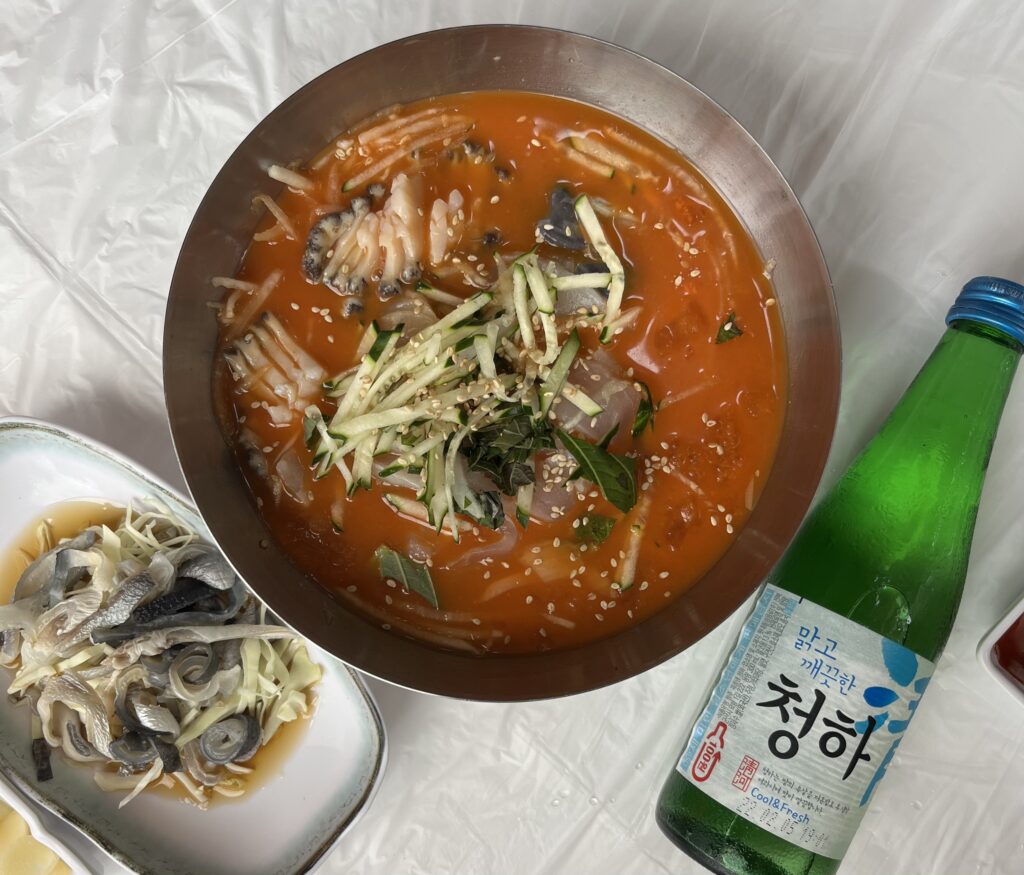
물회 (mulhoe) is summer’s answer to heat: raw fish or seafood (conch, abalone, sometimes 한치 squid) in an icy, sweet-and-tangy chilled broth you drink as much as eat. Order 한치물회 if it’s squid season.
You’ll find 전복 prepared every which way. Beyond porridge there’s 전복회 (sliced raw, sweet and crunchy), 전복구이 (grilled in the shell with butter), and 전복돌솥밥 (abalone hot-pot rice). The Gujwa area is especially known for abalone, though truly wild Jeju abalone has become rare as the sea warms, so ask if that matters to you. And don’t skip 오분자기뚝배기, a bubbling stew of Jeju’s small native abalone.
4. When to eat what
Jeju’s seabed has seasons, and so do the haenyeo:
성게 (sea urchin) is at its best in June and July.
전복 (abalone) has grown scarce in Jeju’s warming waters and is caught far less than it once was. Restaurants still serve it, but much is farmed, so wild-caught Jeju abalone is now a rare find.
보말 (top shell) is best from May to August, when it’s fattest.
소라 (conch) peaks earlier, from March to June.
물회 is a summer dish, the one you want cold when it’s hot out.
Diving itself pauses in the deep cold and during spawning bans, so “today’s catch” really does change week to week. Ask what came up that morning.
5. Make a night of it: 해녀의 부엌
If you want the food and the story together, 해녀의 부엌 (Haenyeo’s Kitchen) turns a meal into theatre. Its two branches run differently, though. Jongdal pairs a short play about the sea women with a hearty buffet of their catch, while Bukchon is a more polished, media-art space with a fine-dining-style course built on the same haenyeo ingredients. Both book out, so reserve well ahead. We cover them in more detail in Where to See Haenyeo on Jeju.
6. Eat it the right way
A meal like this is also the most direct support the tradition has. There are now only about 2,400 active haenyeo left, most over 70, and a 해녀의 집 or a plate bought on the rocks puts money straight into their hands and their village co-op. (The deeper story of why that matters is in The Last Chapter of the Jeju Sea Women Story, and how the next generation is trained in Jeju’s Haenyeo Schools.)
So order generously, eat what’s in season, and try the thing you can’t pronounce. That’s the whole point.
Sources
Sources
What the haenyeo harvest and signature dishes: VisitKorea: Haenyeo Hoetjip and Korea.net Jeju delicacies coverage.
해녀의 집 restaurants: DiningCode listings (도두, 섭지, 애월, 시흥 해녀의집), VisitJeju.
Haenyeo population figures: Jeju Province haenyeo statistics.
A personal note
The meals are my favourite part of all this. I’m training at a haenyeo school and I guide here in English, but the thing I carry home from each season isn’t the diving. It’s sitting on a plastic stool while a diver sets down a bowl of 성게미역국 she pulled up that same morning, telling me half in Jeju dialect what the sea was like out there.
That’s the meal I most want other people to have. So if you’d ever like to eat with an actual diver instead of watching a show, write to me at soraya@vamosajeju.com. I only take a few people at a time. And if you’d rather go on your own, please just go: find a 해녀의 집, order the urchin, and pay her gladly. Come hungry.
