What You'll Find in This Article
우리들은 제주도의 가엾은 해녀들
비참한 살림살이 세상이 안다
추은날 무더운날 비가오는 날에도
저바다 물결위에 시달리는 몸
We are the poor Haenyeo of Jeju Island.
The world knows our miserable lives.
Even on cold, hot, and rainy days,
Our bodies suffer the waves of the ocean.
— Gwansoon Gang(강 관순) , “Haenyeo’s Song” (해녀의 노래, 1932)
Jeju's Sea Women and the Last of a Vanishing Culture
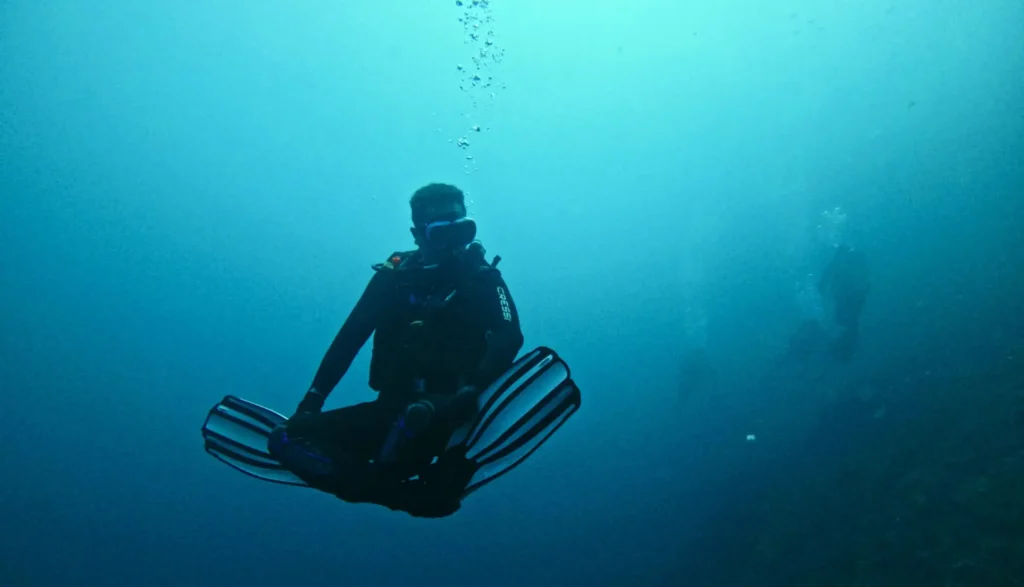
There was a time when I was one with the sea.
Whether it was leading dive trips for underwater tourists while on the clock, or snorkeling and free diving on my own time for fun, there were days when I was on and under the water more than I was out of it. Not counting sleep, of course!
I took pride in my watermanship. How far and how long I could swim, especially with fins on. But I was especially proud, hubristically even, of my free diving skills.
How deep I could go. How long I could stay down. And how well I could manage the cold as I penetrated thermoclines.
Well, this was the early 1990s – a time before most of the world had the Internet as we know it today. Web browsers were just starting to find traction, search engines remained in the lab, and the mobile internet and social media were the stuff of science fiction.
No, in my early 20s, I was a naive big fish in a small pond, blissfully ignorant of a breed of professionals whose feats underwater outclassed mine in every measure: the Haenyeos of Jeju Island.
But life took over. A real job in a city, far from the ocean. Building a family with a loving woman and precious children. And it would be another 20 years before I first discovered the Haenyeo.
And when I did, I made up for lost time, devouring everything I could about these women whose underwater feats in their old age crushed everything and anything I could manage, even in my prime.
But in the unlikely event you are as ignorant as I was and wonder what a Haenyeo is, allow me to catch you up.
Into the Deep: The Reality of Haenyeo Work
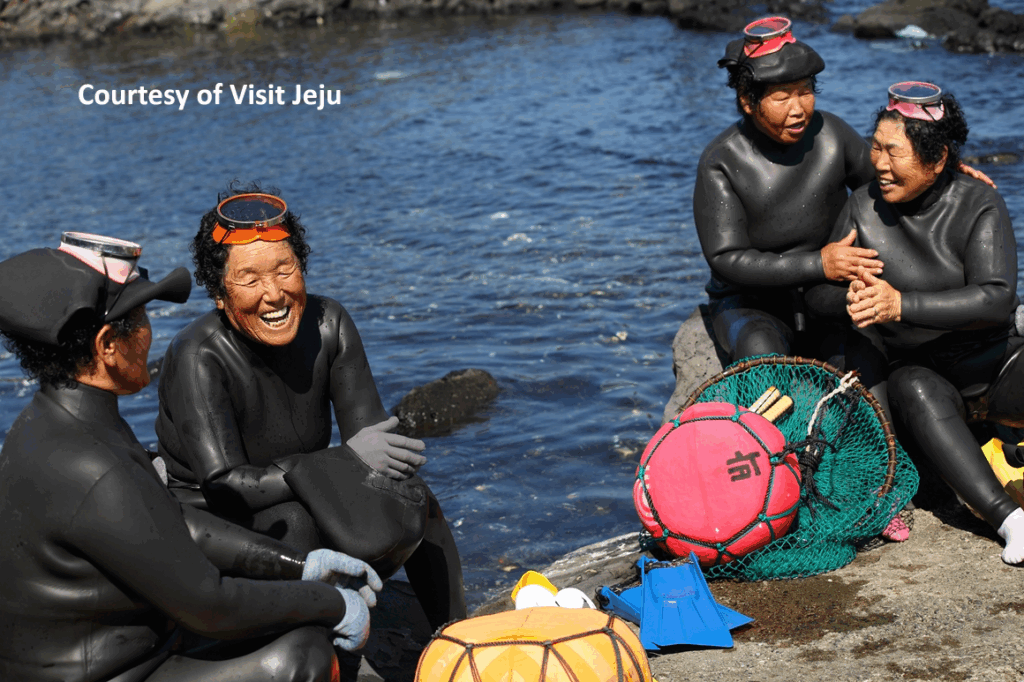
Haenyeo (해녀) means sea woman in Korean.
The Haenyeo represents one of the most remarkable surviving occupational cultures on Earth, with the first written records dating back to 1105 during the Goryeo Dynasty.
In that early record, an administrator of the island had issued an order forbidding Haenyeos from diving naked.
However, the tradition of women divers certainly go further back. How far back, however, is up for speculation.
What is not speculation, however, is that in the modern world, they are a disappearing breed.
Today, less than 3,000 Haenyeos remain, more than 90% of them over age 60. Most of the youngest proficient practitioners are approaching 70. Within a generation, possibly less, this tradition may exist only in museums, documentaries, and the memories of those who witnessed it.
What Haenyeos Actually Do
Let’s start with the basics.
The physical reality of Haenyeo work is difficult for most people to comprehend. I used to be a child of the deep, yet I’m still in awe of what these women can do.
First off, they are virtually all women, and most come from the island of Jeju.
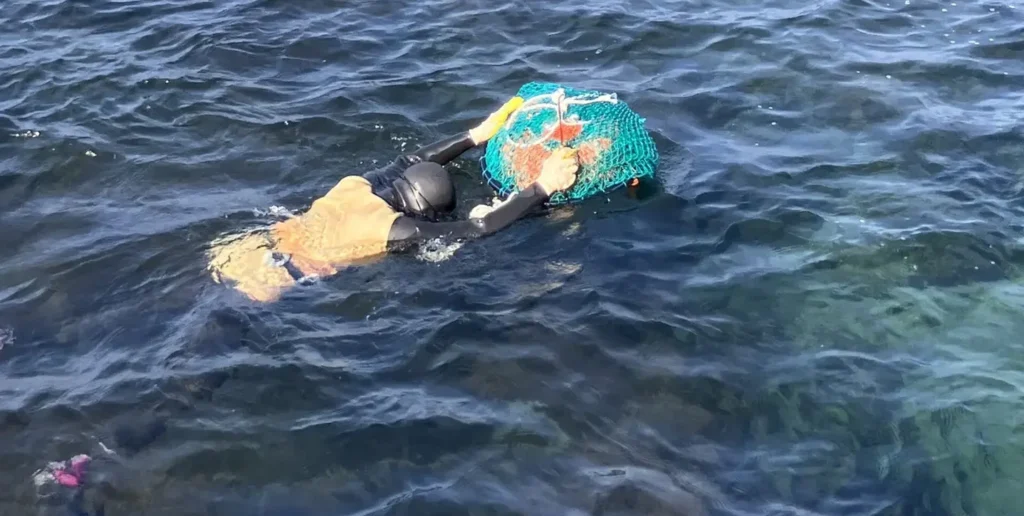
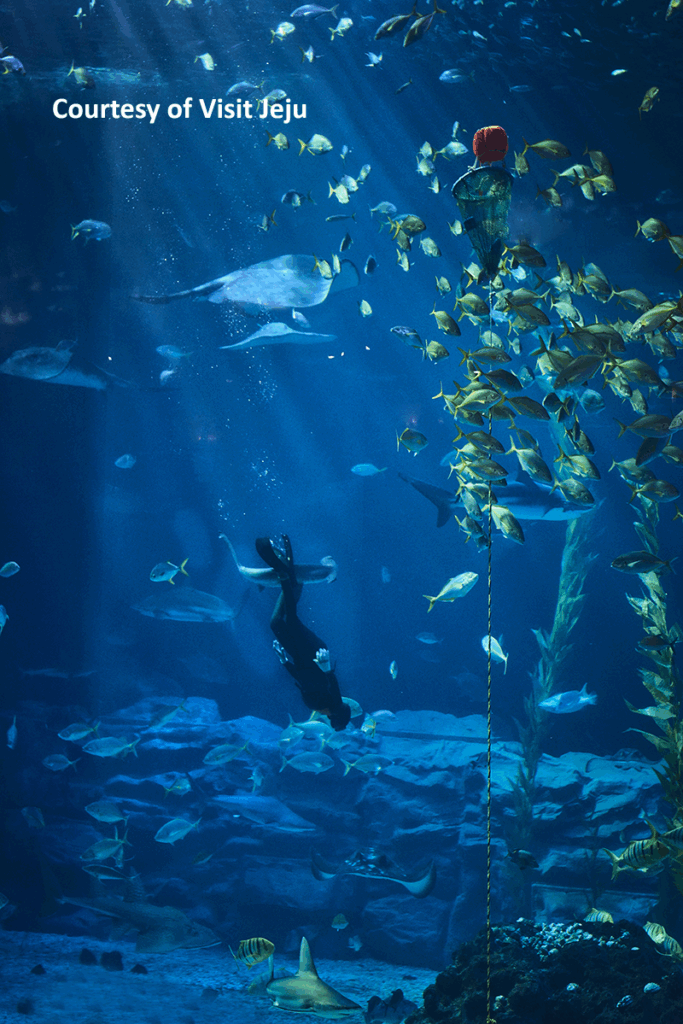
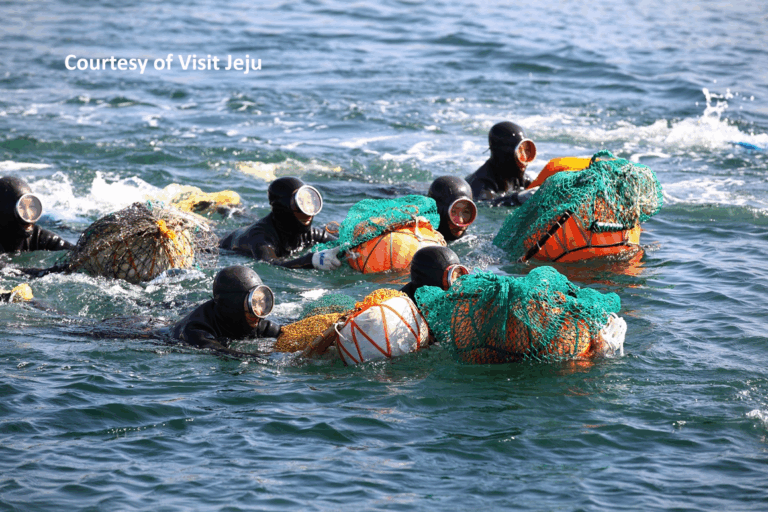
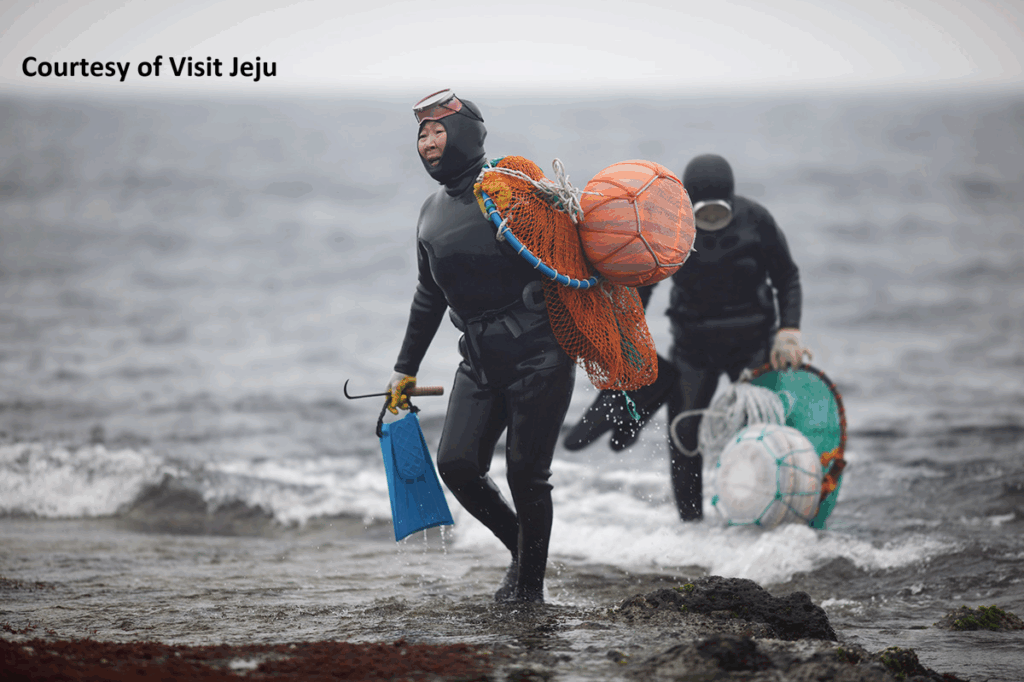
These female free divers harvest seafood: abalone, sea urchins, conch, octopus, sea cucumbers, and various seaweeds from the waters surrounding Jeju Island. They do all this without any breathing apparatus. No scuba tanks. No lines for air. Just their lungs and their skill.
And boy, can they go deep.
Depending on the diver’s skill level and what she’s looking to harvest, an expert Haenyeo can go as deep as 20 meters. That’s deeper than what rookie scuba divers are supposed to go, with complete life-giving scuba gear!
At these depths, the pressure is as much as 3 times that of the surface. Your eardrums compress, your chest tightens, and the cold water temperature (11-21°C year-round) penetrates even the thickest wetsuit.
At my best, I might have touched 15 meters, but I definitely wasn’t able to linger for than a few seconds, in water temperatures that were far more forgiving.
But for experienced Haenyeos, when they submerge, they stay there as long as 2 minutes. The most skilled can hold their breath for even longer.
During that time, they must descend, search for target species among the rocks and seaweed, use a blade to pry seafood from rocks, collect it in their net bag, and ascend. When they resurface, they exhale the carbon dioxide in their lungs with a distinctive whistling sound known as sumbisori (숨비소리). This sound is both exhalation and a signal to the rest of her team that all is well.
And then they do all that again. And again.
In a session that typically lasts 3-4 hours, a working Haenyeo makes as many as 80 dives per session. Some work one session daily; others, if young and strong enough, work two sessions – one in the morning, one in the afternoon. Calculate that: 120-160 breath-hold dives to 10-20 meters depth. Daily. For decades.
Many of these women, when they were younger, continued to dive even when heavily pregnant, sometimes until just before going into labor. Whether they would continue to do so today would remain unknown, because most of the Haenyeos are way past child-bearing age.
As an amateur, I could hold my breath for just over a minute, usually to about 10-12 meters. Professional free divers train for years to achieve breath holds approaching two minutes.
Haenyeos beat all that while performing manual labor underwater in cold water, sometimes carrying an unborn child. They do it day in, day out, well into their seventies and eighties. They do it because it’s their job, their livelihood, their identity.
The Hierarchy of Skill
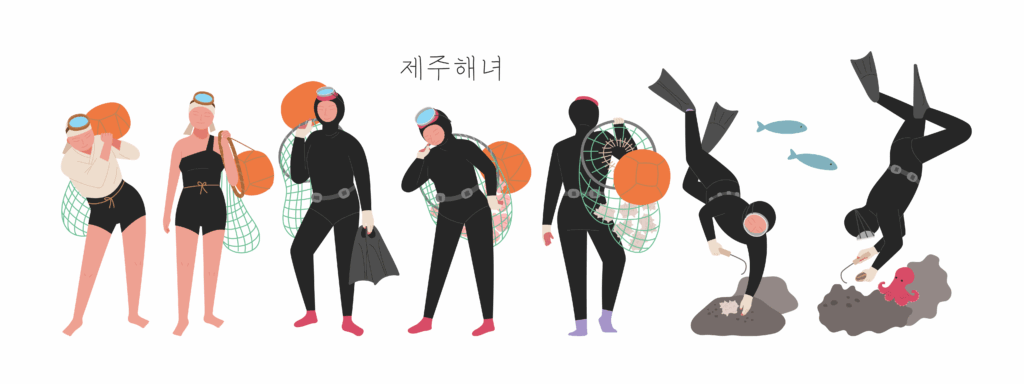
Haenyeo society has always recognized gradations of expertise:
- Hagun (하군): Lower-level divers, capable but not expert. They work 5-10 meters deep, make adequate earnings, but haven’t yet developed the lung capacity and skill for deeper water.
- Jungun (중군 ): Mid-level divers, experienced and competent. 10-15 meters depth, good earnings, respected within the community.
- Sangun (상군): The elite. These women dive 15-20+ meters, deeper than the 18 meter maximum recommended depth for new scuba divers. These senior Haenyeos can hold their breath over two minutes, and harvest premium species (like abalone) that fetch high prices. Sangun status is earned, not given. It represents decades of experience, extraordinary physical conditioning, and deep knowledge of the sea.
This hierarchy is fluid throughout a woman’s career. A young hagun might become a sangun in her thirties. An aging sangun in her seventies will eventually drop to jungun or hagun as her physical capacity declines. If she also happens to be the Daesanggun (대상군), the leader of her diving group, she may also step aside to let the group elect a new leader. There’s no shame in this regression – everyone understands that age takes its toll on even the strongest divers.
Elderly Haenyeos who can no longer dive at depth work in halmang bada (할망 바다) – “grandmother’s sea” – shallow coastal areas reserved for older divers. They harvest what they can, maintain their dignity, and stay connected to their identity.
But eventually, they stop diving altogether. And Jeju loses another link to its past.
The Bulteok: Early Democracy by Fireside
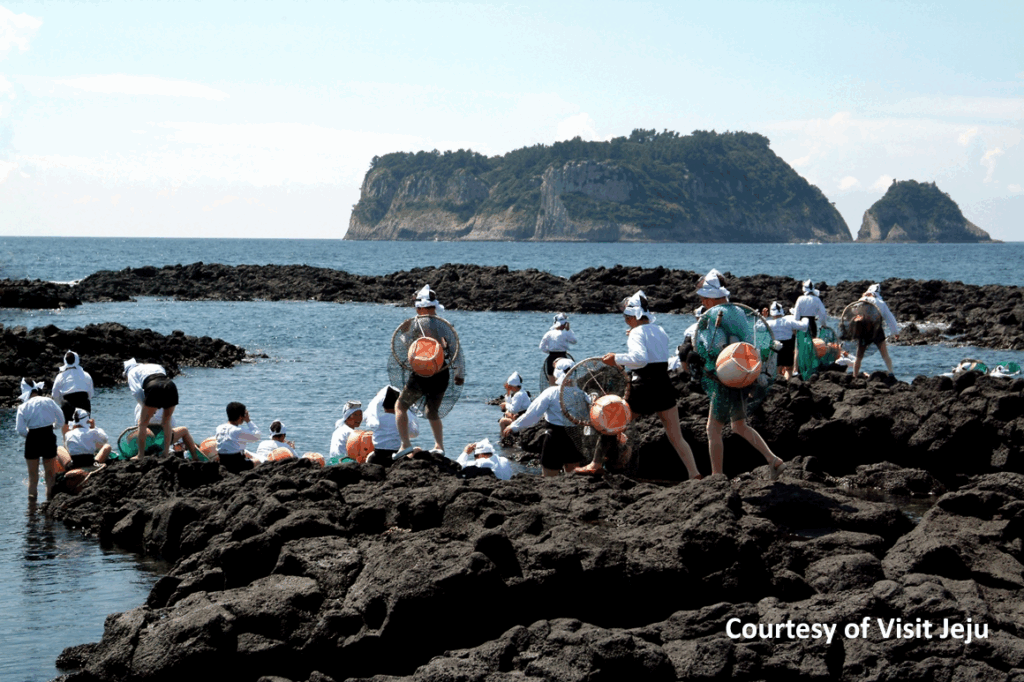
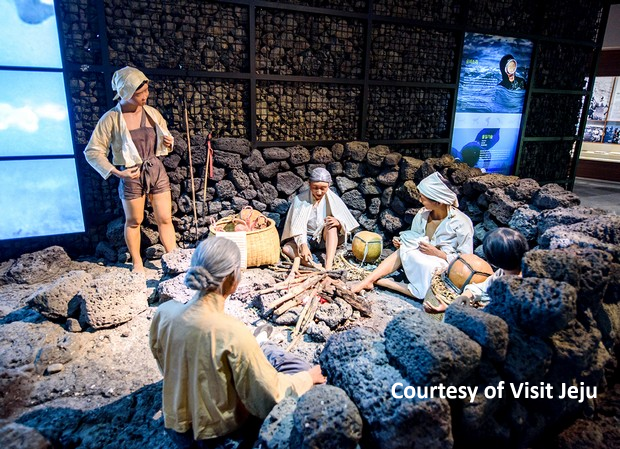
Before and after diving, Haenyeos used to gather at the bulteok (불턱), which is a stone enclosure with a fire pit, located on the shore.
When I was walking the Jeju Olleh Trail, I would come across these at the coastal villages all around the island. Many are no longer used, as modern facilities with running water and heat have been built to replaced them.
But the bulteok remains a central part of the Haenyeo psyche.
Originally just a windbreak with a fire to keep divers warm, the bulteok evolved into something far more significant: the seat of decision making for the local Haenyeo chapter.
At the bulteok, Haenyeos make collective decisions about their work and community:
- Which areas to harvest, and when, to prevent over-fishing
- How to divide earnings from collective catches
- Who gets access to premium diving sites
- Discipline for violations of community rules
- Distribution of profits from sales to merchants
Every Haenyeo who uses a particular bulteok has the right to speak, debate, and vote. Decisions are made by consensus when possible, by majority vote when necessary. In most groups, there is usually an elected leader, but in others, there may be no bosses, no formal leaders – just experienced elders whose opinions carry weight based on demonstrated wisdom and skill.
This form of collective decision making and accountability has been called “bulteok democracy” and it’s not a recent innovation. Haenyeos have practiced this form of direct participatory governance for centuries, long before democracy became a political aspiration in Korea.
In a society (especially historical Korea) where women had virtually no voice in public affairs, Haenyeos created their own autonomous spaces where they wielded real power and made consequential decisions.
The Economics of A Matriarchal Culture
Here’s where Haenyeo culture becomes truly radical in world history, especially given the historical timeline, and even more so in the Korean context.
For most of Korean history, Confucian ideology relegated women to the domestic sphere. Women belonged at home managing households, raising children, serving in-laws. The idea of women as primary economic actors was not just unusual; it was transgressive, almost unthinkable in mainland Korean society.
Jeju was different.
The Original Feminists
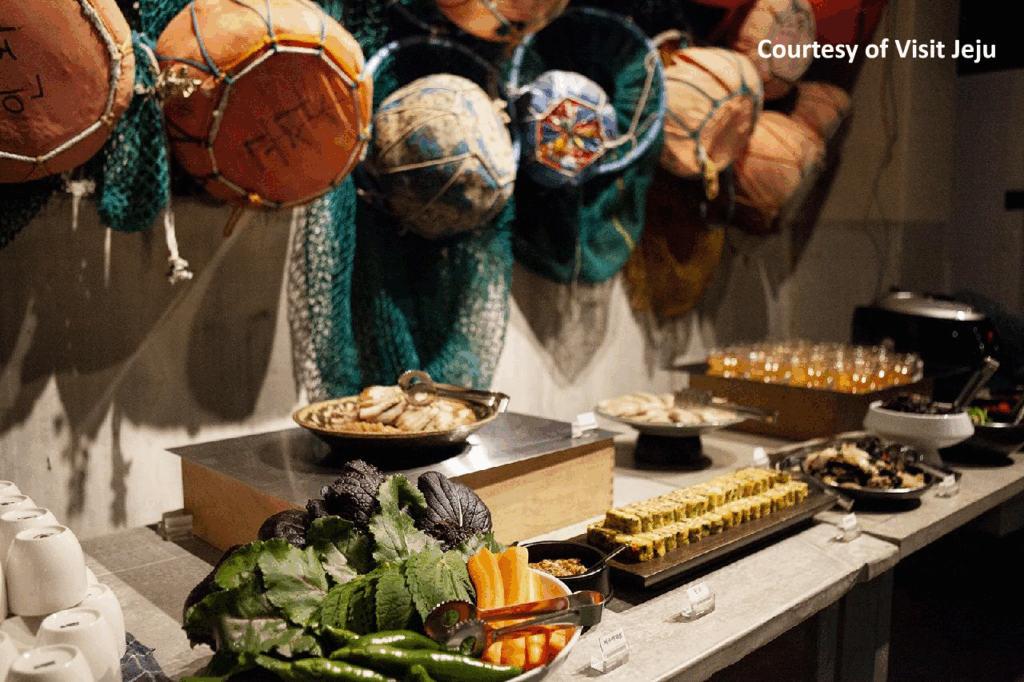
On this volcanic island, agriculture was difficult because porous volcanic rock doesn’t hold water well. Rice, that staple of Asian communities, was especially hard to cultivate.
On the flipside, the surrounding sea was rich with seafood, and since Jeju women excelled at free diving to gather their harvests, they became the primary breadwinners in many families. Not supplemental income, but primary.
The historical record is clear: Haenyeo earnings often exceeded those of their husbands and fathers by significant margins.
Premium seafood, especially abalone, fetched high prices in Korean, Japanese, and Chinese markets. A skilled sangun could earn more in a good season than most men earned in a year of agricultural labor. This economic reality created a social structure radically different from mainland Korea.
Haenyeos controlled their own earnings. They called the shots on major financial decisions. They educated their children, both sons and daughters.
And in a reversal of gender norms rare in other parts of the world, some Jeju men stayed home to manage domestic affairs while the women dove. This wasn’t universal, but it was common enough to establish a different cultural template: women as economic agents, decision-makers, authorities.
These women have been exercising these individual rights for centuries, all the way through to the present day. Taking a global perspective, for much of world history, women rarely held this much autonomy, and the diving women of Korea were the exception that proved the rule.
But what a price they paid.
Chronic ear infections from pressure changes. Arthritis from cold water exposure. Respiratory issues from decades of breath-holding. Body pain from repetitive diving motions.
Yet most Haenyeos continued working into their 60s, 70s, even 80s, as much for identity and comradeship as for income.
Sunset on the last generation
Why Younger Koreans Opt Out
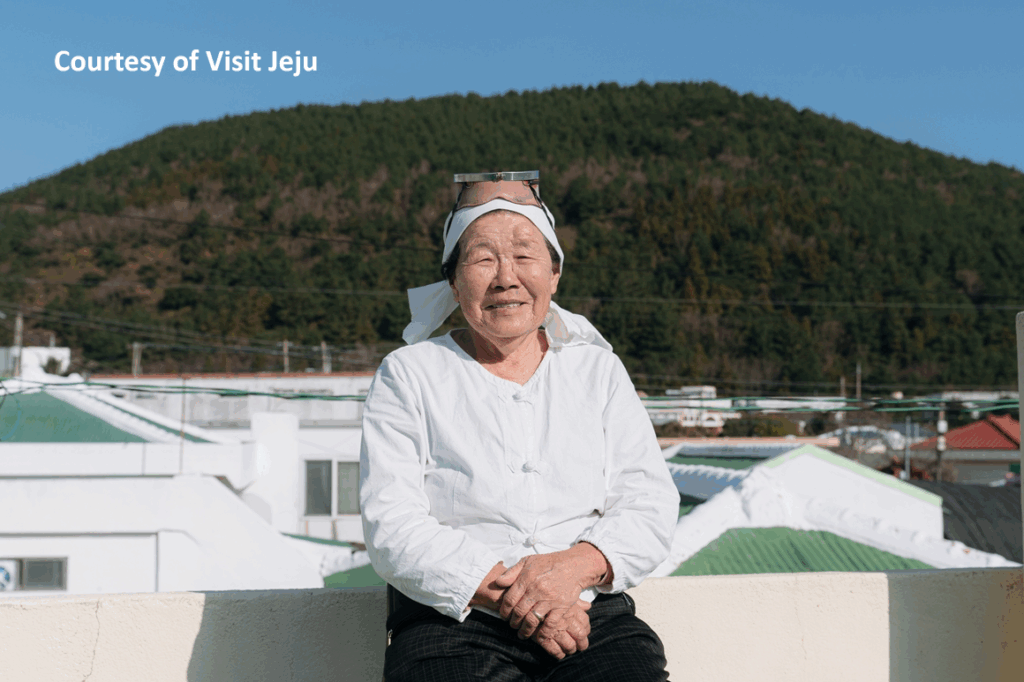
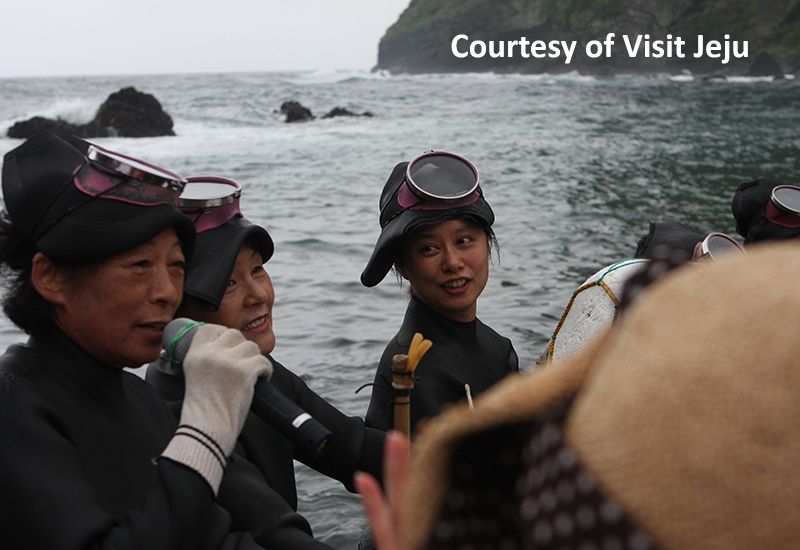
In 2024, no more than 3,000 Haenyeos remain active. This represents a decline of over 60% from the 1960s-70s peak, when an estimated 15,000-20,000 women dove regularly.
The age distribution is catastrophic:
- 90% are over age 60
- The majority are over 70
- Only around 3.4% are under 50. That’s less than 100, of which fewer than 10 are apprentices in their 20s.
Simple demographic math makes clear what this means: within 20-30 years, possibly less, functional Haenyeo culture will cease to exist. There will be museums, exhibitions, perhaps a handful of younger women maintaining the practice as cultural preservation. But the living tradition will be gone.
This isn’t speculation. It’s arithmetic.
The reasons for this demographic collapse are straightforward:
- Economic opportunity: Korea’s extraordinary economic development since the 1960s created abundant alternatives. Young women can work in offices, shops, restaurants, tourism – jobs that don’t require holding your breath 20 meters underwater in cold water 60 times a day. Haenyeo earnings, while still respectable, can’t compete with urban salaries or the comfort of climate-controlled workplaces.
- Physical demands: Free-diving is extraordinarily difficult. It requires years of training to develop the lung capacity, equalization technique, and cold tolerance necessary for productive work. Most young women have neither the time nor inclination to invest in this training when easier alternatives exist.
- Social prestige: Historically, Haenyeos commanded respect for their economic contributions and physical prowess. But modern Korean society, which is heavily influenced by Seoul’s urban culture, valorizes different forms of success: education, professional credentials, urban sophistication. Being a Haenyeo, from this perspective, marks you as rural, uneducated, backward. Few young women want that identity.
- Urbanization: Many young Jeju residents move to Seoul or Busan for education and work. They don’t return. Even those who stay on Jeju often live in cities like Jeju City or Seogwipo, far from the diving communities where Haenyeo traditions are maintained.
- Market changes: Commercial fishing operations, aquaculture, and imports have changed seafood markets. The premium abalone and sea urchin that once commanded high prices now compete with farm-raised alternatives. While wild-caught seafood still brings higher prices, the economic advantage has narrowed.
Put simply: from a rational economic perspective, becoming a Haenyeo makes little sense for a young woman in 21st-century Korea. There are easier ways to earn a living, less dangerous ways to work, more prestigious identities to claim.
Slowing the Inevitable Loss
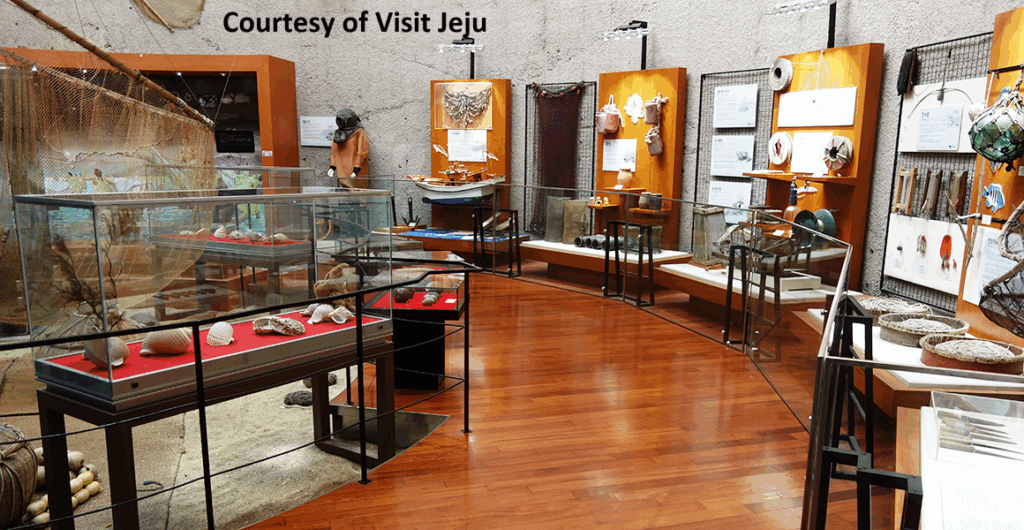
The Korean government and Jeju provincial authorities have committed resources to enshrine and share the history and culture of the Haenyeo, and to delay the inevitable disappearance of their vocation:
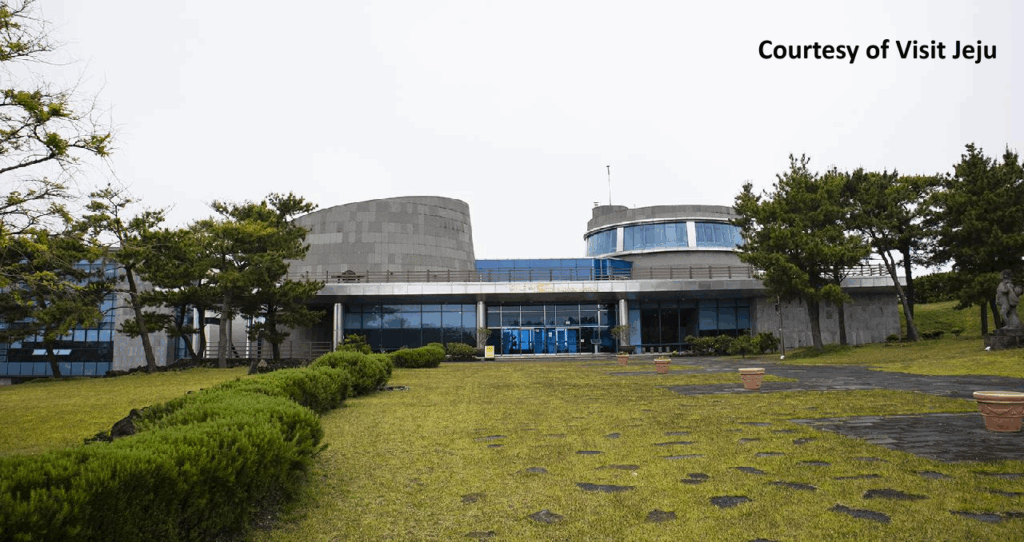
- The Jeju Haenyeo Museum, opened in 2006, documents history and culture. I’ve been there twice and it is a destination well worth visiting. It’s also close to Saehwa beach and the Saehwa 5-day market – the center of the Haenyeo anti-colonial resistance that I previously mentioned.
- Government subsidies support elderly Haenyeos, providing income supplements and healthcare.
- “Haenyeo schools” teach diving skills to younger women who may be interested in learning the craft of the Haenyeo.
- Tourism initiatives showcase Haenyeo demonstrations at several locations, including at Seongsan Ilchubong and Aqua Planet Jeju.
- Academic research has intensified, documenting practices before they disappear.
These efforts are valuable. They preserve knowledge, support elderly practitioners, raise awareness. But they don’t address the fundamental problem: there’s no organic passing of the torch, from mother to daughter, from grandmother to granddaughter.
The Haenyeo schools attract occasional curious students, but few commit to the practice as a livelihood – nor are they always welcomed by a few of the older generation, who hold out hope that their own daughters and granddaughters may yet join the profession. The subsidies support the elderly but don’t incentivize the young. The museum documents a vanishing culture but cannot revive it.
This is cultural preservation in its final phase by documenting the stories, making sure the world knows of its importance, and preparing for its inevitable loss.
Much as we’ve seen the departure of jobs such as typists, stenographers and switchboard operators into the annals of history.
There’s still dignity in the work of Haenyeos, of course. But in under 20 years, maybe even less, it will become but a footnote in the story of Korea.
Before the Final Sumbisori
Haenyeos were women who, for centuries, supported their families primarily through their own skilled labor. They controlled their earnings. They made autonomous economic decisions. They organized collectively to protect their interests. They negotiated cannily with merchants and authorities from positions of relative strength. They passed their knowledge and identity to daughters who would continue the tradition.
This wasn’t common in pre-modern societies. Women worked, obviously. Women have always worked. But work organized around female autonomy and collective self-governance? That was rare. Haenyeo culture represented something genuinely unusual: a space where women were primary economic actors and decision-makers, where female strength and skill were valorized, where matriarchal values shaped social organization.
And now it’s ending.
Not through persecution or prohibition, but through economic development and social change. The same forces that brought Korea from poverty to prosperity, that gave women education and professional opportunities, that created alternatives to backbreaking physical labor, are the same forces that are erasing Haenyeo culture because young women choose lives that are less difficult and taxing on their health.
The forces that gave Korean women education and professional opportunities are the same forces that made the haenyeo’s work unnecessary. There’s no villain in that story.
So what should we, visitors, outsiders, people who will never hold our breath 20 meters deep, do with this knowledge?
First: be a witness.
If you visit Jeju, seek out the Haenyeo. Not just the tourist demonstrations, although those are better than nothing. But the real working divers. They still exist, though you’ll need local knowledge to find them. They dive early morning, before tour buses arrive, at locations not marked on tourist maps.
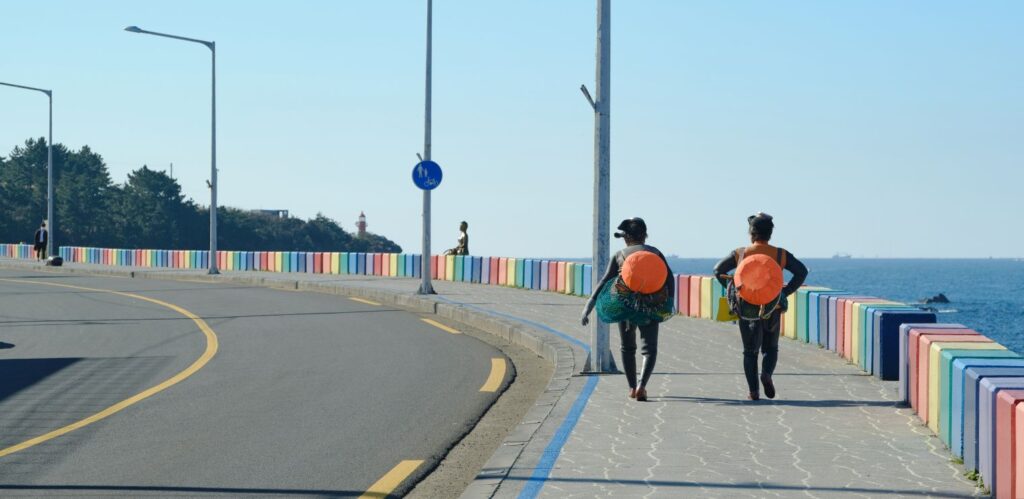
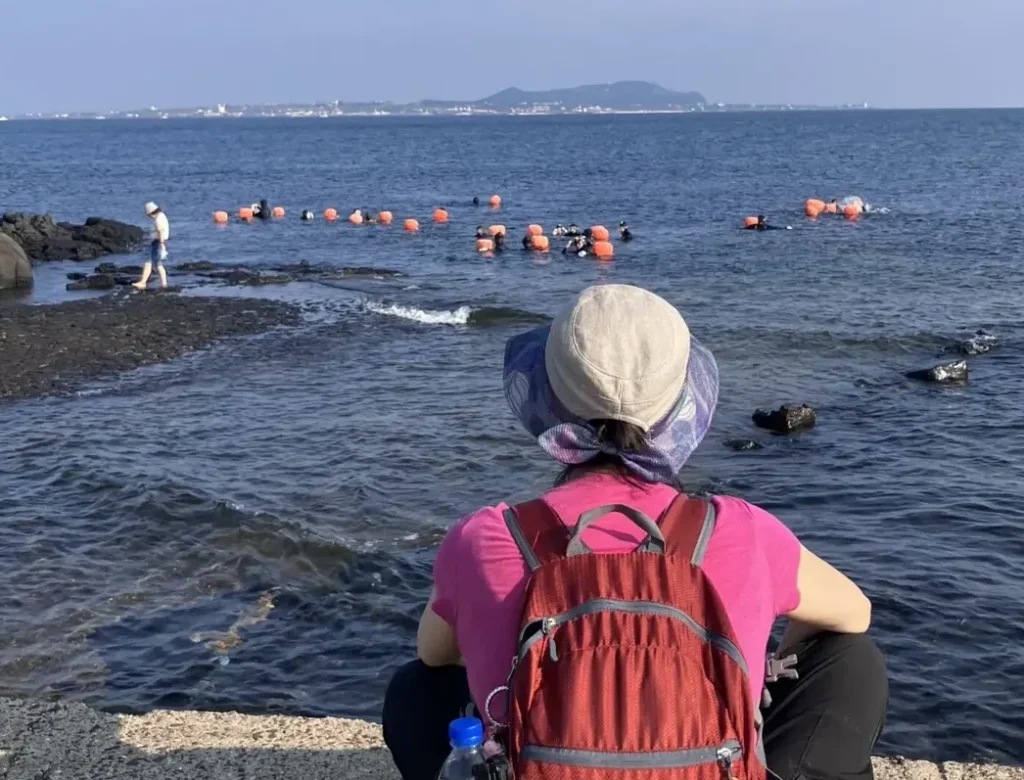
The Jeju Olleh Trails take you through many of these coastal towns where they operate. If you are early enough, you get to watch them enter the water and listen for their sumbisori. If you are there later in the day, you’ll see the wetsuits, weight belts, nets and floats left out to dry. Understand that you’re seeing something that won’t exist much longer.
Second: learn.
- Visit the Jeju Haenyeo Museum and understand that this culture was complex, sophisticated, and irreplaceable. Read the academic literature (much exists in Korean, some in English).
- Read The Island of Sea Women by Lisa See and watch The Last of the Seawomen directed by Sue Kim.
- Walk the Sumbisori-gil – a 4.4 km trail that shares the same path as a segment of Jeju Olleh Trail 21. This trail takes you from the Museum, through farmlands, coastlines, and bulteoks used by the Haenyeo, all the way to Hado, the neighboring village where a walled fortress still stands.
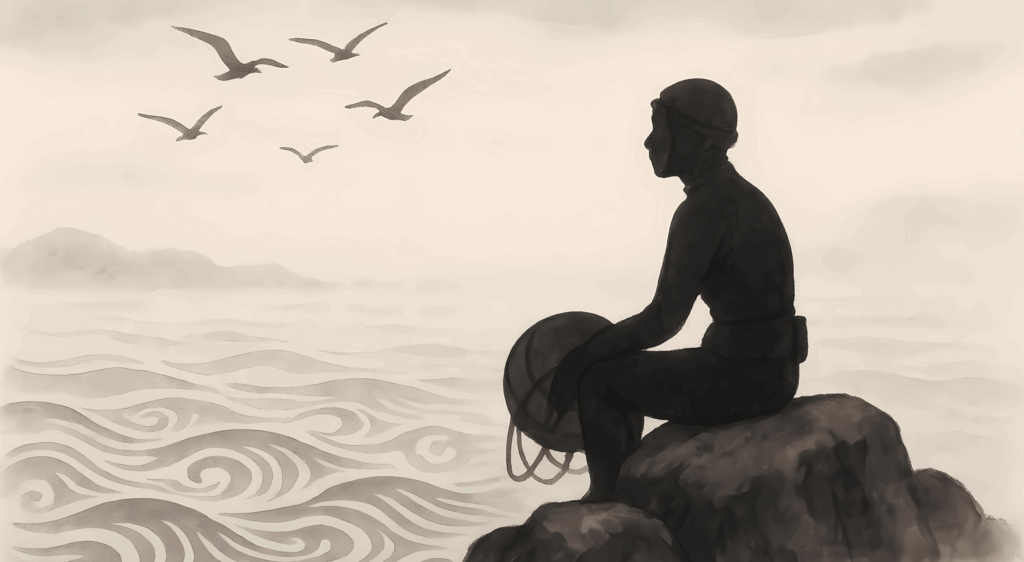
Third: remember. Because what’s being lost is worth mourning. The world will be poorer when Haenyeo culture exists only in museums and memories. Not because “traditional is better” or “progress is bad,” but because diversity of human adaptation. Different ways of organizing work, community, gender relations, spiritual practice, is inherently valuable. And we’re losing one of the most remarkable examples.
The elderly Haenyeos who still dive are in their 70s, 80s, carrying decades of experience in bodies worn by cold water and physical strain. They know they’re the last.
They know their grandchildren won’t continue the practice. Some might be sad about this, while others might be relieved.
I am neither Korean nor female. But I hold the Haenyeos in awe.
I hung up my diving fins half a lifetime ago because life happened and it was easier to stop. For me, anyway.
Most of the Haenyeos never had that choice. They dove because they had to — for their families, their communities, themselves.
In as little as another generation, the last sumbisori will fade and the final bulteok fire will go cold forever.
I am grateful to have been a witness to their endeavors before the final chapter closes.