Lo que encontrarás en este artículo
Every few weeks someone messages me some version of the same dream: “I watched the haenyeo documentary / I saw them at Seongsan / I read about the sea women, how do I become one?”
I get it, because I’m in the middle of that exact question myself. Right now I’m a student at the Hansupul Haenyeo School (한수풀 해녀학교) in Hallim, on Jeju’s west coast: wetsuit, cold water, burning lungs, the whole thing. So this isn’t a post written from a guidebook. It’s the honest version. Yes, Jeju really does have schools where you can learn to dive like a haenyeo. I’ll walk through how the two main ones work, who can actually get in, what it costs, and what a season is really like. There’s also the part the brochures skip, which is that graduating from a haenyeo school does not make you a haenyeo.
First time hearing about all this? Start with Where to See Haenyeo on Jeju y The Last Chapter of the Jeju Sea Women Story, then come back.
The two schools at a glance
한수풀 Hansupul | 법환 Beophwan | |
|---|---|---|
¿Dónde? | Hallim-eup (Gwideok-ri), west coast | Beophwan-dong, Seogwipo, south coast |
Tracks | Intro (입문) and Vocational (직업) | Vocational only (직업) |
Who | Women only, under 50 | Women only, under 55 |
2026 season | Saturdays 10:00 to 16:00, May 2 to Aug 29 (18 weeks) | Weekends, May 23 to Jul 26 (86 hours) |
Spots | about 30 intro, about 20 vocational | about 40 |
Apply (2026) | Mar 16 to 27 (results Apr 3) | Feb 23 to Apr 10 (interview Apr 17) |
Costo | Free (small student fund for snacks and supplies) | Tuition free, ₩180,000 facility fee (₩20k/wk) |
Foreign women? | Yes, explicitly included (intro) | Career-focused; 어촌계 priority |
Idioma | Korean only | Korean only |
Official site |
(2026 figures from the schools’ own notices. Dates and fees change yearly, so always confirm on the official site before planning.)
First, why do haenyeo schools even exist?
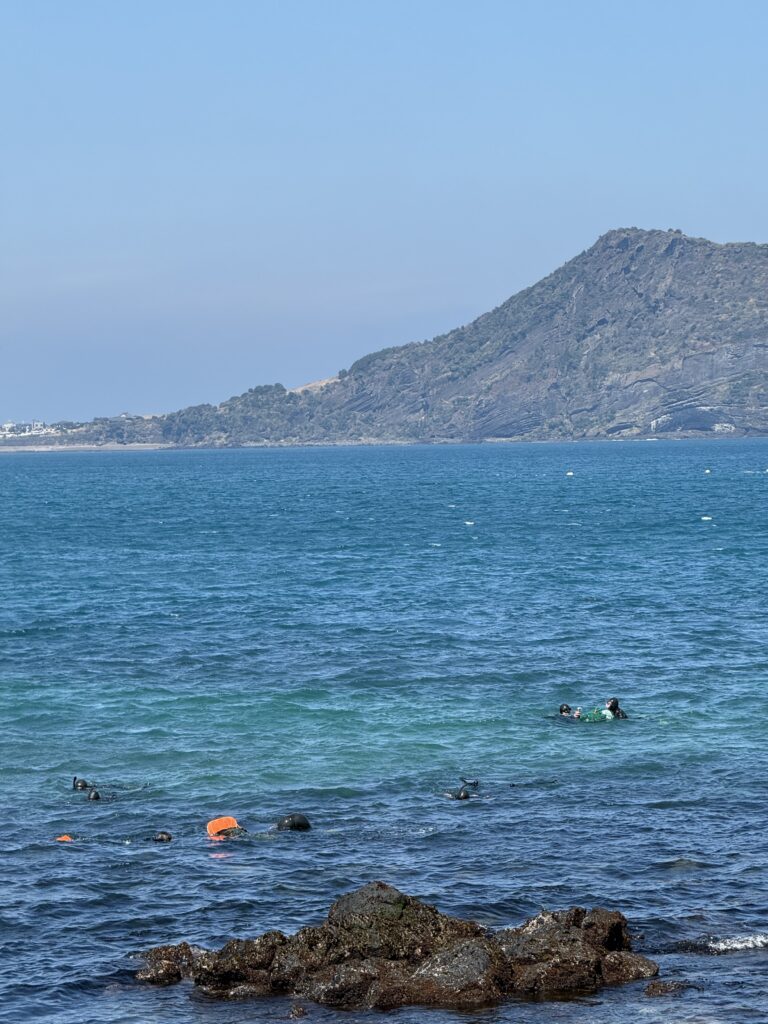
Because the tradition is dying, and everyone knows it. There are now only about 2,400 active haenyeo left (about 2,371 at the end of 2025, down from 2,623 in 2024, and more than a quarter fewer than in 2020). Over 90% are 60 or older, and over 60% are past 70. New recruits barely move the needle: in 2024 just 27 women joined while 157 retired. UNESCO inscribed the culture as Intangible Cultural Heritage in 2016, exactly because it’s vanishing this fast.
The schools are Jeju’s deliberate answer: train a new generation before the knowledge sinks with the last halmang (grandmothers). It works, slowly. Over recent years only roughly 30% of vocational graduates actually go on to register as working haenyeo. That number says two things at once. The schools really do produce new divers, and most students still don’t become one. Hold that thought; it matters.
School #1: Hansupul Haenyeo School (한수풀), Hallim
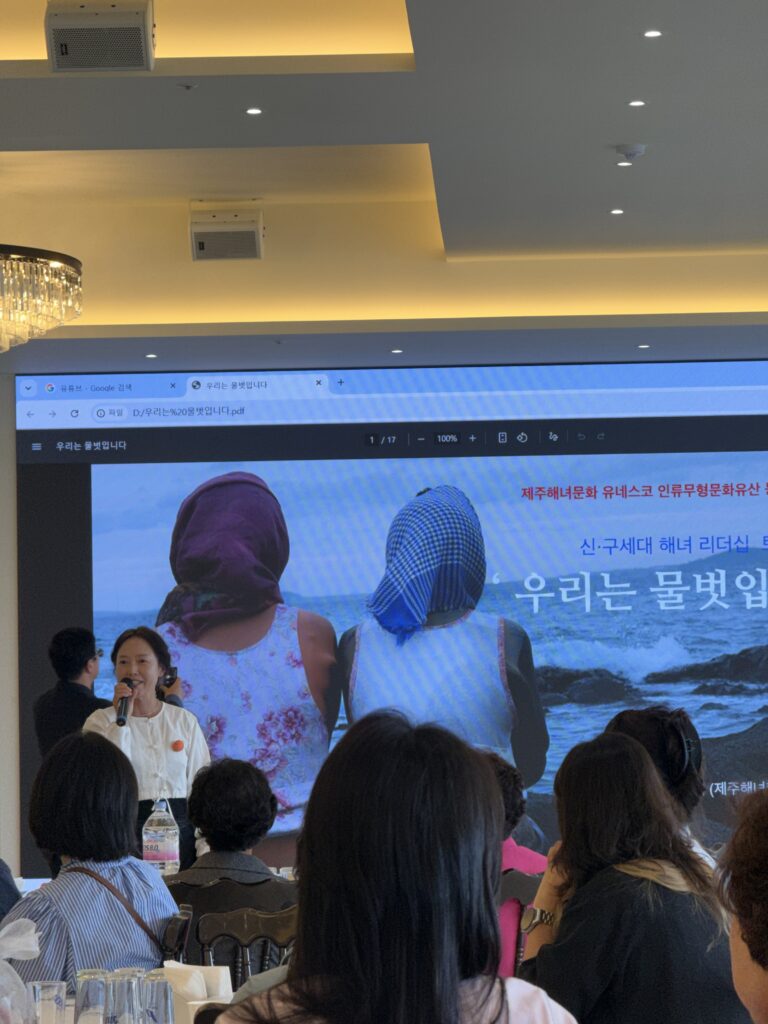
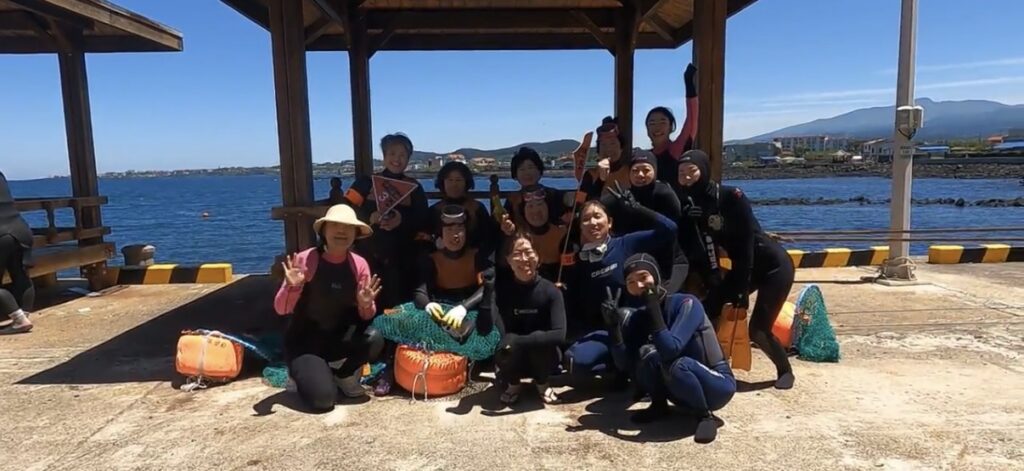
This is mine, so I’ll spend the most time here.
Hansupul opened in 2007 in Gwideok-ri, Hallim, on the west coast. In 2026 it runs from May 2 to August 29, every Saturday, 10:00 to 16:00, for 18 weeks (outdoor sessions shift with the tide and weather). Two very different tracks run at once:
- The 입문양성과정 (Introductory Course) is the one most curious people, and most foreign women, have in mind. It’s open to healthy adult women under 50, from Jeju or anywhere, who are truly drawn to the haenyeo. The 2026 notice spells it out: it explicitly includes women who’ve moved to Jeju and foreign women. About 30 spots.
- The 직업양성과정 (Vocational Course) is the serious “I want this as my job” track. It’s for women under 50 who already live in a fishing village (2+ years) and come backed by a recommendation from the village’s 어촌계장 (co-op head) and 잠수회장 (head of the divers). About 20 spots, a career pipeline rather than a hobby.
Both tracks share three things. They take women only (Hansupul does not select men), every class is entirely in Korean, and the course is free, with no tuition or fee. The only money involved is a small amount the student council collects each week for snacks and shared supplies.
How to apply (2026): applications go up on the school’s site (jejuhaenyeoschool.com) for a short window, March 16 to 27, with results on April 3. Spots are limited (about 50 total) and competitive. Miss the window, wait a year.
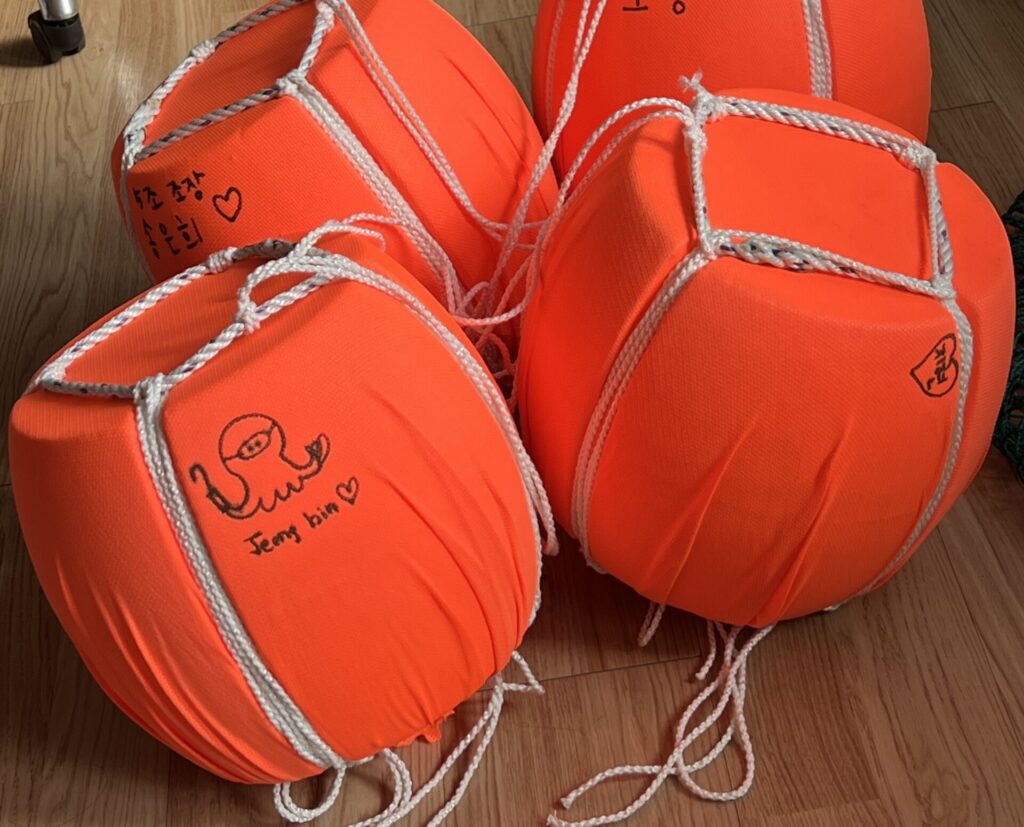
What a season actually looks like: this is no weekend taster. Across 18 Saturdays you do CPR and water-safety training, learn 호흡법 (breath technique) and equalizing, make your own 테왁 (float) and 소중이 (the traditional haenyeo swimsuit), learn to handle the 호맹이 and 빗창 (the divers’ hand tools), study how to read the 물때 (tide tables), hear the island’s history from a university professor, learn the haenyeo songs, and harvest 성게 (sea urchin) and 우뭇가사리 (agar seaweed) alongside the actual grandmothers of Gwideok-ri. There’s even a school sports day, and near the end a 레벨 테스트 (dive distance and breath-hold) to pick interns. The lesson that’s stuck with me most came during a guest class by a veteran haenyeo. Freediving, she explained, is about holding one breath to its absolute limit. Muljil is the opposite. You never push to empty, because the whole point is to surface, breathe, and go back down, over and over, all day long. Learning to hold something in reserve instead of everything changed how I see the entire craft.
A note on language: every class is in Korean. The instruction, the CPR and safety briefings, all of it. And yet foreign women are truly part of it. I have non-Korean classmates, and there are foreign graduates too. So it’s absolutely possible, as long as you go in clear-eyed. You’ll need enough Korean to follow safety instructions in the water, or a reliable bilingual buddy. This is not an English-language program, and for safety that’s not a detail to wing.
School #2: Beophwan Haenyeo School (법환), Seogwipo
On the south coast, Beophwan-dong has the largest haenyeo community on Jeju, which makes it a natural home for training. Beophwan runs a single, serious track, the 직업해녀양성과정 (professional haenyeo course), aimed squarely at women who actually intend to make diving their living.
- It’s open to women under 55 who are healthy enough for the sea. Priority goes to applicants recommended by an 어촌계 (with a commitment to join one), then to local ties, then to the youngest.
- The 2026 season runs May 23 to July 26, weekends, 86 hours total (adjusted around the tides).
- You apply between Feb 23 and Apr 10, with an interview on April 17 and results April 20. Apply in person, by post, or email (haenyeoschool@naver.com).
- The course itself is free, but there’s a ₩180,000 facility-use fee (₩20,000/week) for the Haenyeo Experience Center where it’s held.
- You’ll find the rest at thehaenyeo-school.com.
So the two doors are different. Hansupul has an open introductory course, the realistic option for a curious traveler or new resident. Beophwan is the career track, built for women committed to actually becoming working divers.
"I don't want to enroll, I just want to try it once"
Totally fair, and honestly the right answer for 95% of visitors. Neither school is built for a single afternoon, and both are women-only, but you don’t need to enroll to feel what it’s like to pull on the suit and the 테왁 (tewak, float) and go under.
- Beophwan runs a 물질 체험 (haenyeo experience) for ₩30,000, with wetsuit and tewak rental included. It’s about 2 hours, runs June to October, and has three sessions a day (10:00, 13:00, and 15:30). Even weak swimmers can do it. It’s phone reservation only for 2+ people, with no online booking, so have a Korean speaker call or ask your guesthouse.
- Hado-ri, on the east coast, runs a village 물질 체험 through its 어촌체험마을. It’s about ₩40,000 for roughly 2 hours, runs April to October, usually twice a day, and it sits right beside the Jeju Haenyeo Museum. Sagye, on the southwest coast, runs one too.
- Several haenyeo diving experiences also sell through booking platforms like Klook and Ceetiz if you’d rather book in English in advance. These typically run April to October and include a short training session before you go in with the divers.
Either one is open to everyone, men included, and you finish with cold hands, a huge grin, and a whole new respect for the women on those rocks.
The honest part: a certificate is not a haenyeo
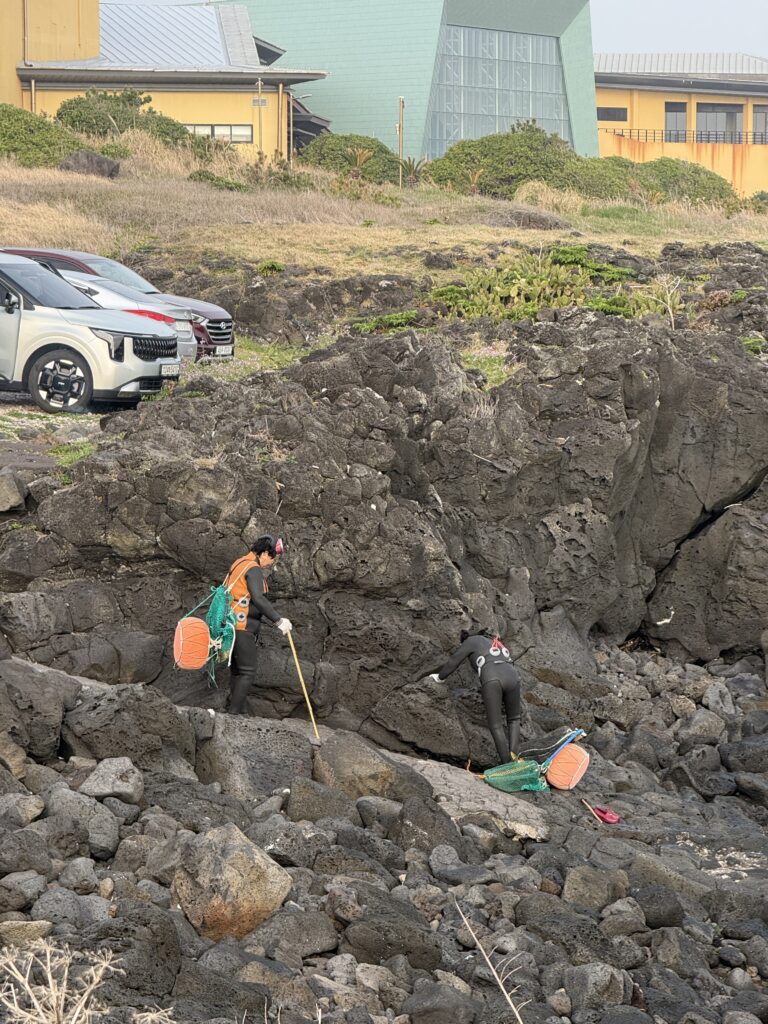
The dreamy version leaves something out. Finishing a haenyeo school, even the vocational track, does not automatically make you a haenyeo. To actually work as one, you need to be accepted into a village’s 어촌계 (eochonge, fishing cooperative), which controls who may harvest which waters. Those memberships are limited, fiercely protected, and tangled up in generations of village relationships, which is exactly why the vocational courses prioritize women already tied to a village. It’s also why only about a third of graduates ever register as working divers.
So what is the school for, if not a guaranteed job? It’s the one structured doorway into the culture. It teaches the skill, earns you the respect of the women who hold the door, and keeps the tradition from vanishing. For most of us it won’t be a career change. It’s the closest you can get to understanding, honoring, and helping carry something that won’t be here forever. And that, to me, is reason enough to keep showing up on Saturdays.
Frequently asked questions
Can a foreigner become a haenyeo or join a haenyeo school?
Yes. Hansupul’s introductory course explicitly includes foreign women (I have non-Korean classmates, and there are foreign graduates too). The catch is that all instruction is in Korean, including the safety and CPR briefings, so you need enough Korean to follow along safely or a reliable bilingual partner.
Do you have to be a woman to attend?
The schools take women only (Hansupul under 50, Beophwan under 55), so men aren’t admitted. Diving itself isn’t strictly women’s work, though. Jeju still counts a few male divers, called 해남 (haenam), just 16 of them among 2,623 haenyeo in 2024, and almost all come from a haenyeo family or have long roots in their village. That points to the factor that matters most here. For a diver of either gender, belonging to the village community and its 어촌계 counts for more than anything else. If you’re a man, or you only want one afternoon in the water, book the casual 물질 experience instead.
How much does haenyeo school cost?
Hansupul charges no tuition or fee. The only money involved is a small weekly amount the student council collects for snacks and shared supplies. Beophwan’s course is also free but adds a ₩180,000 facility fee (₩20,000/week). The casual visitor 물질 experience runs about ₩30,000 to ₩40,000 for roughly 2 hours.
When can I apply (2026)?
Hansupul takes applications March 16 to 27 on its site, with results April 3 and the season running May 2 to Aug 29 (Saturdays). Beophwan takes them Feb 23 to Apr 10, with an interview April 17 and the season running May 23 to Jul 26 (weekends). Dates shift yearly, so check the official sites.
If I finish, am I a haenyeo?
No. Working as a haenyeo also requires being accepted into a village 어촌계 (fishing cooperative), which is limited and hard to enter. The school teaches the skill and the culture; it doesn’t hand out the job.
I only have one afternoon. What should I do?
Book the Beophwan 물질 experience (about ₩30,000, roughly June to October) or a Klook haenyeo diving experience (April to October). Two hours is enough to feel it.
Sources
A few of the specifics above come straight from official notices and public data, so you can check them yourself:
- Hansupul Haenyeo School, 2026 intake notice and schedule, at jejuhaenyeoschool.com
- Beophwan Haenyeo School, 2026 course notice, at thehaenyeo-school.com
- Beophwan haenyeo (물질) experience, at VisitJeju: Beophwan Haenyeo Experience Center
- Hado-ri and other village 물질 experiences, via VisitKorea (대한민국 구석구석)
- Haenyeo population and age data, from Jeju Province haenyeo statistics and the Jeju gender-aware statistics system
A personal note
I’ll be honest: I’m writing this from inside it. I’m a student at Hansupul right now, and most Saturdays I come home cold, salt-stung, and a little stunned, because the women teaching me are in their seventies and they still out-dive me without breaking a sweat. I’ll probably never be a “real” haenyeo. The eochonge may never have room for me, and honestly that’s okay. I’m not in it for the certificate. I’m in it because I can’t live on this island and watch something this extraordinary slip away without at least learning to hold my breath beside them.
What I puede do is hold the door open a crack for other people. I guide here in English, and I already take a few travelers at a time to really meet a haenyeo: to sit with her, hear her story in her own words, and share what she pulled from the sea that morning. It’s small and unhurried, nothing like a 20-minute show. I’m shaping these meetings into a proper program that’ll go live here on the site soon.
If you’d like to join one while you’re on Jeju, or just hear when it opens, write to me at soraya@vamosajeju.com. Come meet them while they’re still here. I think it’ll end up being the part of your trip you can’t stop talking about.
