What You'll Find in This Article
Living in Jeju, tangerines are everywhere. They’re in every convenience store, piled high at every market, gifted by neighbors, and honestly sometimes I take them for granted.
But recently I visited Geumdongi’s Tangerine Farm in Seogwipo for a proper picking experience, and it reminded me why this is something every visitor should do at least once.
This isn’t just a tourist activity. Eating a tangerine 30 seconds after picking it, with the smell of the citrus in the air, standing in an orchard with Hallasan visible in the distance, is honestly one of the purest pleasures Jeju offers.
I’m not being dramatic. It’s that good.
How Tangerine Picking Works
Why Jeju Tangerines Are Different
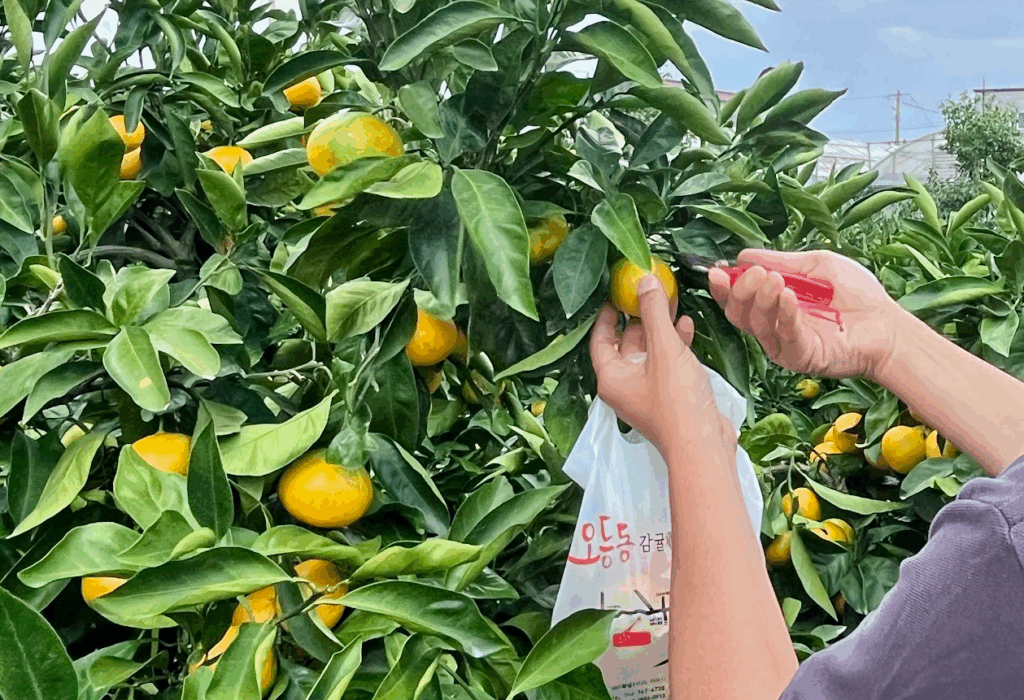
The format is simple. You pay an entrance fee (usually ₩5,000-10,000 per person), and the farmer gives you a basket and scissors. They may take you out to the orchard and show you how to clip your tangerine without damaging the tree.
Then you’re set loose on your tangerine buffet for about an hour. Pick and eat as many tangerines as you want right off the tree.
When you’re done, you fill a bag to take with you, usually 1-2kg depending on the farm.
Most people easily eat 5-10 tangerines with no effort at all.
The smell of the fruit is intoxicating, like an air freshener that only nature can make.
The trees are loaded with fruit in peak season; you’re surrounded by orange orbs hanging heavily on branches.
Look for signs that say 감귤체험 (gamgyul che-heom). That means tangerine picking experience. You can search most on KakaoMap or NaverMap, but some farms are informal family operations that only open during harvest season. If you show up and one isn’t open, just remember you are on island time and go to the next one.
Jeju produces about 90% of Korea’s tangerines. The volcanic soil, ocean climate, and abundant sunshine create ideal conditions. Korean tangerines, particularly Jeju varieties, are sweeter and less acidic than most Western mandarins. There’s a reason Koreans go crazy for them.
The varieties you’ll encounter:
제주 감귤 (Jeju gamgyul): The classic. Small, easy to peel, seedless, intensely sweet with a slightly tart finish. This is what most farms offer for picking experiences.
한라봉 (Hallabong): The fancy one with the distinctive bump on top. Larger, very juicy, named after Hallasan because the bump looks like the mountain peak. Season is January through March.
천혜향 (Cheonhyehyang): Incredibly aromatic with a honey-like sweetness. The name literally means “heavenly fragrance.” Also January through March.
These premium varieties are expensive in Seoul and mainland Korea, but much more reasonable on Jeju during harvest season.
My Experience at Geumdongi's Tangerine Farm
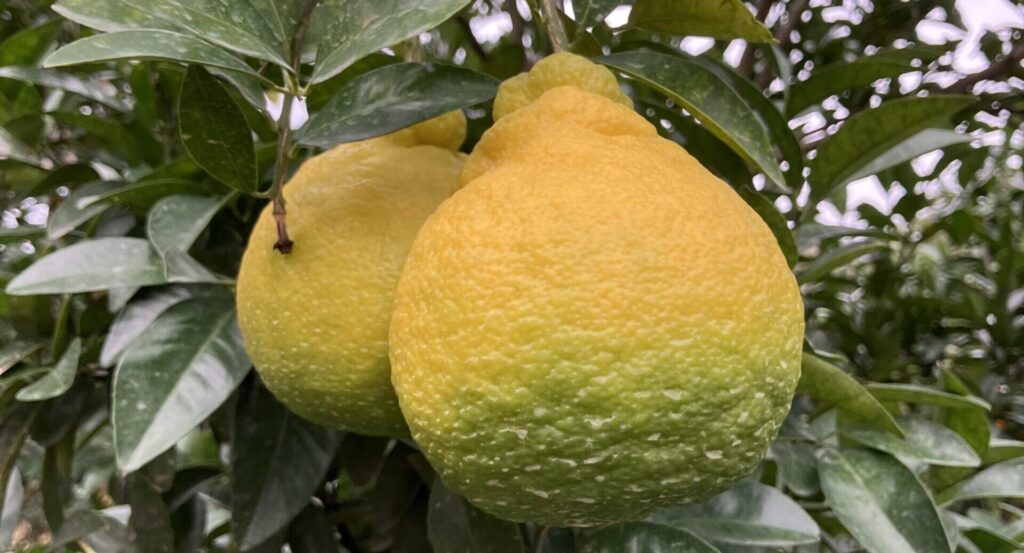
I went to Geumdongi’s Tangerine Farm (금동이네 귤농장) in Seogwipo recently, and I have to say, this place is special. It’s located at 1994 Gangjeong-dong, easily accessible from downtown Seogwipo.
The first thing I noticed was the terraced grove. Unlike flat tangerine orchards, the rows here are stacked from top to bottom on a hillside. It’s impressive to look at, and apparently this structure helps with drainage and contributes to the tangerines’ high sugar content. The slope is steep though, and they don’t open on rainy days for safety reasons, so check the weather before you go.
And if you’re traveling with children, an adult should definitely watch over them.
But here’s what makes this farm different: it has history. A lot of it.
This orchard has been cultivating tangerines that were once presented as tribute to Korean kings during the Joseon Dynasty. It’s even depicted on the Tamna Sunryeokdo, an old historical map of Jeju.
The owner explained all of this while showing us the different varieties and the optimal way to clip the fruit. It wasn’t just a fun experience, I actually learned things about tangerines I didn’t know, and I live here!
If you do not speak Korean, however, you might be missing out on the history lesson, but the you’re definitely missing out on the juicy fruits!
The tangerines themselves were sweet and plump, completely different from the ones I usually buy at the supermarket. The flavor was so addictive that I kept picking one after another. Freshness really is everything.
During the experience, I ate as much as I could. Then picked another 3 kg (6.6 lbs) to take home – a whole box.
I also bought a 5kg box and sent it to my mom’s home via courier in a city northwest of Seoul. Since they ship directly from Jeju, it’s cheaper and much fresher than buying tangerines at a fruit store in Seoul.
My mom shared her loot with with her friends and said they were so delicious she wanted to order more, so I sent her the farm’s business card.
When to Go
Tangerine season runs from November through March, with different varieties ripening at different times:
October: Early tangerines (조생귤) start appearing
November-December: Classic Jeju tangerines (감귤) at peak. Most farms open.
December-January: Peak harvest season. Best selection, most farms operating.
January-March: Premium varieties such as hallabong, cheonhyehyang, and Red Hyang.
March-April: Late season. Fewer farms open. In May, greenhouse tangerines become available, but these usually do not offer picking opportunities.
Tip from Ed, my podcast co-host: if you’re going to do this, schedule it for the beginning of your Jeju trip. That way you can eat your harvest throughout the rest of your stay instead of trying to either leave the leftover tangerines behind, or cram them into your luggage on the last day.
Where to Go
Tangerine farms with pick-your-own experiences are scattered across Jeju, but the Seogwipo area in the south has the warmest microclimate and best growing conditions. That’s where most of the good farms are. Or just search in Naver or Kakao Maps.
If you want a recommendation, I’d say Geumdongi’s Tangerine Farm is worth the trip. Not just for the experience but because it’s a real working farm with history, not just a tourist photo op. The terraced orchard is beautiful and the tangerines are genuinely excellent.
But honestly, most farms offer a similar experience. The important thing is just to do it. Walk among the trees, test different tangerines, eat your fill.
Why Everyone Should Try This Once
I know “go pick fruit” sounds like a minor activity compared to climbing Hallasan or watching dolphins. But there’s something about standing in an orchard, sun-warm tangerine in your hand, Hallasan in the background, that just… feels like Jeju. It’s simple. It’s real. And you’ll remember it.
After my experience at Geumdongi’s, I finally understood why this orchard was once a tribute to the kings of the Joseon Dynasty. The quality really is that good. If you’re visiting between November and March, don’t skip this. It’s one of the purest Jeju experiences you can have.
Ready to start planning your own trip to Jeju? Our Trip Planner can help you flesh out your own custom itinerary!
