
What You'll Find in This Article
When visitors search for Jeju accommodations online, they usually see pricey hotels and resorts. But Koreans traveling to Jeju choose very different options. Let me show you the accommodations we actually use, the ones that give you better value and a more authentic experience.
Where Should You Stay on the Island?
Location matters more than accommodation type. Here’s how to think about different parts of Jeju:
Jeju City (North): The main city has two different areas. Old Town Jeju where I live has older buildings and a quieter neighborhood feeling. New Jeju has high-rise apartments, the Hyatt hotel, and more restaurants and cafes. It looks more like Seoul. If you need convenience and lots of dining options, stay in New Jeju. If you prefer a calmer atmosphere, Old Town is better.
Seogwipo (South): The southern coast is more spread out with beach towns along the shore. It’s less urban than Jeju City, so you get a different, more relaxed coastal feeling.
Beach areas: You can find beach accommodations all around the coast. They cost a bit more, but you get ocean views and beach access.
Mid-mountain: These areas are quieter with forest surroundings and cooler weather. Less convenient for touring, but very peaceful.
If you have a rental car: Some visitors like to circle the island, with one night in the north, one night in the east, south, then west. This works well if you don’t mind changing hotels every day. But if you prefer to unpack and settle in, choose one or two bases and take day trips from there.
Hostels – For Young Backpackers
Dorm beds cost around ₩20,000 ($20) per night. These are the same as hostels anywhere, with bunk beds, shared bathrooms, common spaces. Good for young travelers and backpackers, but most Korean visitors prefer private rooms.
Hotels – Budget Rooms in Great Locations
These older Korean-style hotels, also called motels, cost ₩25,000-40,000 ($20-30) for a private room. You’ll find them in excellent locations, near Dongmun Market, close to Jeju City Hall, and in some neighborhoods where locals actually live.
The rooms have traditional Korean wet bathrooms where the whole bathroom gets wet when you shower. This is normal in Korean homes, and it makes it easier to clean. You’ll get hand towels instead of big bath towels. The design is from before Jeju had many international visitors, so everything is very Korean-style.
For budget travelers who want private rooms in good locations, these are the best value. My cohost Ed wrote an article about wet bathrooms, which actually, I didn’t know was an unsual thing until I started traveling.
Standard Hotels – The Comfortable Middle Option
₩70,000-100,000 ($50-75) gets you a modern three-star hotel with Western-style bathrooms, good amenities, clean rooms, and nice views. This is what most Korean families or friend groups choose when they travel to Jeju because they are comfortable, convenient, and reliable.
Pensions – Houses with Kitchens
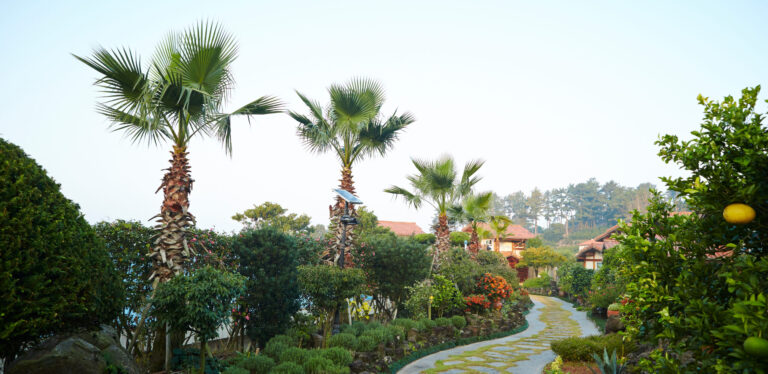
Pension is a Konglish word for rental houses or apartments, usually near the beach or in forest areas. The most important difference from hotels: pensions have full kitchens where you can cook your own meals.
Korean families really like pensions because you can cook together, have a dining table, and spread out more than in hotel rooms. If you’re traveling with 4-5 people, a pension often costs less than booking multiple hotel rooms.
Prices depend on location and size. Beach pensions cost more than forest pensions. You’re paying for space and cooking facilities, not trying to save money on the room itself.
BTW: Many pensions are listed on Airbnb now, so when you browse Airbnb in Jeju, you’re often looking at pensions, not just someone’s apartment.
Minbak – Rooms in Local Homes
민박 (minbak) means “homestay” and you’ll see signs in Korean (민박) outside homes in smaller towns and villages, especially in areas without hotels.
Like pensions, most minbaks have moved to online booking platforms now like AirBnB. The ones that haven’t are usually run by older people who don’t use computers, so you need to call them or visit in person to book.
In some small villages along the Jeju Olle Trail, minbak are the only place to stay. No hotels, no pensions, just local families renting out spare rooms. You might sleep on the floor Korean-style and eat breakfast with the family. It’s a very different experience from staying in a hotel.
Speciality Lodgings
Temple Stays – Staying at Buddhist Temples
Jeju has Buddhist temples where you can stay overnight. This isn’t just sleeping at a temple. It’s a cultural program with different options.
Resting program: You can sleep until 8 or 9am and participate as much as you want. It’s a quiet, peaceful place to rest.
Experience program: Wake up at 4am for meditation, bowing practice, and temple activities with the monks. The 4am wake-up sounds difficult, but the experience is very special.
I’ve done temple stays a few times. If you want to experience Korean Buddhist culture and find some quiet time away from tourist areas, I really recommend it.
Yoga & Wellness Retreats
Jeju has become Korea’s center for yoga. Many famous Korean yoga teachers live and teach here, so lots of yoga practitioners come to Jeju for training.
Wellness resorts offer yoga classes, meditation, tea ceremonies, and other programs included with your accommodation. They cost around ₩150,000 ($110) per night with all the programs included. Not cheap, but good value for what you get.
Camping Cars (RVs)
Camping cars (RVs) cost ₩100,000-200,000 ($75-150) per day depending on size and options like refrigerators. You’re paying for both transportation and accommodation, but also using more gasoline.
The nice thing about camping cars: you can park along the coast, in forests, or mid-mountain areas and stay overnight. Jeju doesn’t have strict regulations yet, so if you don’t see a “no camping” sign, you can usually park and sleep there.
On the west coast near our dolphin watching area, there’s even a place with stationary camping cars – old RVs that don’t move, converted into small accommodations you can rent. You’re not driving anywhere, just sleeping in a fixed camping car.
About Airbnb in Jeju
When you search Airbnb in Jeju, you’ll see everything mixed together: minbaks, pensions, small motels, beach houses. Many pension owners list their properties on Airbnb to reach international visitors.
This gives you lots of options, but it can be confusing because you’re not always sure what type of accommodation you’re actually booking. Read the descriptions carefully to understand if it’s a minbak, pension, motel, or standalone house.
My Recommendation
For budget solo travelers, the older Korean motels offer the best value, with private rooms in excellent locations for ₩30,000. Yes, they have wet bathrooms and face towels, but that’s normal in Korea.
For families or groups, pensions work well because you can cook together and have more space than hotel rooms.
For comfortable, reliable accommodation without any cultural adjustment, the mid-range hotels (₩70,000-100,000) are your best choice.
Now you know what we know. You can stay where locals stay and save money for better food and experiences, and you’re all set to start planning your own trip to Jeju!
