What You'll Find in This Article
I love Jeju Island. I’ve spent months there doing independent travel, walking the Jeju Olleh trails, climbing Hallasan, wandering into village restaurants, and exploring every beach, farmland, coast, village and mountain path I stumbled upon.
My co-host Soraya is an inbound tour guide who’s taken countless groups around Jeju and who knows the island inside out.
Between the two of us, we’ve seen it all. The good, the bad, and the overhyped. So, we sat down and ranked the places that might not live up to their reputation.
Because here is the thing that we both agree on: not every famous Instagram spot is worth your time, money, or energy.
What Makes a Tourist Trap?
Before we dive in, let’s define what we mean by “tourist trap.” There are many meanings, and here is ours:
- Wow Factor – Does it actually deliver on the hype? Or was it just “meh”?
- Is it overpriced? – Do you get overcharged, compared to other similar places on the island?
- Was it worth the effort – Was the time, treasure, and effort spent worth it?
Some places on this list are legitimately beautiful but challenged by crowds. Others just don’t deliver on their promises. And one is so underwhelming that we both immediately agreed it deserves the #1 spot.
Let’s get into it.
Think Twice About Going To This List
#1: Mysterious Road (신비의 도로) - Skip This One
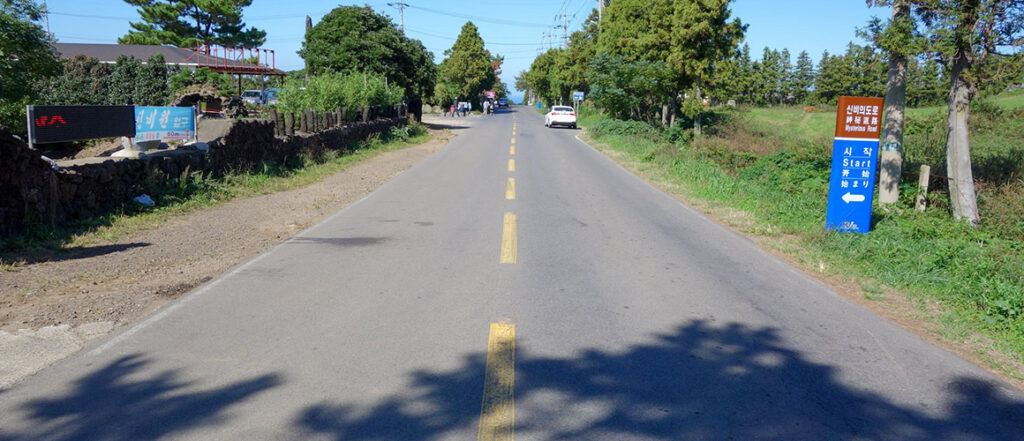
The Hype: A mysterious road where things roll uphill due to some mystical force!
The Reality: It’s an optical illusion that doesn’t always work. That’s it. That’s the whole attraction.
Here’s what happens: You drive to this stretch of road, put a can of Coca-Cola on the pavement, and maybe it rolls in a direction that looks like it’s uphill. It’s a three-degree incline that your eyes can’t quite process correctly.
Soraya, who’s had this on tour itineraries, says she has to bring Coke cans because water bottles won’t even roll. And sometimes it just doesn’t work at all.
Why It’s #1: This was popular with Korean honeymoon couples in the 1980s-90s, and somehow it’s still on tour itineraries, mostly because it cost the tour groups nothing. Even on the off chance the can rolls, so what?
Our Verdict: We really don’t recommend this one. Not even as a curiosity.
One Exception: If you’re visiting the Jeju Art Museum (which is actually worth seeing) or Love Land nearby, and you have five minutes to kill after, fine. But never go just for Mysterious Road.
#2: Big Rocks - Yongduam (용두암) & Oedolgae (외돌개)
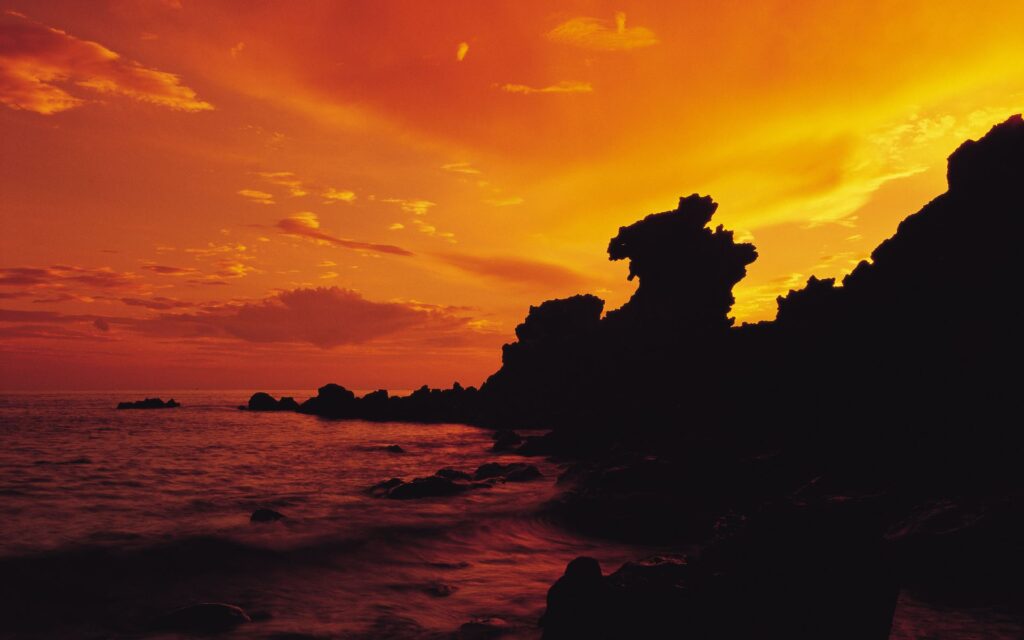
The Hype: Amazing volcanic rock formations with cultural significance!
The Reality: They’re rocks. In Jeju. Which is literally one giant rock.
Yongduam (Dragon Head Rock)
Located near Jeju City Airport, this volcanic rock supposedly looks like a dragon’s head. If you stand at exactly the right angle. From other angles, it looks like… a rock.
For listeners in the West, this doesn’t look like a dragon from Lord of the Rings. It’s an Asian dragon, the long, skinny, snake-like version.
The surrounding area has overpriced food stalls (expect a 20% markup), and you’ll be navigating crowds for photos.
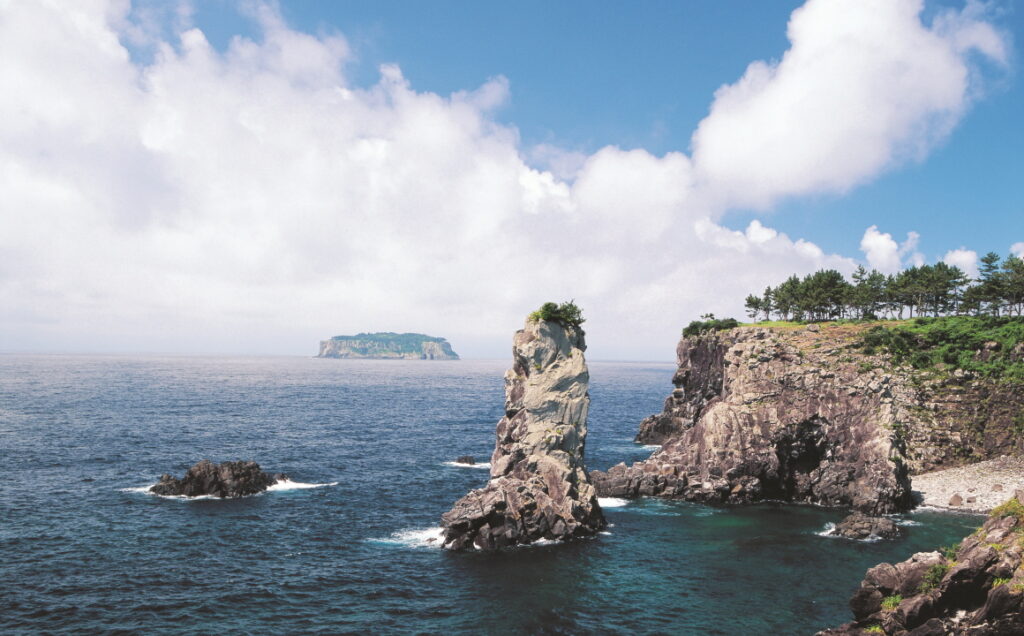
Oedolgae (Lonely Rock)
This tall rock formation stands alone in front of the ocean near Seogwipo City. It’s can be beautiful, sure. But driving 1.5 hours just to see one rock? That’s a lot of effort for what you get.
Our Verdict: These are classic Korean tourism checklist items. If it’s nearby and convenient, take a quick look. But don’t make a special trip, and don’t expect to be blown away. It really depends on the effort. If it’s far away, one or two hours, it’s not worth spending your time, money, and effort.
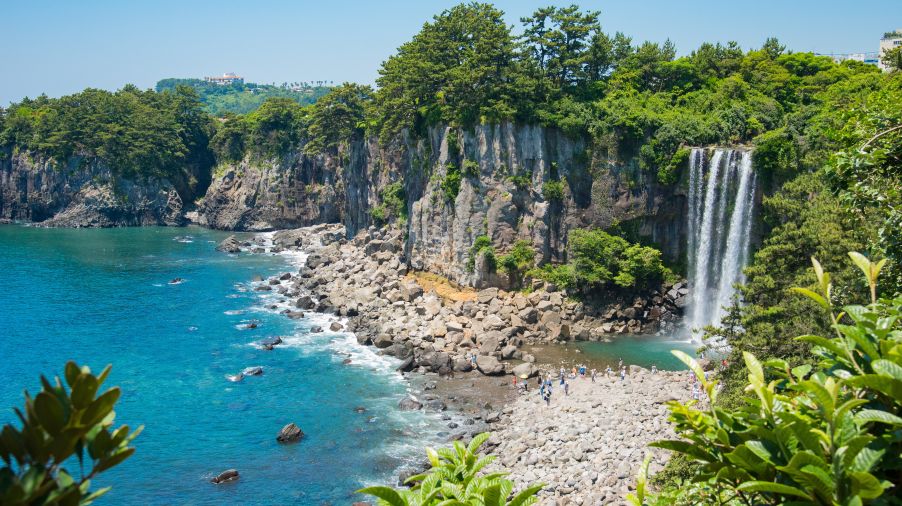
#3: Cheonjiyeon Waterfall (천지연 폭포)
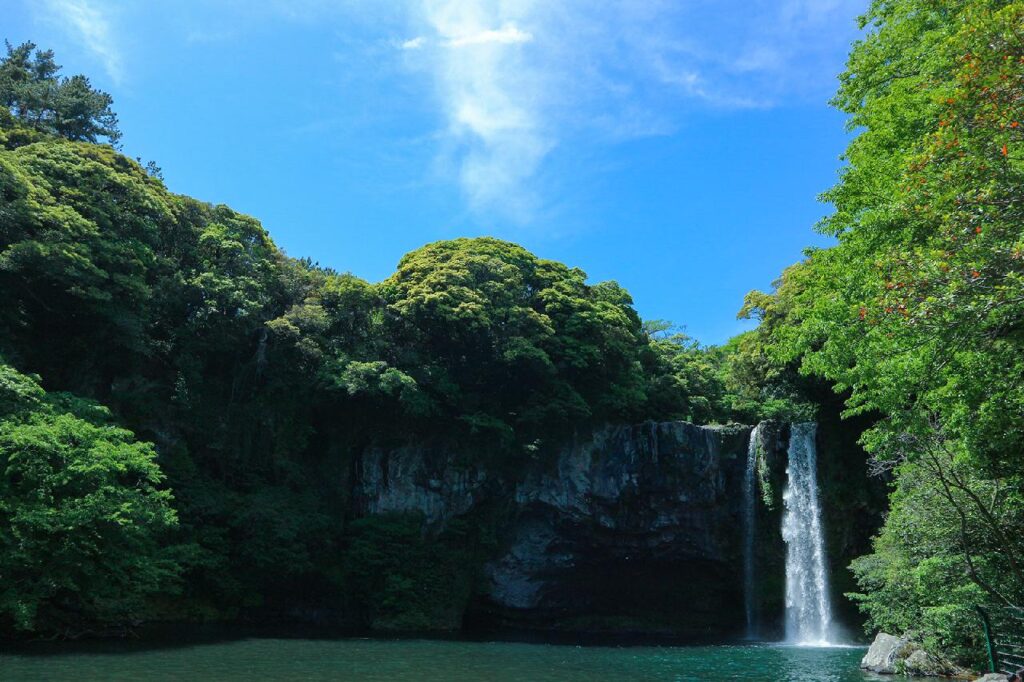
The Hype: A stunning UNESCO Geopark waterfall!
The Reality: It’s 22 meters high (about 72 feet). If you’ve ever seen Niagara Falls, Victoria Falls, or Iguazu Falls, this will feel underwhelming.
Don’t get me wrong. It’s pretty. It’s cute. And if you’re staying in Seogwipo with nothing to do at night, it’s a pleasant walk because it is tastefully lit and it’s open late.
Because of how porous the rocks are, it’s hard for Jeju waterfalls to accumulate into major rivers. No big rivers, no big waterfalls. So don’t expect the thundering roar one might associate with “destination waterfalls.”
The UNESCO Factor: Marketing in Korea loves to promote UNESCO designations. Not all UNESCO sites deliver the same experience.
This waterfall is technically part of a UNESCO Geopark, but that doesn’t make it a must-see attraction.
The Other Two Waterfalls
Since we’re talking waterfalls, let’s cover the other two famous ones:
Cheonjeyeon Waterfall (천제연 폭포): Even smaller. Has three levels, but the first one only becomes a waterfall when it rains. The water color is really beautiful though, and the columnar basalt backdrop is nice.
Jeongbang Waterfall (정방 폭포): The only waterfall on Jeju that flows directly from land into the ocean. Cool fact, but still only 20-23 meters tall. I almost missed it while hiking the Olleh trail because it’s so quiet. You can’t hear it from a distance like you would with a major waterfall.
Our Verdict: If you’re staying in Seogwipo City in the south and want an easy evening stroll, maybe even a romantic one, sure, amble over to Cheonjiyeon Waterfall. It’s well lit and can be pleasant and refreshing. But don’t drive 1.5 hours from Jeju City just for this. Jeju doesn’t really do “majestic” waterfalls. These are good pit stops if you’re already in the area, stay 5-10 minutes, take some photos, and move on.
#4: Udo Island (우도)
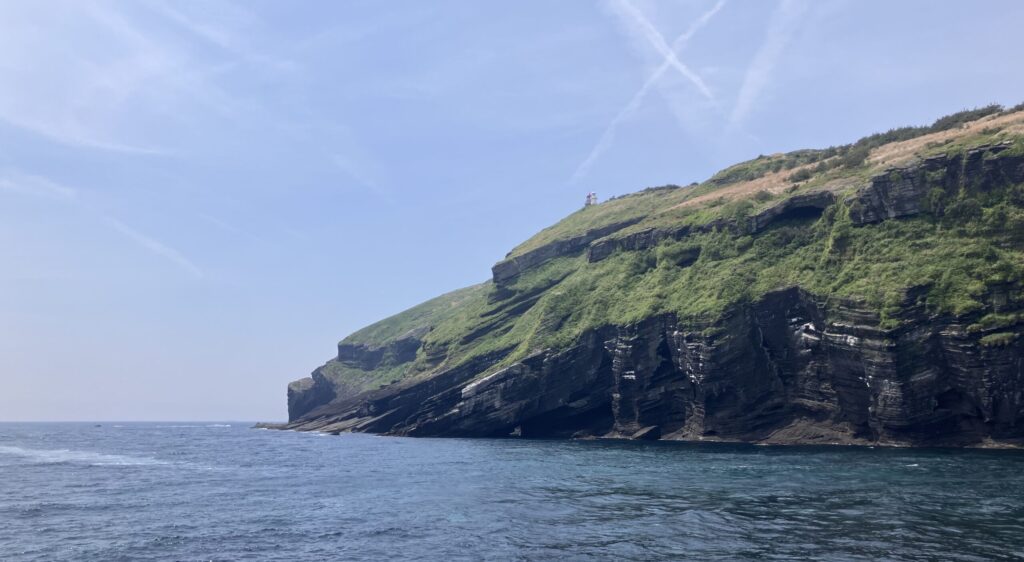
The Hype: A pristine island paradise off the coast of Jeju!
The Reality: It used to be pristine. Now the atmosphere has changed significantly.
Udo (which literally means “Cow Island” and saying “Udo Island” is like saying “Cow Island Island”) is a small island you can reach by ferry from Seongsan Sunrise Peak. It takes 15-20 minutes to get there, and the nature is still beautiful. But here’s the challenge: the ambiance isn’t what it used to be in the lower-lying coastal areas.
What Happened: Tour drivers get commissions for bringing large groups to Udo, so many buses arrive simultaneously. The result? Crowds, noise, and a different vibe from what made Udo special. When you have many big tour groups all shopping at the same time in the same places, it gets noisy and crowded, and the authentic island atmosphere diminishes.
If you’re on a tour group, you’ll likely be taken to shops selling Udo peanut products (the island is famous for peanuts) where there’s sometimes pressure to buy things.
Why It’s Still Worth Mentioning: If you hike to the lighthouse at the top of Udobong, the views are genuinely spectacular. You can see Seongsan Ilchulbong (Sunrise Peak) and even Hallasan on clear days. But you will have to climb up to leave the tour groups behind.
Our Verdict: Skip it unless you’re willing to arrive early or stay overnight to avoid peak tour group hours, and plan to hike away from the main tourist areas. It’s kind of a pity because it used to be a very beautiful place.
#5: Traditional Markets - Dongmun Market (동문시장) & Olle Market (올레시장)
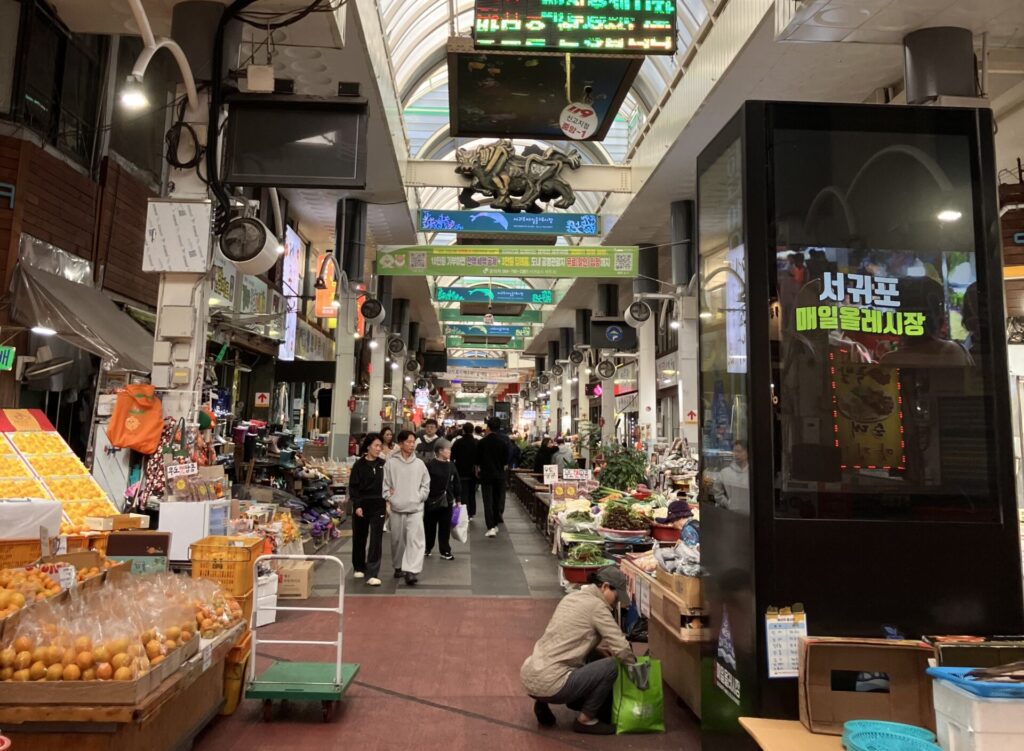
The Hype: Experience authentic local Korean market culture!
The Reality: They’re fine for 20-30 minutes if you are already in the area, but there’s nothing particularly special here, and the food carries a tourism markup.
To be clear, Dongmun Market is in Jeju City in the north, and Olleh Market is in Seogwipo in the south.
The Good News
Unlike some markets in Seoul that have made headlines for overcharging, Jeju markets are generally honest. You won’t get scammed with intentional upcharges or surprise extra dishes.
The Reality Check
While the prices are transparent, it’s still transparently overpriced. A 10,000 won skewer of black pork (about $7 USD in 2026) gets you just that one item. For the same price, you could have a full meal with banchan (side dishes) at a regular restaurant. That’s the tourism pricing at work.
What You’ll Find:
- Food trucks selling black pork, abalone, and seafood
- Fresh produce, fish, and vegetables (the market’s original purpose)
- Crowded walkways
- Tourist-focused pricing
Our Verdict: Walk through if you’re nearby and curious about Korean market culture, but don’t expect exceptional food or great value.
#6: Black Pork Street (흑돼지 거리)
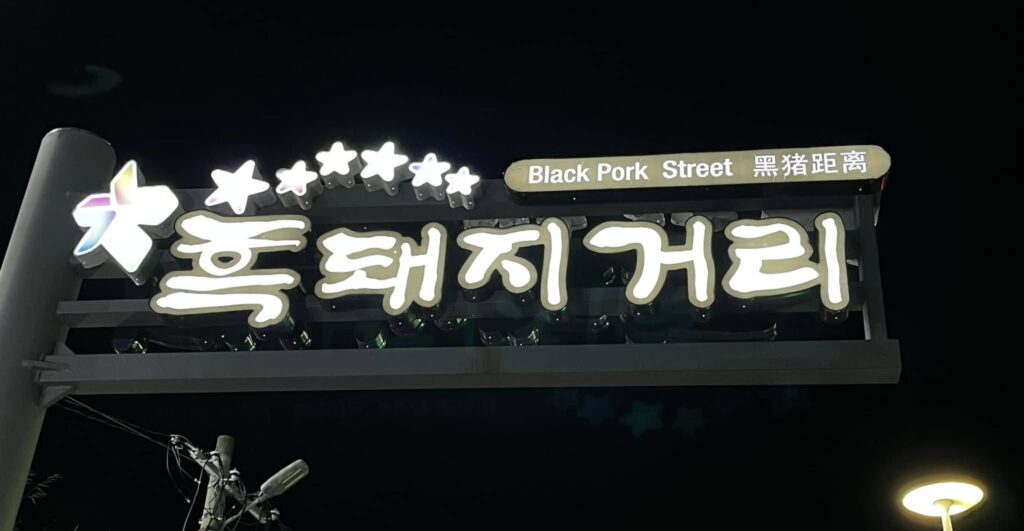
The Hype: Jeju’s famous black pork is a must-try delicacy!
The Reality: I’ve tried it three times in different settings, and I honestly cannot tell the difference from regular pork. I’m not saying it is bad. I’m just saying it’s not worth the premium.
The Black Pork Story
Jeju’s traditional black pigs are a different species with black fur. Historically, Jeju people raised these pigs in their homes. Specifically in fields that also serve as outdoor toilets, where the pigs would eat human waste as part of an eco-friendly cycle. The manure would then fertilize plants, completing the circle.
The original species is now protected and can’t be eaten. What’s sold as “black pork” today is a hybrid.
Why It’s Supposedly Special
Black pork is marketed as being more chewy and juicy than regular pork. In Korean, they describe it as “쫄깃쫄깃” (jjolgit-jjolgit), which means pleasantly chewy.
My Experience
First time: Tourist area, wasn’t impressed
Second time: Local place recommended by my Airbnb host (not a tourist spot), still just okay
Third time: With Soraya and her friends in Jeju City, couldn’t even tell it was supposedly black pork.
The Truth: Many Jeju locals don’t even order black pork. When restaurants offer both black pork and white pork (regular pork), locals often choose the latter.
Once the meat is cooked, they look identical. The only way to tell is if you order 오겹살 (five-layer pork belly with skin attached), then you can maybe see the black fur on the skin.
Our Verdict: Try it once if you’re curious, but don’t expect a revelation. Don’t go out of your way or pay significantly more for it. Again, I’m not saying it’s bad, I’m just saying I can’t tell the difference, and it tastes the same to me.
#7: Cafe Streets - Aewol (애월 카페거리) & Hamdeok Beach (함덕해수욕장)
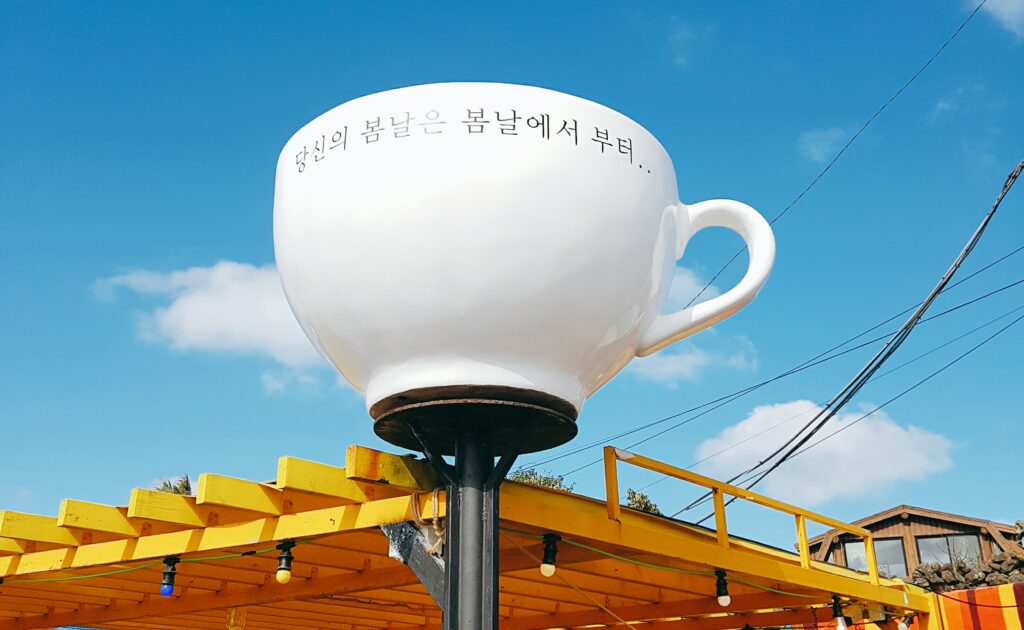
The Hype: Instagrammable cafes with ocean views!
The Reality: Overpriced coffee, crowds, and peope trying to take photos of their drinks that make it look like they’re alone.
The Price Situation
- Budget Cafe Chains Americano: 1,500-2,000 won.
- Regular cafe Americano in Korea: 4,00-5,000 won
- Aewol/Hamdeok cafe Americano: 7,000-8,000 won
That’s quite an upcharge for the same coffee, but with an ocean view and Instagram potential.
The Experience
You buy a drink, then spend five minutes trying to photograph it in your hand while making it look like you’re the only person there. Multiply this by many people doing the same thing. On roads with traffic.
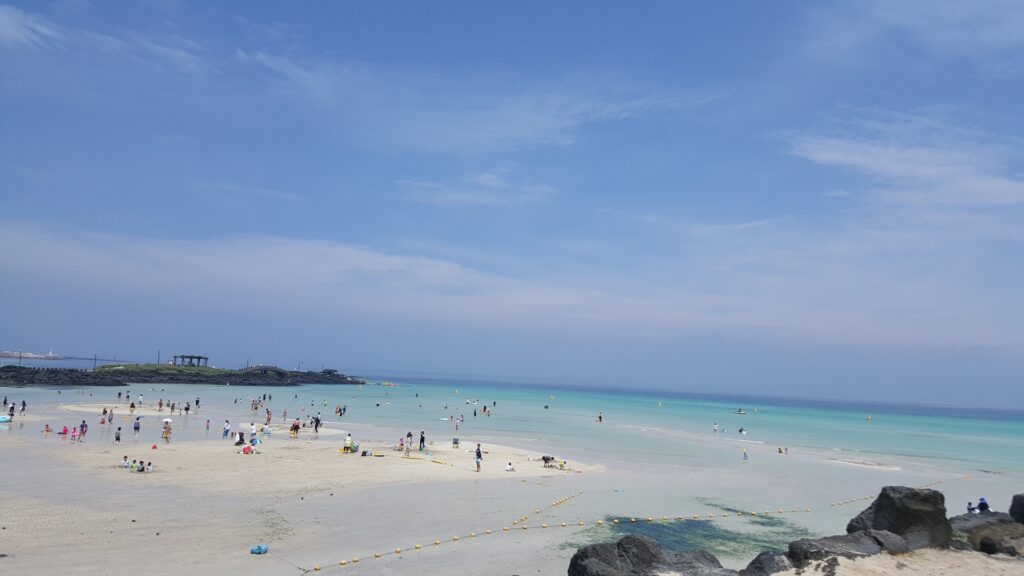
Hamdeok Beach Specifically
This beach is genuinely beautiful. The water is a stunning emerald color. But it’s been discovered by tour groups. You’ll see 40-50 person groups arriving by buses at the same time..
Our Verdict: If you’re really into cafe hopping and fancy, beautiful cafes, and don’t mind paying premium prices for cafes with pretty decor, then maybe it’s a good place to go. But maybe go early or late in the day, after the tour buses have headed back to the city. If you just want to enjoy the view and relax, it’s not the right place. There are many other beaches in Jeju without the crowds.
#8: Seongeup Folk Village (성읍민속마을) - The 50/50 Call
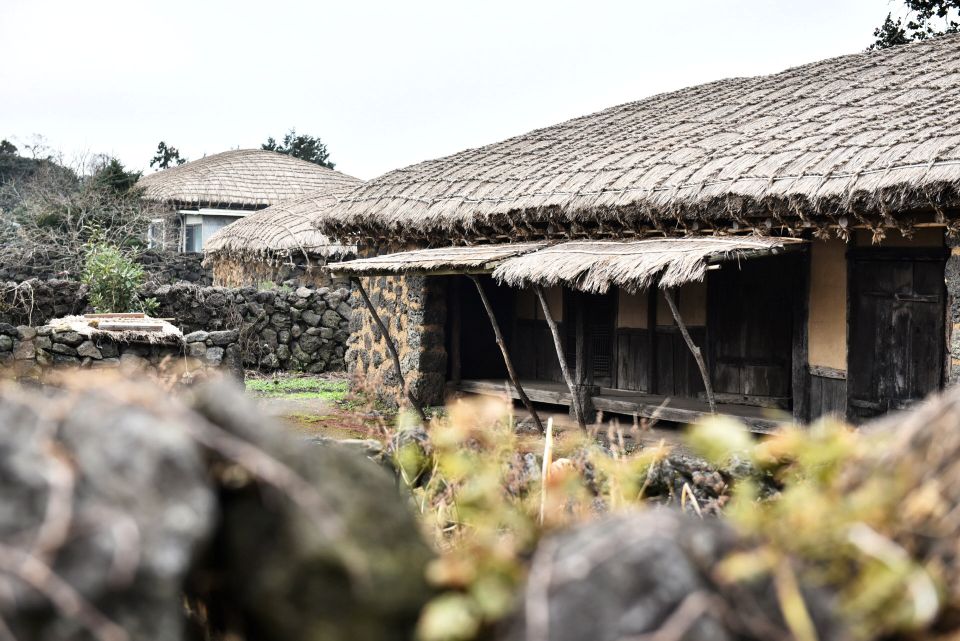
The Hype: A preserved Joseon dynasty village where people still live!
The Reality: It’s half authentic cultural experience, half potential sales pitch.
The Good
- About 60 people actually live here
- Traditional houses and architecture from the Joseon dynasty are preserved
- It was one of the three main villages in historical Jeju
- If you watched the K-drama When Life Gives You Tangerines, you’ll see a similar environment
- It has real historical and cultural value
The Challenge
Some tour groups take visitors to unofficial “folk villages” nearby where you get a tour that ends in a sales pitch for horse bone powder, honey, horse oil cosmetics, and other “traditional” products. It’s a classic bait-and-switch.
How to Avoid This
If you’re going independently (not with a tour group), you’ll skip the sales pitch entirely. Just visit the actual official folk village.
Our Verdict: If you’re staying in the south and interested in Korean history, it’s worth a visit, especially for K-drama fans. But it’s far from Jeju City (1+ hour), so factor that into your decision. This is why it’s our 50/50 call, it can be overpriced and crowded sometimes, but it also has authentic historical and cultural value
#9: Jusangjeolli Cliff (주상절리) - Beautiful But Challenging
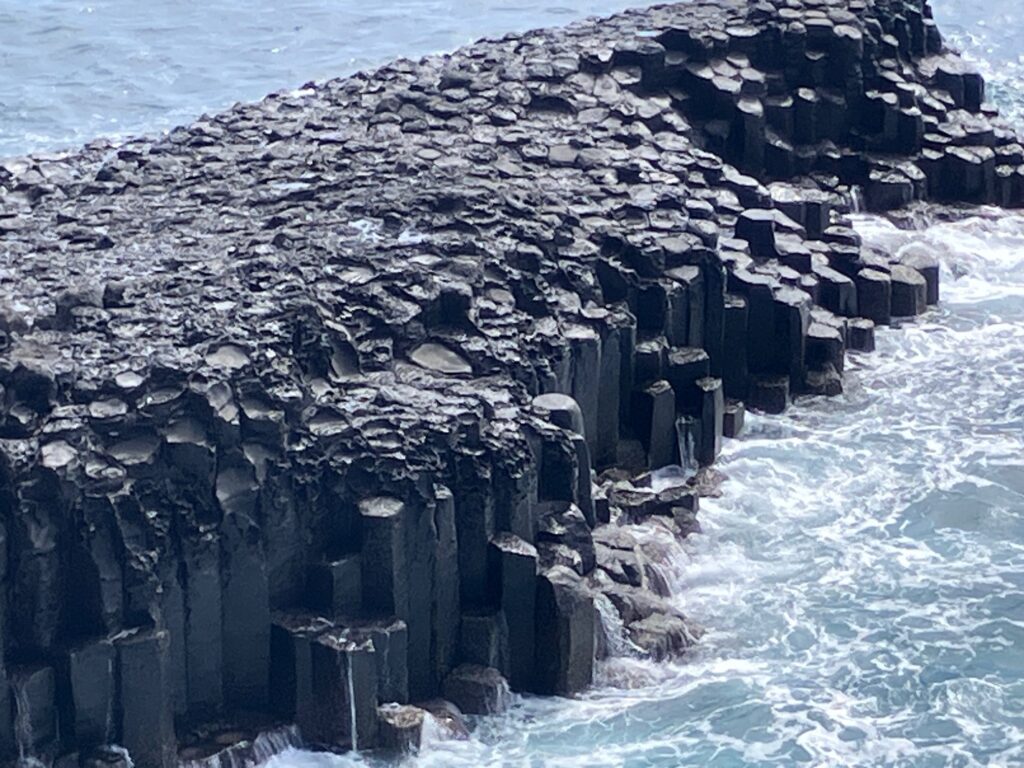
The Hype: Stunning hexagonal basalt columns formed by volcanic lava!
The Reality: Legitimately beautiful, but the crowds can make it stressful.
The Good
The hexagonal columnar basalt formations are genuinely impressive. They look like something out of Iceland (though smaller in scale), and it’s amazing that nature can create such perfect geometric shapes.
The Challenge
This is on many tour groups’ checklists, so expect:
- Narrow viewing platforms that can be very full
- Crowds trying to take photos
- People pushing and jostling for position
A Note on Access: A few years ago, you could walk down to the beach level and get close to the columns. It was nice and beautiful. Now you’re kept at a distance on elevated platforms, looking down from above, which they built for safety reasons.
Our Verdict: It IS beautiful, and that’s why it’s not higher on our list. But you need to pack patience and understanding. If you’re already feeling stressed before you arrive, this place might make it worse. If you can pack patience and kindness, you can manage it. Go early morning or late afternoon to avoid peak crowds.
#10: Osulloc Tea Museum (오설록 티 뮤지엄) - Not Really a Museum
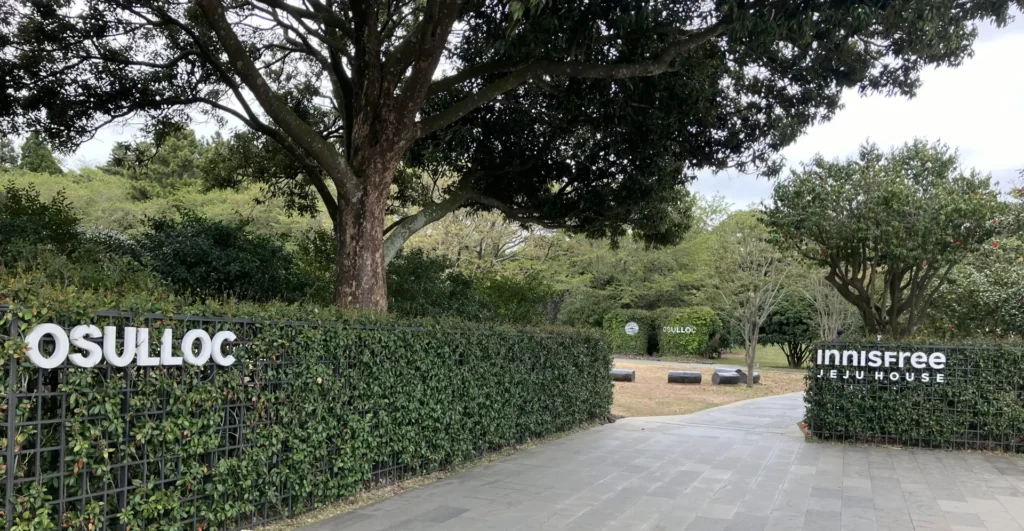
The Hype: A tranquil tea museum surrounded by beautiful green tea fields!
The Reality: It’s not really a museum. It’s a large gift shop with a cafe. And it’s anything but tranquil.
What It Actually Is
- The biggest green tea farm in Jeju
- A gift shop (the largest part of the facility)
- A cafe with lines that feels more like a food court at its busiest
- Maybe one or two small exhibits that barely qualify as “museum”
The Experience
When you think of a tea place, you are probably thinking of someplace tranquil and relaxed. This place is not that because it can be very busy. The traffic marshalls upfront and the giant parking lot for tour buses do not bode well for a chill experience.
High schoolers on field trips. Tourists from various countries. Lines of 10-20 minutes just to pay for tea or coffee.
The prices are actually reasonable (not overpriced), but finding a seat can be challenging. And when tables open up, they’re not always cleaned yet because the staff can’t always keep up with the volume.
The Redeeming Factor
The green tea fields themselves are genuinely beautiful and huge. Here’s the pro tip: walk away from the cafe area for about five minutes. Most tourists stay near the buses and cafe, so if you’re willing to walk into the fields, you’ll find quiet, peaceful spots where you can actually enjoy the view.
The Distance Challenge
From Jeju City: 1 hour drive From Seogwipo: 45 minutes drive
That’s a significant journey for a “museum” that isn’t really a museum.
Our Verdict: Go if you want to see the green tea fields and are willing to walk away from the crowds. Skip if you’re expecting a peaceful tea house experience or an actual museum. For some people it can be a great experience, but there are a lot more tea farms to check out on Jeju if you are looking for tranquility and great tea.
Personal Note: This was originally my #1 choice for most overhyped spot until Soraya pointed out that some people do like it. I still think calling this a “museum” is misleading, but I’ll concede it’s not as disappointing as Mysterious Road.
The Bottom Line
Jeju Island is incredible. It has stunning nature, fascinating geology, and yes, some truly spectacular destinations that are worth visiting. But the places on this list? They either don’t live up to the hype, require too much effort for what you get, or are challenged by overcrowding.
Remember our three criteria:
- Wow Factor
- Is it overpriced?
- Was it worth the effort?
The places on this list fall short on at least two of those three measures in varying ways.
Soraya and I did disagree on some rankings. I originally wanted Osulloc Tea Museum at #1, but she convinced me that while it’s not great, it’s not as bad as Mysterious Road. She was right. Based on what other tourists say, some people do like Osulloc, Jusangjeolli, or the Folk Village. But Mysterious Road? Yeah, that’s just a big old waste time.
Your Turn: Have you been to any of these places? Did you agree or disagree with our takes? And if you’re planning a trip to Jeju, check out our Trip Planner app to sketch out your own customized itinerary.
