What You'll Find in This Article
Welcome to Email 5!
We’ve covered:
- Seongsan (accessible volcanic crater)
- Butcher BBQ (local food culture)
- Dolphins & Coast (natural beauty)
- Hallasan (the mountain that made everything)
Today: The human tradition that defines Jeju as much as the volcano does.
PART 1: Why You Shouldn’t Miss This
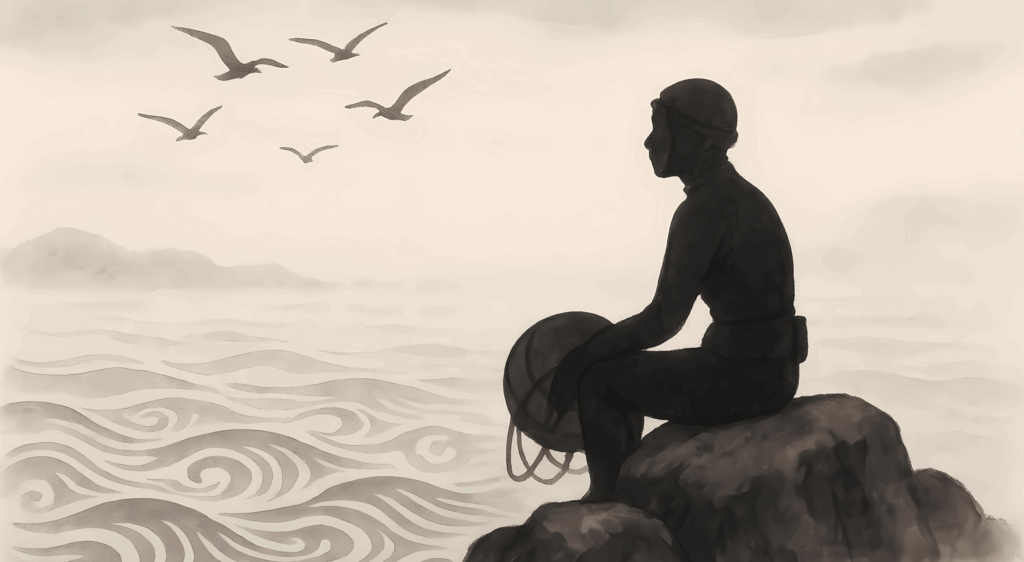
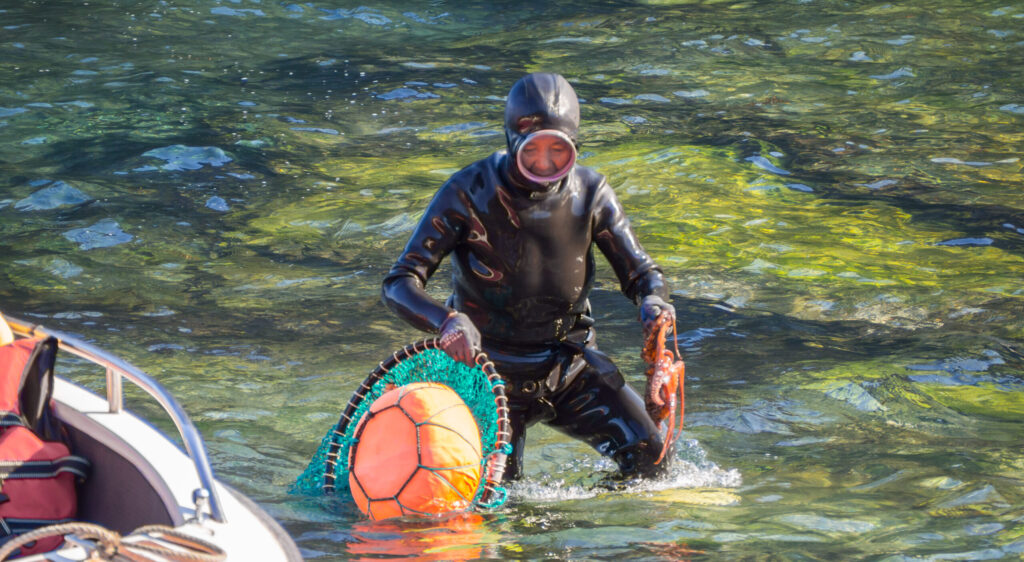
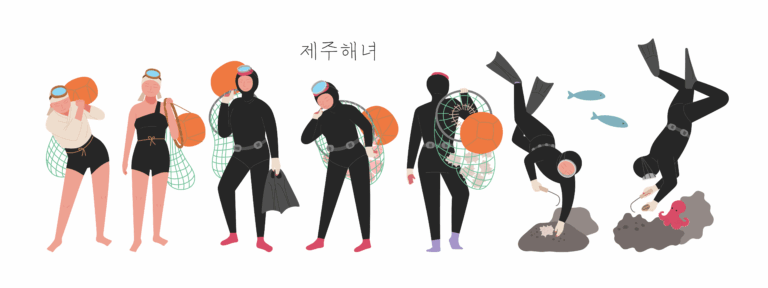
A 70-year-old woman puts on a wetsuit, grabs an orange buoy and a net bag, and walks into the ocean. She takes a deep breath and dives 15-20 meters straight down—deeper than most recreational scuba divers go.
She stays underwater for 1-2 minutes, using a blade to pry abalone and conchs from rocks, collecting them in her bag.
When she surfaces, she makes a distinctive whistling sound—sumbisori (숨비소리)—exhaling carbon dioxide from her lungs while signaling to her team that she’s okay.
Then she does it again. And again. 60-80 times in a 3-4 hour session.
No breathing apparatus. No scuba tanks. No oxygen lines. Just her lungs and her skill.
These are the haenyeo (해녀), Jeju’s female free-divers who harvest seafood—abalone, sea urchins, conch, octopus, sea cucumbers, seaweed—from ocean waters surrounding Jeju.
The Physical Reality
Dive depth: 10-20 meters (experienced divers)
Water pressure: 3x surface pressure at 20 meters
Water temperature: 11-21°C year-round (cold even in wetsuits)
Breath hold: 1-2 minutes per dive
Dives per session: 60-80 dives over 3-4 hours
Sessions per day: 1-2 (if younger)
Do the math: That’s 80-160 breath-hold dives to 15-20 meters deep. Daily. For decades.
This tradition is disappearing. Today, fewer than 3,000 haenyeo remain. More than 90% are over age 60. Most of the youngest practitioners are approaching 70.
Fewer than 100 haenyeo are under age 50. Fewer than 10 are in their 20s-30s.
Simple demographic math: Within 20-30 years, this living tradition will cease to exist. There will be museums, exhibitions, demonstrations. But the living tradition—women whose primary occupation is free-diving for seafood, who gather at the bulteok to make collective decisions, who pray to the Dragon King before entering the water—will be gone.
Why They’re Disappearing
Modern Korea offers better opportunities. Young women can work in offices, shops, tourism—jobs that don’t require holding your breath 20 meters underwater in cold water 60 times a day. From a purely economic perspective, becoming a haenyeo makes no sense for a young Korean woman in the modern world.
You’re witnessing the last generation. This is arithmetic, not speculation.
BTW: I used to be comfortable in the water—I could free-dive to maybe 15 meters for a few seconds. What haenyeo do routinely at age 70 is beyond what I could ever do at my peak. It’s humbling and inspiring at the same time.
PART 2: How to Make it Happen
If you would like to experience the haenyeo culture of Jeju, here are a few options:
Option 1: Demonstrations (Scheduled, Touristy, But Accessible)
At Seongsan Ilchulbong: We discussed this previously, so let’s do a quick recap.
Times: 2 PM daily, but sometimes there are extra shows at 1:30 PM and 3:00 PM
Location: Base of Seongsan (the volcanic crater from Email 1)
Duration: Approximately 30 minutes
What happens: Haenyeo in wetsuits dive, resurface with seafood, demonstrate sumbisori whistle
Cost: Free, at the end of the Seongsan free trail
Accessibility: Very easy, scheduled, predictable
Honest assessment: It’s a show for tourists. But it’s also real haenyeo doing real diving. You’ll see the physical reality of what they do. You’ll hear the sumbisori. You’ll see women in their 60s-80s casually doing what would challenge professional athletes.
Worth seeing? Absolutely. Especially if you combine it with climbing Seongsan (which you should).
Option 2: Real Haenyeo Working (Unpredictable, Authentic, Challenging)
Where: Any coastal area, especially:
- East coast near Seongsan, Hado, Jongdal-ri
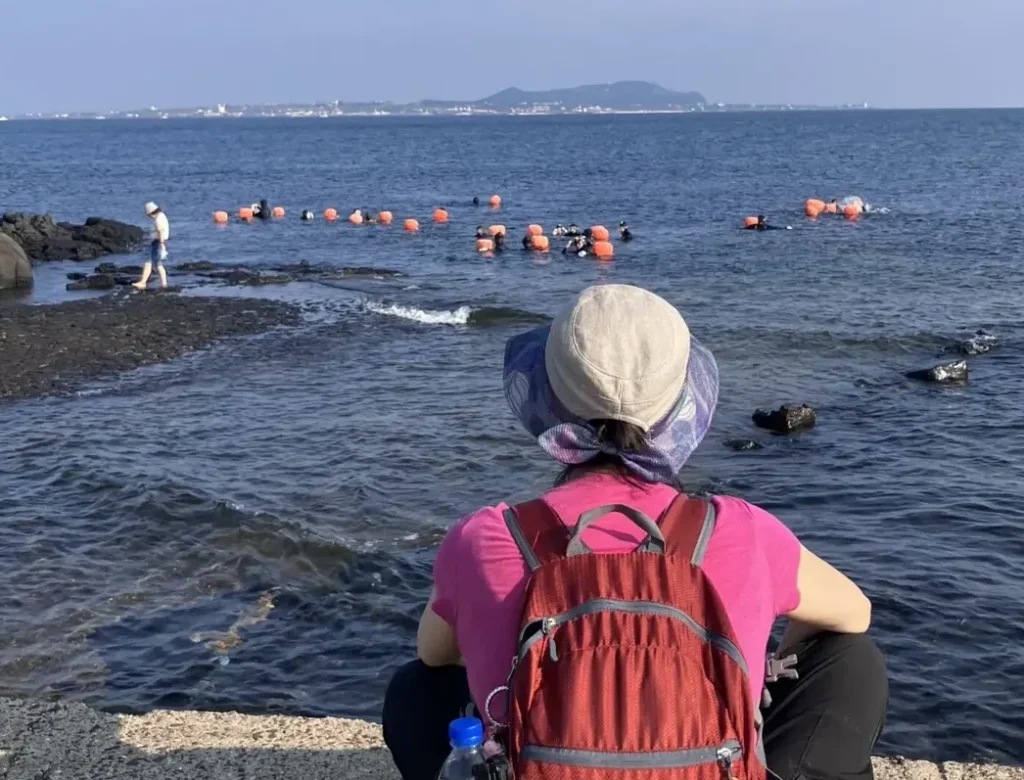
- Haenyeo bulteok (gathering places with orange buoys and wetsuits drying)
- Small ports and rocky shorelines
When: Early morning (6:00-10:00 AM), sometimes late afternoon
How to find them:
- Walk coastal trails (Olleh Trail routes)
- Look for bulteok (stone structures near shore)
- Look for orange buoys in water
- Look for wetsuits hanging to dry
What you might see, if the weather is good:
- Before 9 AM: Haenyeo gearing up at bulteok, or even entering the water
- Wetsuits and orange buoys drying
- Seaweed being laid out to dry
- Seafood being sorted at bulteoks
Reality check:
You might not see active diving. Haenyeo:
- Don’t dive in bad weather (wind, rain, rough seas)
- Usually finish before noon
- Work in specific areas (not every coast)
- Don’t perform on schedule
But even seeing the bulteok, the equipment, the evidence of their work—that’s authentic. That’s the real tradition.
Option 3: Haenyeo Place (해녀집 – Haenyeo Jib)
Some of the haenyeos run their own food places. Some of these are actual restaurants, others may just be pop-up tents. If you like raw seafood like octopus, abalone, conch, sea urchin, and sea squirts, this would be a great way to see the haenyeo in a different perspective.
Full disclosure: I don’t like raw seafood, so I don’t have anything first hand experience to share here. But here’s what Sora shared with me:
해물탕 (Haemultang) – Spicy seafood stew
- What’s in it: Abalone, sea urchin, octopus, conch, vegetables
- Warning: SPICY. Tell them if you can’t handle heat
전복죽 (Jeonbok-juk) – Abalone porridge
- Creamy rice porridge with fresh abalone
- Not spicy, comfort food
성게비빔밥 (Seonge bibimbap) – Sea urchin bibimbap
- Fresh sea urchin mixed with rice and vegetables
- Acquired taste (fishy, briny)
문어 (Mun-eo) – Octopus
- Various preparations (boiled, grilled, raw)
- Very fresh, chewy texture
Where to find these restaurants:
- Near ports and coastal areas (especially east coast)
- Look for signs with 해녀 (haenyeo) in the name
- KakaoMap search: “해녀집/해녀식당” (haenyeo restaurant)
Atmosphere:
- Usually simple, no-frills local restaurants
- May not have English menus
- Point at what you want or use photos
- Owners are often haenyeo or haenyeo families
Option 4: The Jeju Haenyeo Museum
Location: East coast, near Hado
Cost: ₩1,100 adults (less than $1)
Hours: 9:00 AM – 6:00 PM (ticket office closes 5:00 PM)
Closed: Jan 1, Lunar New Year, Thanksgiving, first Monday of month
What’s there:
- History of haenyeo culture
- Diving techniques and tools
- Social structure and “bulteok democracy”
- Traditional vs. modern equipment
- Economic and cultural significance
Why visit: Even if you see demonstrations or real diving, the museum gives context. You’ll understand:
- Why haenyeo were economically powerful (they earned more than their husbands)
- How “bulteok democracy” worked (collective decision-making)
- Different skill levels (sangun, jungun, hagun, ttongun)
- The sumbisori whistle and why it matters
- What’s being lost as this tradition disappears
Combine with: Seongsan Ilchulbong (30 minutes by bus), Sehwa Beach (walking distance), Manjanggul Lava Tube (30 minutes)
PART 3: Korean You’ll Actually Use
At the Museum
One adult ticket please: “어른 한 명 주세요” Romanization: Eo-reun han myeong ju-se-yo
For two people: “어른 두 명 주세요” Romanization: Eo-reun du myeong ju-se-yo
Finding Haenyeo
Are haenyeo here today: “오늘 해녀 있어요?” Romanization: O-neul hae-nyeo i-sseo-yo?
Where can I see haenyeo: “해녀 어디서 볼 수 있어요?” Romanization: Hae-nyeo eo-di-seo bol su i-sseo-yo?
What time do haenyeo go in (the water)? “해녀 몇 시에 들어가요?” Romanization: Hae-nyeo myeot shi-e deu-reo-ga-yo?
At Haenyeo Restaurant
Spicy seafood stew please: “해물탕 주세요” Romanization: Hae-mul-tang ju-se-yo
Not spicy please: “맵지 않게 해주세요” Romanization: Maep-ji an-ke hae-ju-se-yo When: Tell server when ordering if you can’t handle spice
This is delicious: “맛있어요!” Romanization: Ma-shi-sseo-yo! When: Use liberally at restaurants
Thank you for the food (Bon appétit!): “잘 먹겠습니다” Romanization: Jal meog-gessseubnida! When: When served
Thank you for the food (when paying): “잘 먹었습니다!” Romanization: Jal meog-eossseubnida! When: When paying
Thank you: “감사합니다” Romanization: Kam-sa-ham-ni-da When: After demonstrations, meals, help from locals
Useful Vocabulary
해녀 (Hae-nyeo) = Sea woman / female diver
불턱 (Bul-teok) = Stone gathering place where haenyeo change
숨비소리 (Sum-bi-so-ri) = The whistling sound when surfacing
테왁 (Te-wak) = Orange buoy haenyeo use to float/rest
전복 (Jeon-bok) = Abalone
성게 (Seong-ge) = Sea urchin
문어 (Mun-eo) = Octopus
Why This Matters
Every tourism board promotes their “unique cultural heritage.” But haenyeo are different. These are real women doing real work that requires extraordinary physical ability and decades of training. And you’re likely seeing the last generation who’ll do it.
The museums will remain. The demonstrations might continue with a handful of practitioners. But the living tradition—the economic reality, the social structure, the daily practice—is ending in our lifetime.
When you see a 70-year-old haenyeo walk into the ocean, dive 15 meters, and come up with a net bag full of seafood, you’re witnessing something rare. She learned from her mother, who learned from her mother. That chain of knowledge goes back centuries. It ends with her generation.
So when you visit the museum, watch the demonstration, eat at the haenyeo restaurant, or glimpse a wetsuit drying at a bulteok, remember what you’re seeing.
What’s Next?
In two days, Email 6: Manjanggul Lava Tube. Walk through a tunnel formed 200,000-300,000 years ago when liquid rock drained from Hallasan. It’s 11-21°C year-round inside (bring a jacket even in summer). UNESCO World Heritage, and unlike haenyeo, it’s not going anywhere.
But first: add the Haenyeo Museum to your itinerary. Check Saturday schedule if you want the singing performance. Practice saying “오늘 해녀 있어요?”
See them while you still can.
— Ed
