
What You'll Find in This Article
Welcome to Email 7!
So far you’ve learned about:
- Seongsan (volcanic crater you can climb)
- Butcher BBQ (how locals eat)
- Dolphins & Coast (natural beauty)
- Hallasan (the volcano that created everything)
- Haenyeo (disappearing sea women tradition)
- Manjanggul (walk inside the volcano)
Today: Green tea plantations and why Jeju is quietly rivaling Japan.
PART 1: Why You Shouldn’t Miss This
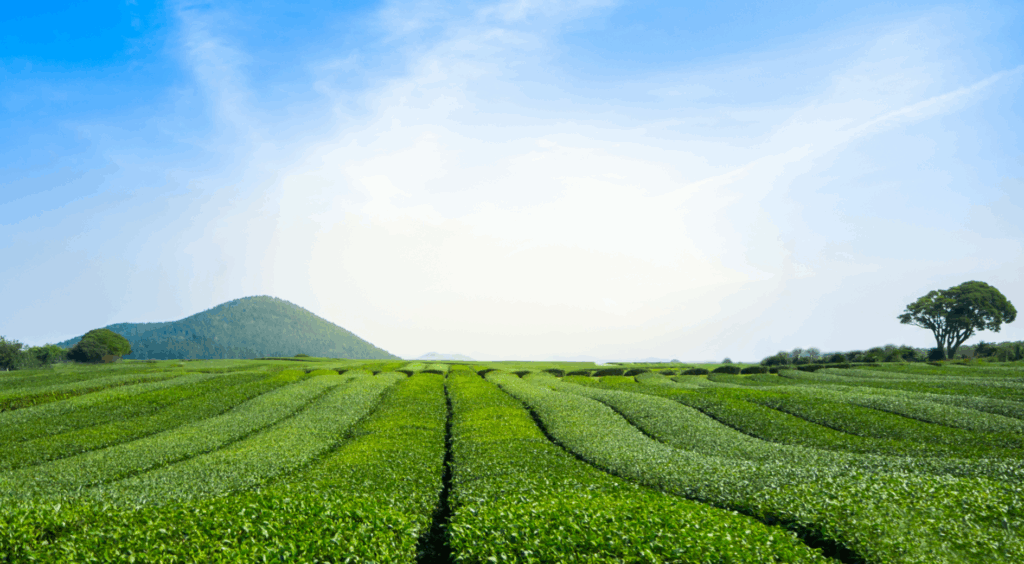
Jeju Green Tea (녹차) – Korea’s Answer to Uji
The matcha craze has gone global. Matcha lattes. Matcha ice cream. Matcha pizza (yes, really).
Jeju is quietly becoming one of the world’s premier green tea regions. Same quality as Japan. Less hype. Better value.
In fact, Trader Joe’s in the United States now stocks matcha from Jeju. Michele (Ed’s wife) spotted it and sent Sora a photo. The secret’s getting out.
What Makes Jeju Tea Special
Three things create perfect conditions for tea cultivation:
Volcanic soil: Nutrient-rich from centuries of Hallasan eruptions. Tea plants thrive in this mineral-dense earth.
Clean water: Filtered naturally through volcanic rock before reaching tea fields. Pure, mineral-rich hydration.
Climate: Warm temperatures, high humidity, gentle year-round rainfall. Fog rolls in from the coast. Everything tea plants need.
The Harvest
Tea picking runs April through June. Early harvest (April) produces smoother, more delicate tea. Koreans prefer this and pay premium prices for it. Late harvest (June) produces stronger, more robust tea. Foreigners tend to prefer this intensity.
Matcha vs Green Tea: What’s the Difference?
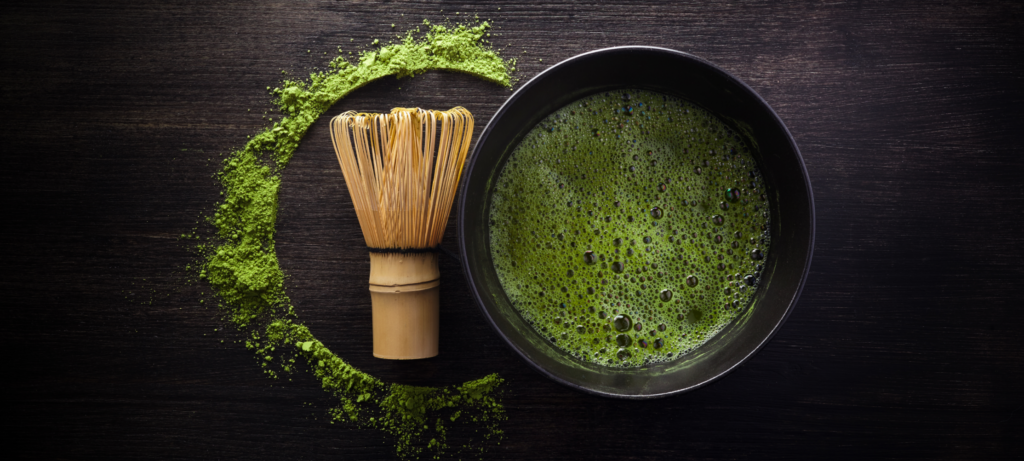
Matcha (말차): Ground powder. You drink the entire leaf. More nutrients. More caffeine. Requires whisking to create foam. Labor-intensive preparation.
Green Tea (녹차): Brewed leaves. You drink the extract. Less caffeine. Less fuss. Simpler daily consumption.
Most Koreans don’t make matcha at home. They visit tea houses and let experts handle the whisking ceremony. For daily drinking, they brew simple green tea. No ceremony required.

Where to Experience Jeju Tea Culture
Osulloc Tea Museum (오설록)
Location: Western Jeju, near Seogwipo
What it is: Korea’s largest tea company. Massive plantation. “Tea museum” that’s really a cafe and retail space. Innisfree cosmetics shop attached. Beautiful grounds for photography.
The problem: Tour buses. Crowds. Noise. Long lines. During peak hours it feels like a food court.
The solution: Arrive at opening (before 9 AM). Enjoy the tranquility. Leave by 10 AM before tour groups descend. Done this way, it’s actually lovely. The views are spectacular, the tea is good, and you can appreciate the scale of the operation.
Skip it if you arrive midday and find chaos. Not worth the stress.
Orteas (오르티)
Location: Mid-mountain eastern region
What it is: Small family operation. Reservation-only. Available through Airbnb Experiences.
The experience: Tea plantation tour. Hands-on tea picking. Processing demonstration. Traditional tea ceremony. Tasting. Actually educational.
This is where you learn how tea grows, gets harvested, gets processed, and gets prepared. The owners know their craft intimately and share it genuinely. No performance. No sales pitch. Just authentic tea culture.
Book in advance. Worth the effort.
Onulun Green Tea House
Location: Mid-mountain, southeastern region
What it is: Lava cave beneath tea fields. Instagram-famous. Green tea foot baths!
Worth a quick visit if you’re already in the area. The juxtaposition of ancient lava tube and modern tea cultivation is interesting.
Aewol Matcha (애월 말차)
Location: Northwest coast, near airport
What it offers: Green tea fields. Outstanding matcha bingsu (shaved ice dessert). Matcha ice cream. Matcha croiffle (croissant-waffle hybrid that originated in New York and swept Korea).
If you like Korean cafe culture and trendy desserts, this is your spot. The setting is beautiful. The desserts are excellent. The matcha is quality.
Suman Dawang (수만다왕)
Location: Southern Jeju
What makes it special: Small. Peaceful. Explicitly refuses tour groups. The owner turns them away.
If you want genuine tranquility, come here. Locals know about it. Tourists mostly don’t.
Beyond Green Tea: Other Korean Teas
Korean tea culture extends beyond Camellia sinensis (tea plant):
생강차 (Saeng-gang-cha) Ginger tea. Good for throat health.
유자차 (Yu-ja-cha) Citron tea. Sweet and tangy.
팔라봉차 (Pal-la-bong-cha) Made from Jeju’s hallabong citrus.
홍차 (Hong-cha) Black tea (standard tea).
These infusions appear everywhere in Korea. Worth sampling.
PART 2: How to Make it Happen
Getting There
Each plantation has different access:
Osulloc: Accessible by bus from Jeju City or Seogwipo. Check KakaoMap or NaverMap for current routes.
Orteas: Car required. Mid-mountain location not served by public transit.
Aewol Matcha: Bus accessible from Jeju City. Coastal location on main routes.
Suman Dawang: Car recommended. Southern location off main transit lines.
When to Visit
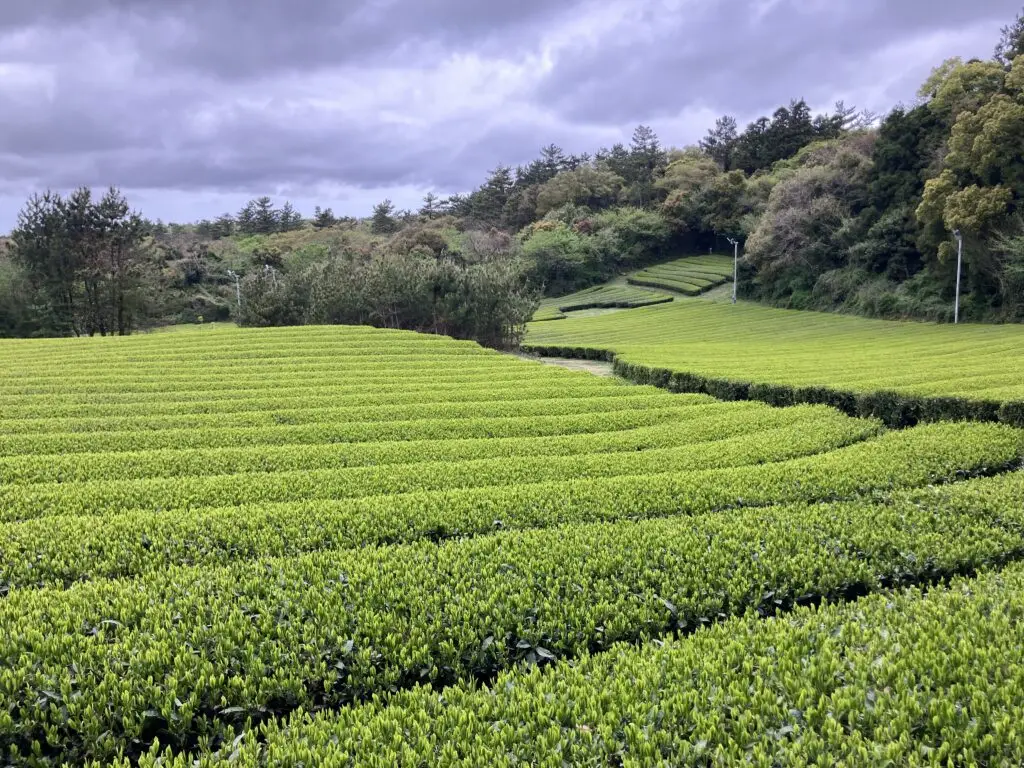
Best season: April through June (harvest period). Tea plants are greenest and most active. You might see harvesting in progress.
Off-season: Still beautiful. Still worth visiting. Just less activity in the fields.
How Long to Budget
Quick visit (Osulloc): 1-2 hours
- Browse grounds
- Visit cafe
- Shop (if interested)
- Leave before crowds
Educational experience (Orteas): 2-3 hours
- Full plantation tour
- Hands-on activities
- Tea ceremony
- Tasting session
Cafe visit (Aewol, Suman Dawang): 1-2 hours
- Enjoy tea or dessert
- Appreciate views
- Relax
Combining with Other Attractions
Western coast: Osulloc pairs well with western beaches, caves, and coastal drives.
Eastern region: Orteas works with Seongsan area attractions.
Northern coast: Aewol combines with coastal cafes and Jeju City.
Cost
Entrance: Free at most locations (Osulloc is free)
Beverages: ₩5,000-8,000 for tea or matcha drinks
Experiences: Orteas runs approximately ₩40,000-50,000 per person for full experience
What to Bring
- Cash (some small tea houses prefer cash)
- Camera for tea field photography
- Light jacket if visiting caves
- Appetite for tea (obviously)
PART 3: Korean You’ll Actually Use
At a Tea House
What would you like to drink?: “뭐 마실래요?” Romanization: Mwo ma-shil-lae-yo?
Korean sentence structure = Subject + Object + Verb. Often you drop the subject. So questions can be super simple: literally “What drink want?”
Ordering
Matcha please: “말차 마실래요” Romanization: Mal-cha ma-shil-lae-yo Literal: “Matcha drink want”
Green tea please: “녹차 마실래요” Romanization: Nok-cha ma-shil-lae-yo Literal: “Green tea drink want”
Americano please: “아메리카노 마실래요” Romanization: A-me-ri-ka-no ma-shil-lae-yo Literal: “Americano drink want”
Common Questions
Can I sit here?: “여기 앉아도 돼요?” Romanization: Yeo-gi an-ja-do dwae-yo?
Where is the bathroom?: “화장실 어디예요?” Romanization: Hwa-jang-sil eo-di-ye-yo?
What is this?: “이거 뭐예요?” Romanization: I-geo mwo-ye-yo?
Tea Vocabulary
말차 (Mal-cha) = Matcha
녹차 (Nok-cha) = Green tea
홍차 (Hong-cha) = Black tea
생강차 (Saeng-gang-cha) = Ginger tea
유자차 (Yu-ja-cha) = Citron tea
팔라봉차 (Pal-la-bong-cha) = Hallabong citrus tea
The Famous Korean Iced Americano Obsession
얼죽아 (Eol-juk-ah) = Shortened from 얼어 죽어도 아이스 아메리카노
Translation: “Even if I freeze to death, iced Americano”
Koreans order iced Americanos in winter, in snow, while shivering. Cultural phenomenon.
Why Green Tea Adds A Deeper Flavor to Your Jeju Experience
You came to Jeju for volcanic landscapes and coastal beauty. Maybe haenyeo culture and fresh seafood. Tea plantations weren’t on your radar.
Tea culture offers a different pace. Slower. Quieter. Contemplative.
After climbing Hallasan and battling crowds at Seongsan, sitting in a tea house overlooking green fields with a properly prepared cup of green tea changes the rhythm of your trip. The setting, the craft, the momentary pause in your sightseeing marathon—that’s what makes it worthwhile.
If you have 3-4 days in Jeju, dedicate a half-day to tea culture. Pick one location. Go early or late to avoid crowds. Sit. Appreciate. Slow down.
Tea culture offers more than a beverage. It offers a mindset.
What’s Next?
In 2 days, Email 8 covers Jeju’s seasonal highlights.
- When to see cherry blossoms.
- When to pick tangerines.
- When to avoid the crowds.
- When to get the best weather.
Everything you need to time your trip right.
But first: consider adding one tea plantation to your Jeju itinerary. Even coffee people like Sora and I appreciate the experience.
— Ed
