What You'll Find in This Article
Welcome to Email 8!
So far you’ve learned about:
- Seongsan (volcanic crater you can climb)
- Butcher BBQ (how locals eat)
- Dolphins & Coast (natural beauty)
- Hallasan (the volcano that created everything)
- Haenyeo (disappearing sea women tradition)
- Manjanggul (walk inside the volcano)
- Green Tea (tea culture and plantations)
Today: Jeju’s seasonal highlights and when to actually visit.
PART 1: Why Timing Matters
Every Season Delivers Something Different
Each season offers distinct advantages. Different weather. Different crowds. Different activities. Different prices. What matters is what you want to experience.
Jeju looks different in every season. Spring brings explosions of pink and yellow. Summer delivers turquoise waters and beach culture. Fall paints the mountains in gold and crimson. Winter offers snow-capped Hallasan and sweet tangerines.
But seasons also determine crowds and prices. Cherry blossom week in early April sees triple hotel rates and tour buses everywhere. A random Tuesday in January offers the same volcanic landscapes at a fraction of the cost with almost no crowds.
Each season has distinct tradeoffs. Want to see cherry blossoms? Come in spring and accept the crowds and prices. Want cheaper rates and fewer tourists? Come in winter and bring warm layers. Want beaches? Come in summer and wake up early.
The choice is yours. Just choose deliberately.
PART 2: How to Make it Happen
PART 2: How to Make it Happen
Spring (Late March – May)
Cherry Blossoms
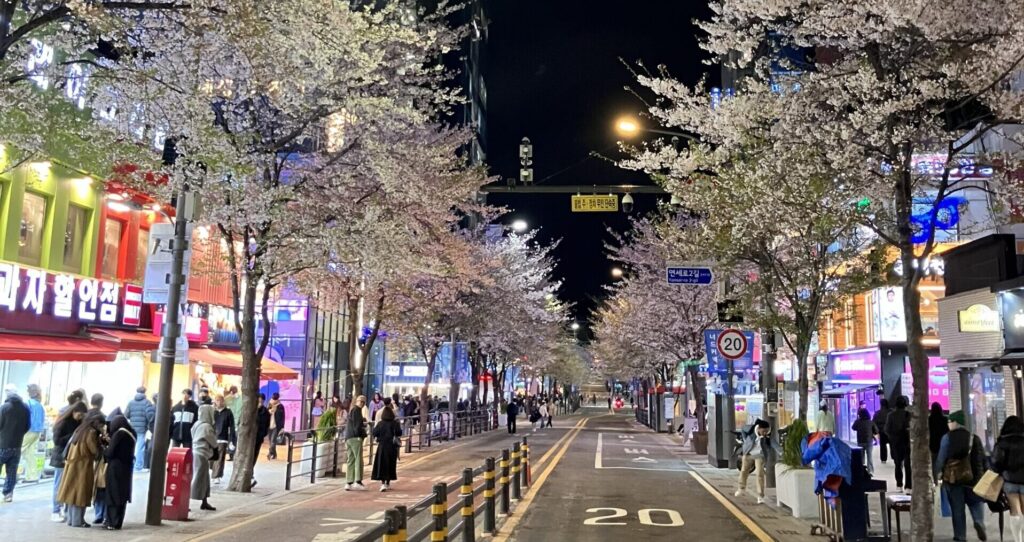
Everyone knows Japanese cherry blossoms (sakura). Jeju has its own endemic species called King Cherry Blossom (왕벚나무). It’s native only to Jeju. Discovered in the early 1900s. A completely different species from Japanese cherry trees.
The competitive name “King Cherry Blossom” is very Korean. Of course it had to be called “King.”
Where to see them:
- Jeonnongro King Cherry Blossom Street (전농로 왕벚꽃거리) runs multiple blocks lined with king cherry trees. When they bloom, branches arc over the street creating tunnels of pink-white flowers. The entire neighborhood is also covered in murals depicting Jeju landscapes, haenyeo, Hallasan, and native animals. Over 100 murals across multiple blocks. Even if you miss cherry blossom season, the murals justify 3-4 hours of exploration.
- Gashiri Noksantdo (가시리 녹산도) in the southeast combines cherry blossoms with canola flowers (yellow) and windmills. All together. Middle of nowhere. No facilities. You pull over, take photos, and continue driving. Requires a car. Not accessible by bus. But if you’re driving the southeast coast, it’s spectacular.
- Sarabong Oreum (사라봉) in Jeju City is where locals go for cherry blossoms. Not touristy. Easy 10-minute walk to the top. Great views of Jeju City, airport, and ocean. You’ll see kindergarten kids having picnics and grandparents exercising.
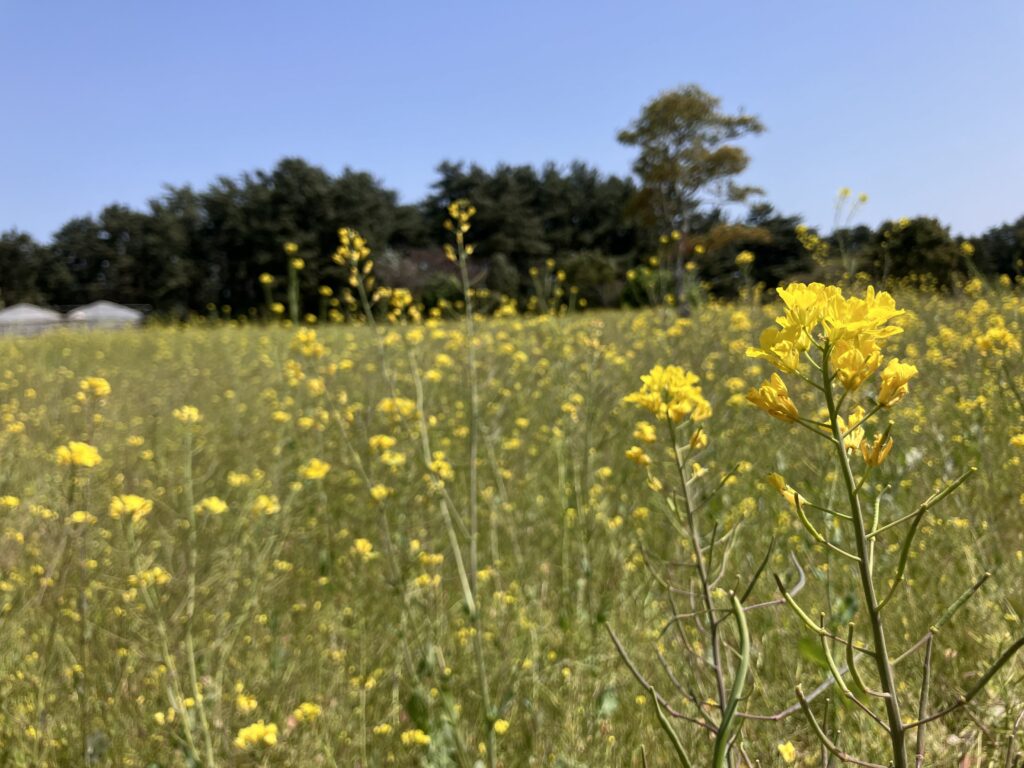
Canola flowers
Bright yellow blooms appear February through May (longer season than cherry blossoms). You’ll see them everywhere, especially on roadsides in the south and southeast.
Cherry blossom timing: Late March through mid-April. Exact dates depend on weather. If heavy rain hits, the season ends early. Book accommodation and rental cars months in advance. This is peak season.
Why spring is popular: Warm weather perfect for hiking. Flowers everywhere. Better air quality than Seoul (Seoul gets yellow dust from China and Mongolia plus fine dust pollution; Jeju gets significantly less). Ideal conditions for outdoor activities.
Spring crowds: Cherry blossom season means packed hotels and tourist sites. First week of May is Golden Week when multiple Korean holidays stack up (Children’s Day, Parents Day, Labor Day). Avoid if possible.
Winter (December – February)
Tangerines & Snowy Hallasan
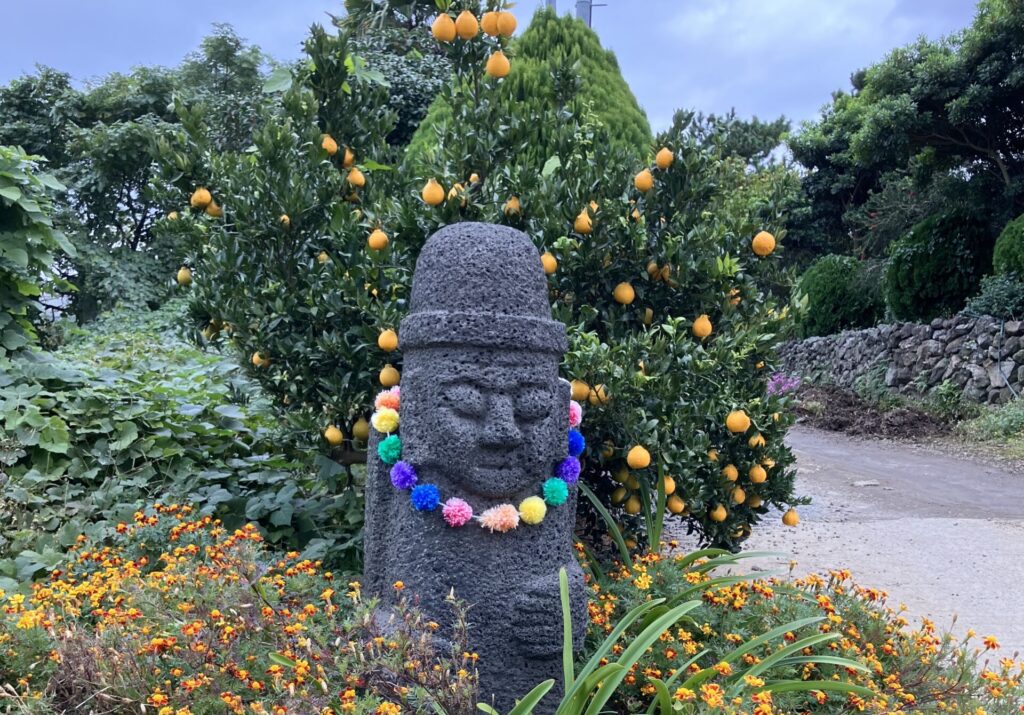
Tangerine picking: November through March. This is the winter activity. Jeju grows most of Korea’s tangerines. You can visit farms, pick your own, eat until you’re sick of them, then box some up to ship to family.
Some farms offer all-you-can-eat picking experiences. You pay an entrance fee, pick and eat as many as you want while you’re there, then pay separately for boxes to take home.
Snowy Hallasan: If you climb Hallasan in winter, you get snow-covered peaks and stunning views. But you need proper winter hiking equipment. Crampons (mandatory). Hiking poles (mandatory). Multiple layers. Winter hiking experience.
This isn’t casual hiking. It’s technical winter mountaineering. If you don’t have the gear or experience, stick to partial trails or wait for another season.
Why winter is underrated: Fewer crowds. Cheaper prices (accommodation, flights, everything). Still beautiful on clear days with incredible views. Can be surprisingly warm in Jeju City and Seogwipo where locals walk around in hoodies.
Winter downsides: Shorter days (sunset around 5:30-6 PM). Some trails close due to snow. Weather is unpredictable. Heavy snow can delay or cancel flights. Cold and windy on the coast.
Winter secret: December can still be mild. Early March is technically spring but still cold. Real winter hits in January-February.
Avoid Seollal: Lunar New Year (usually late January or February). Half of Korea travels during this holiday. Impossible to get tickets. Everything is crowded and expensive. Christmas and New Year are fine since they’re not major Korean holidays.
Summer (June – August)
Beaches & Water Sports
Swimming season: May through September. June is ideal because it’s warm enough for swimming but has fewer crowds than July-August peak season.
July-August equals Korean summer vacation. Schools are out. Companies give summer vacation days (3-4 days, often taken in late August). Beaches get packed, though not Busan-level nightmare density.
Summer activities: All 12 official beaches open. Water sports available (surfing, windsurfing, kitesurfing, kayaking). Scuba diving and freediving offer best visibility. Coastal hiking in early morning or evening.
Summer weather: Hot. Humid. Typhoons possible (but if there’s no typhoon, it’s sunny and perfect for swimming).
Fun fact: Jeju doesn’t flood despite heavy rain. Volcanic rock can’t hold water so everything drains through. But typhoons can shut down beaches and boat activities for safety.
Beach culture: Koreans cover up. Long sleeves. Long pants. Rash guards in the water. It’s more about beauty than skin cancer prevention, though both matter. Sunscreen is mandatory daily, even in winter.
You can rent parasol sets (umbrella plus chairs plus table) for about ₩30,000 per day at popular beaches. Or bring your own tent and gear.
Local strategy: Arrive early (before 9 AM). Enjoy until it gets too hot (1-2 PM). Leave.
Summer downside: Most crowded season. Highest prices. Humidity makes hiking harder (bring extra water if climbing Hallasan). Last week of August sees company vacation shutdowns. Avoid.
Fall (Late September – November)
Autumn Foliage & Perfect Weather
Why Koreans say fall is best: Perfect temperature. Not too hot. Not too cold. Comfortable for walking and hiking. Clear skies.
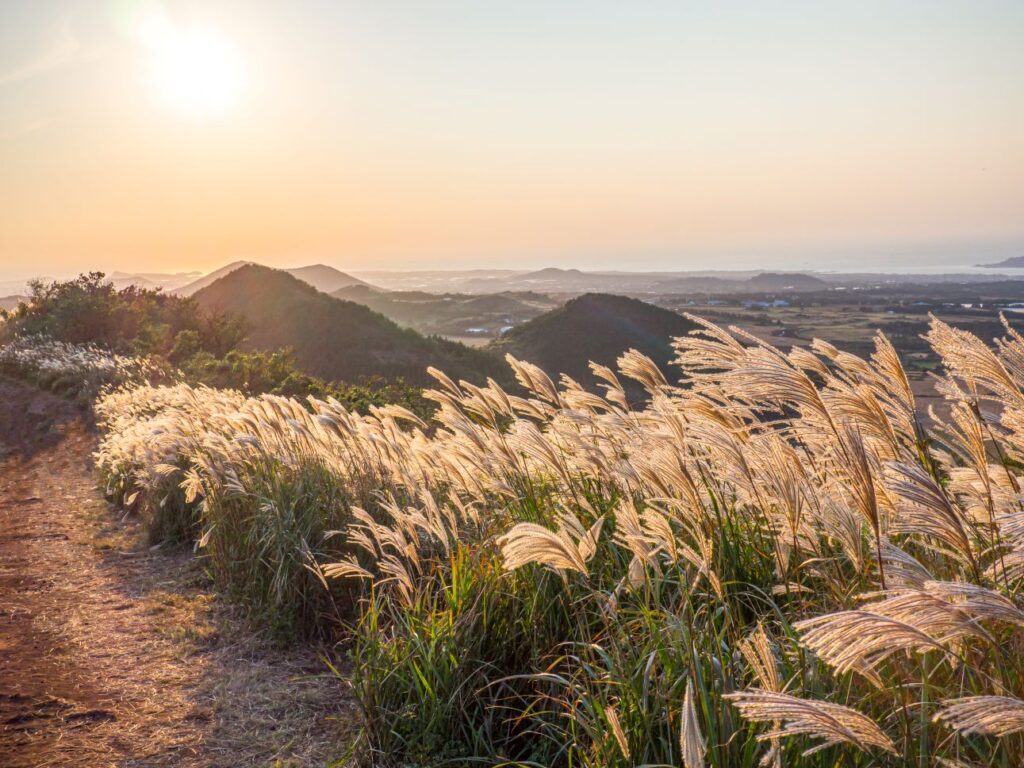
Autumn foliage: Hallasan turns gold, orange, red. Peak foliage hits mid-to-late October. Hiking partial trails gives you autumn colors without the full summit commitment.
Fall crowds: Moderate. Not as packed as spring or summer, but school field trips from mainland Korea visit in fall. You’ll see buses of middle school and high school students at major sites.
Fall downside: Avoid Chuseok. Korean Thanksgiving, usually late September or early October. This is when half of Korea travels. Trains, flights, buses sell out weeks in advance. Accommodation prices triple. Roads are jammed.
Koreans book Chuseok tickets like concert tickets. Ticketing opens one month before. People wait at their computers 15 minutes early, refreshing constantly. Tickets sell out in minutes.
Cherry Blossoms
When: Late March through mid-April
Where:
- Jeonnongro Street (Jeju City)
- Gashiri Noksantdo (southeast, car required)
- Sarabong Oreum (Jeju City)
Tangerines
When: November through March
Where: Farms throughout Jeju. Copy and paste 감귤체험 into KakaoMap or NaverMap.
Cost: All-you-can-eat picking typically ₩8,000-15,000 per person plus a 1-2 kg bag.
What to expect: Pick, eat unlimited tangerines on-site, fill a bag to take with you.
Canola Flowers
When: February through May (longer window than cherry blossoms)
Where: Roadsides throughout Jeju, especially south and southeast regions
Things to Note
Best Overall Weather:
- Spring: Late March through May
- Fall: Late September through November
Cheapest Season:
- Winter December through February (except Seollal period)
Peak Korean Vacation Periods to Avoid:
- Seollal (Lunar New Year) Late January or early February
- Golden Week First week of May (multiple holidays stack up)
- Late August Company vacation shutdowns
- Chuseok (Korean Thanksgiving) Late September or early October
Swimming Season: May through September. June offers fewer crowds while still being warm enough.
Climbing Hallasan in Winter: Requires crampons, hiking poles, multiple layers, and winter mountaineering experience. Don’t attempt the summit without proper gear and skills.
What to Pack by Season:
Spring: Light layers. Mask for yellow dust (less of an issue in Jeju than Seoul but still possible).
Summer: Sunscreen (mandatory). Rash guard for water activities. Umbrella for sudden rain. Light, breathable clothes.
Fall: Layers for variable temperatures. Selfie stick for autumn foliage photos if that’s your thing.
Winter: Padding (puffer jacket). Hot packs (available at convenience stores). Warm layers.
The Bottom Line
Want flowers and perfect weather? Spring (late March through early May). Book early.
Want fewer crowds and lower prices? Winter (December through February). Be prepared for cold.
Want beaches and water activities? Summer (June through August). Arrive early at beaches.
Want comfortable hiking weather and fall colors? Fall (late September through November). Avoid Chuseok.
Budget travelers choose winter (cheapest season). Photographers target spring (cherry blossoms), winter (snowy Hallasan), or fall (autumn foliage). Families with kids prefer summer (beaches) or spring (flowers and mild weather). Hikers do best in fall and spring. Avoiding crowds means winter weekdays, early June, or late November.
Every season works. It depends on what you prioritize.
PART 3: Korean You’ll Actually Use
Asking About Seasonal Items
Useful phrase structure: [Item] + 있어요? (i-sseo-yo?) = “Do you have [item]?” or “Is there [item]?”
Spring (봄 | Bom)
Do you have masks? “마스크 있어요?” Romanization: Ma-seu-keu i-sseo-yo? When: For yellow dust
Summer (여름 | Yeo-reum)
Do you have sunscreen? “선크림 있어요?” Romanization: Seon-keu-rim i-sseo-yo?
Do you have an umbrella? “우산 있어요?” Romanization: U-san i-sseo-yo?
Do you have a raincoat? “비옷 있어요?” Romanization: Bi-ot i-sseo-yo?
Fall (가을 | Ga-eul)
Do you have a selfie stick? “셀카봉 있어요?” Romanization: Sel-ka-bong i-sseo-yo?
Winter (겨울 | Gyeo-ul)
Do you have hot packs? “핫팩 있어요?” Romanization: Hat-paek i-sseo-yo?
Do you have a puffer jacket? “패딩 있어요?” Romanization: Pae-ding i-sseo-yo?
If they don’t have it: “없어요” Romanization: Eop-seo-yo Meaning: “There isn’t any” or “We don’t have it”
Weather Phrases
The weather is nice: “날씨 좋아요” Romanization: Nal-ssi jo-a-yo
It’s cold: “추워요” Romanization: Chu-wo-yo
It’s hot: “더워요” Romanization: Deo-wo-yo
It’s raining: “비 와요” Romanization: Bi wa-yo
It’s snowing: “눈 와요” Romanization: Nun wa-yo
What’s Next?
Tomorrow, Email 9 takes you oreum hunting. 368 small volcanic cones scattered across Jeju. Easy climbs. Stunning views. Almost no crowds. This is where locals go for quiet sunset walks and morning meditation.
But first: decide when you’re visiting Jeju. Everything else flows from that choice.
— Ed
