Play Episode
Episode Summary
Tangerines are so iconic to Jeju that they made it into the podcast’s logo—so this episode is overdue. Ed and Soraya cover the history (tangerines were once so precious that Joseon kings gave them as rewards to scholars), the scale (over 50 varieties grown on the island), and the best way to experience them: tangerine picking at a U-pick farm. For about 5,000 won (~$3-4 USD), you get one hour of unlimited eating plus a bag to take home. The hosts explain when to go (November is peak season), how to find farms (search 감귤체험 on Naver or Kakao Map), and why farm-fresh tangerines taste noticeably better than supermarket ones. They also share tips on the sweetest varieties, where to buy tangerines (farms > roadside stands > markets > supermarkets), and what to do with any extras—including shipping boxes home via Taegbae delivery.
Key Takeaways
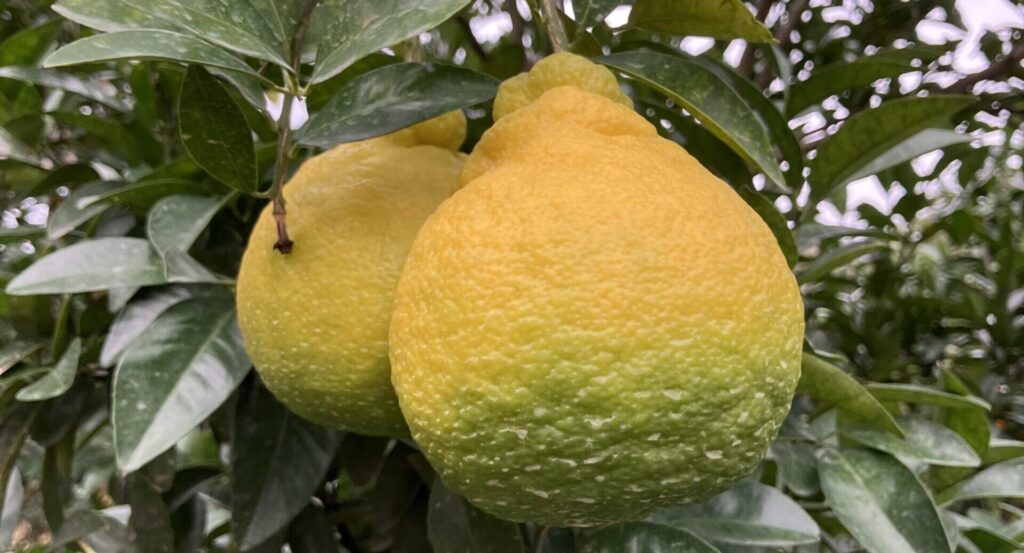
- Jeju has over 50 varieties of tangerines; the Hallabong (with the distinctive bump on top) is the most famous
- Best season: Late October through February/March, with November being the peak time to see orange-laden trees
- U-pick farms cost about 5,000 won (~$3-4 USD) for one hour of unlimited eating plus ~1kg to take home
- To find farms: Search 감귤체험 (gamgyul cheheom) on Naver Map or Kakao Map; no booking usually required
- Price/quality ranking: Farm (best, cheapest) > Roadside stands > Markets (tourist prices) > Supermarkets
- For the sweetest tangerines, look for Tyvek (타이벡 감귤)—grown with reduced water to concentrate sugars
- “University tree” (대학나무): Tangerine trees were once so valuable that one tree could pay for a child’s university tuition
- Pro tip: Do tangerine picking early in your trip so you have time to enjoy what you harvest
- Tangerine Museum near Seogwipo is a decent rainy-day activity but not worth a special trip
Handy Korean with Sora Ssaem (쌤)
하나 둘 셋 (hana dul set) — “One, two, three” (Korean numbers)
- Korean has two number systems: native Korean (하나, 둘, 셋) and Sino-Korean (일, 이, 삼)
- Use Korean numbers for counting things: 하나 (one), 둘 (two), 셋 (three)
- Use Sino-Korean numbers for larger amounts, prices, phone numbers
Tangerine vocabulary:
- 귤 (gyul) = tangerine
- 귤 하나 주세요 (gyul hana juseyo) = “One tangerine, please” (but they’ll probably give it to you for free!)
- 감귤체험 (gamgyul cheheom) = tangerine picking experience (search term for maps)
Next Steps
- Plan your Jeju trip at vamosajeju.com/trip
- Sign up for the 14-part email series at vamosajeju.com/start
- Follow Vamos a Jeju on Instagram, TikTok, or YouTube.
- Share the episode with friends to help the podcast grow
- Visit vamosajeju.com for articles, videos, and resources
- Related Reading: Jeju Tangerine Season: When to Go & Where to Pick Your Own
Episode Transcript
Why Tangerines Are Jeju's Symbol
Ed (00:19)
So I’d like to welcome everybody back to today’s episode of the Vamos A Jeju Podcast And if you’ve looked at us on our show on Apple podcast or Spotify or our YouTube channel, or even come to our website before, you’ll notice our logo, which is this big round. fruity looking thing and that’s called a tangerine. So this logo was really the brainchild of my magnificent co-host Sora. And so I guess to start today’s episode Sora, I’d like to ask you, why did you pick the tangerine as the logo for the Vamos a Jeju podcast?
Soraya (00:58)
Because Tangerine is a symbol of Jeju. So when people think about Jeju islands, three things comes up on their mind. So the first thing is, Hallasan mountain Ed’s favorite. And the other thing is beautiful beach, ocean. And the last thing is the tangerine. Because when you come to Jeju Island, you’re going to see people wearing tangerine hat, tangerine umbrella, tangerine pajama, tangerine bag, everything, like tangerine sleeper.
Ed (01:36)
when you say you see people wearing all this tangerine stuff, like 90 % of that are Koreans from the mainland, right? Because I’m not gonna wear that, but I guess I’m not a normal tourist. Or you know what, my wife would. Okay, yeah, okay.
Soraya (01:42)
Mm-hmm. Right. Also lots of tourists like to do that. It’s cute. It’s cute to take photo with Tangerine hairband, Tangerine hair. It’s cute
Ed (01:59)
Yeah, we have different definitions of cute. So, the tangerine is a symbol of Jeju Island. And I guess to start off, why is it Jeju has so many tangerines?
Soraya (02:14)
long before, we had Tangerine tree, especially during Joseon dynasty, know, each region of Joseon dynasty, had to tribute to the king something really valuable. or the best thing in the region. So from Jeju, of course, the best thing was tangerine. So the king, when they have the national exam, he liked to give people the tangerine, like one each, because it was so precious. Because we can only grow tangerine in Jeju Island. After like 1960, 70, our president back then, he decided to make Jeju have more tangerine farm. So from then we had like tangerine farm everywhere in the south
History of Jeju Tangerines
Ed (03:03)
so what I’m hearing you say is that it used to be something that was natural to Jeju Island. And then, in the last 50, 60 years, modern Korea decided to make tangerines, like one of the main agricultural exports of Jeju. it began a big push to expand, uh, the amount of space dedicated to tangerine farms.
Ed (03:27)
and also like industrial farming and all those practices began to take root. I hear that one thing you said earlier about how like when the Joseon King used to give the successful officials who passed the exam a tangerine because it was so valuable. one of the
Ed (03:48)
the Chinese dialects of Cantonese is called 金, which is the same sound as gold, 金. Cantonese
Ed (03:56)
Yeah. So it’s like, oh, this is interesting. And so you mentioned earlier that in modern Korea, there was a big push by Seoul to really make tangerines the main export of the island. Is it like just one or two kinds of tangerines? Like how many kinds of tangerines are we talking about?
Soraya (04:18)
Once I tried the tangerine ice cream making class in the tangerine farm and then he told me we have more than 50 different kinds of tangerine in Jeju island
Ed (04:30)
Wow, really 50? That sounds like a lot.
Soraya (04:32)
There are many different like for example you have heard of Hallabong, just Kyul, Chanhye-yang
Ed (04:40)
And to be clear, Hallabong is our logo, right? It’s the Tangerine in our logo. Right? Okay. Gotcha. A bump. Yeah.
Soraya (04:43)
Right, right. So something on the top, And all of these species, have different harvesting time and like best season. So I have calendar that says like, which fruits is the best now? Like September, have to do this. October, this. November, this.
Tangerine Picking Experience (감귤체험)
Ed (05:04)
what are some of the best seasons to get tangerines when you’re in Jeju?
Soraya (05:09)
it’s gonna start from at the end of October like November until at the end of February March. so I think the best season to see all of these Tangerine in the tree, it’s November. November would be the perfect time. But if you come like after Christmas, January
Soraya (05:31)
Sometimes, you know, in Jeju it’s snow a lot. So when you see those beautiful orange color tangerines in snowy places, it’s beautiful, beautiful.
Ed (05:35)
when you see all those tangerines plum and juicy on the trees, like, are we allowed to just take them and eat them?
Soraya (05:53)
Of course, no. But I mean.
Ed (05:55)
then how do we pick them? In the US, we have these things called U-pick farms where you can go harvest, pick for yourself blueberries, raspberries, strawberries and all those kinds of stuff. I think there’s something similar, right? In Jeju?
Soraya (06:11)
We do have like exactly same thing in Jeju. So usually you pay like five thousand won like three four dollar to get in for then for one hour you can eat those fresh tangerine you can eat them unlimited unlimited one hour unlimited tangerine buffet but you have to pick it first.
Ed (06:34)
Do you get a free toilet break?
Soraya (06:37)
it also counts in one hour.
Ed (06:39)
Okay. games on, like you go there and you harvest So you’re eating the, the harvest and also keeping some for later. Right.
Soraya (06:49)
Like usually they give us like one kilo per person.
Ed (06:52)
like, why would it be a better idea to like pick your own Tangerines and eat it versus buying it from the markets? Like, is there a difference in taste, quality, price? what’s the difference?
Soraya (07:05)
I think of course the taste is a lot better because when you buy it from the store it’s been a while after harvesting but when you just harvest and then eat it it’s so much better it’s lot more juicy You can see those trees and then you just have it. So it’s very authentic experience, I would say. And lots of families from mainland Korea, they like to do this tangerine picking experience with their children because they love this kind of activity.
Ed (07:27)
when I was in Jeju, at the airport, I saw people like carrying boxes of tangerines. I’m not sure if it was checked in or carry on, but a lot of Koreans actually carry that to the mainland. is it very expensive in the mainland? why bother? It seems like a lot of work to have to bring all that tangerines to the mainland. Like, is there a huge difference in savings or like why?
Soraya (07:46)
No, it’s similar. mean Jeju is a little bit cheaper. It’s a little bit cheaper because we can buy it from the farm. But I would just send it through the Taegbae
Ed (08:12)
Taegbae the delivery service, So then you’re doing three things when you go for tangerine picking. Number one, you’re picking the tangerines to eat. Number two, you’re picking the tangerine in the bag to take home. And then the third thing you’re doing is you are actually buying and shipping pre-packed tangerine boxes to the mainland.
Soraya (08:26)
Right, yes, I just wanted to say that my mom, she loves tangerine. So she’s like specialist for checking the taste of tangerine. And then she told me there are some differences between that tangerine that I send from the farm and then tangerine that she bought from the
Ed (08:48)
The supermarkets, yeah.
Soraya (09:01)
But she told me the one from
Ed (09:01)
that’s fascinating.
Soraya (09:02)
the farm, it’s a lot better.
Ed (09:04)
like, is it not psychosomatic? Like she because it’s from the farm, she goes like, it’s better. Okay.
Soraya (09:09)
Hahaha! I don’t think so. She’s very strict for the taste.
Ed (09:18)
Okay. Gotcha.
Ed (09:19)
I remember I did it once with my wife Michele and we ate but unfortunately I don’t really like tangerines so I ate a few but my wife just went crazy with it and then we filled our bags and I was like no we’re leaving in two days we have a lot of tangerines and so we gave them away so I guess one thing I would say is that if you are visiting Jeju
Ed (09:46)
for like three, four, five days and you want to do tangerine picking, I would suggest if the weather permits and it’s the right season, I suggest you do it early in your trip. That way you have the rest of your time to enjoy the tangerines. Sora I’ve heard you once told me that, the tangerine tree is also called the university tree. Why is that?
Soraya (10:11)
Right, because if you have a tangerine tree in Jeju farm, you can send your children to the university, meaning you can pay for the tuition fee for the uni for your children. So we call those tangerine tree as university tree because back in like until 1970, tangerine was really, really expensive. during Joseon dynasty, tangerine was for the king. Normal people could not have it like easily.
Ed (10:39)
think I remember seeing that about the university tree in the Tangerine Museum. That’s in the south, just near Seogwipo city, the southern city. It’s not a big museum, but all around it is like the Tangerine Orchard. So you can see in the right season, you actually see all the Tangerines on the tree. the museum itself, it’s not very big, but it does talks to you about the history of Tangerines the Tangerine Museum, I think it’s… If you have a car and you have some time and you’re already in Seogwipo city, think it’s a good stop if let’s say it’s raining and you want to like do something away from the rain. But I wouldn’t go there just for it. It’s quite…
Ed (11:23)
out of the way need a car to get there or a taxi. I’m glad I went. But that was a, it was exactly that. It was a rainy day. And so we had a car and we were in Seogwipo city. And so like, oh, what should we do today? It’s raining. Okay, let’s go to this museum. And it was, it was a great two hours. But if it’s a great weather, I’d rather just be. know, tangerines myself.
Where to Find Tangerines & What to Try
Ed (11:47)
Sora, if our audience listens to what we got to say, and then they show up in Jeju all ready to pick some tangerines for themselves, what’s the best way of finding a U Pick tangerine farm on Jeju?
Soraya (11:59)
So when you travel inside South Korea, we usually use two different maps. One is Naver map and the other one is Kakao map. You can download from App Store or Google Play. Also, you can use it on your laptop and you can search in English, but it’s not working well. So we’re to put the thing for tangerine picking in Korean, 감귤체험 in our show notes so you can copy paste on Naver map or Kakao map then there will be like hundreds of tangerine picking place so you can just find something near you you can book first but usually you don’t really have to book so you can just go there show up pay the entrance and then enjoy
Ed (12:42)
we do not recommend using Google Maps in South Korea but you could use Google Map to search things so for instance you could enter like Tangerine, picking Jeju into Google Maps and it will show you about eight or nine places not the hundreds that Sora was talking about but at least it’s a few the farms are not a good place to try and get to using a bus so yes it definitely need a rental car Tangerines are yummy to eat, you know, off the tree. You peel them. It’s yummy. But I also know having been in Jeju that there’s a lot of different food and drinks that are made from Tangerines quickly. Now, what are the top three?
Soraya (13:23)
first of all, the tangerine juice. And the other one is there’s a tangerine pie. You’re gonna see a pie made with tangerine jam. And the other one is tangerine chocolate.
Ed (13:26)
Okay, makes sense. I think it is safe to say that the tangerine picking experience is something that you should at least try one time. It is good fun. And to recap, You’re going to want to be in Jeju around November and December, For me, I don’t like tart things. I don’t like sour stuff. So. I will definitely gravitate towards the sweeter varietals. What is a sweet kind of tangerine, Sora?
Soraya (14:03)
There’s Tyvek I need to explain this because there’s one kind of tangerine that they don’t give the tangerine tree water a lot so that they want to survive and then they concentrate all the sugars in it. that sounds very harsh, but yeah, it’s tasty.
Ed (14:16)
Okay, what’s it called again?
Soraya (14:30)
Tyvek (타이벡 감귤). Yeah
Ed (14:32)
Tyvek Tyvek (타이벡 감귤). basically for me if I want to have sweet tangerines I have to go for the ones that have been tortured
Ed (14:43)
how about you what’s your favorite kind of tangerine
Soraya (14:46)
My favorite one is have the balance with sour and sweet. Because if it’s just sweet, I don’t like it. I like something with a little bit of sourness, like balanced one.
Ed (14:58)
Okay. And so what’s that called? Is that just one type of tangerine or?
Soraya (15:04)
I mean like one type of tangerine can have like many different tastes so we have to taste that first and then buy it
Ed (15:10)
I see. Gotcha. Okay.
Soraya (15:14)
Because in the most of the place you can taste first and then you can choose whatever you want
Ed (15:19)
Wait wait wait, so you can taste first before you do the picking?
Soraya (15:23)
Not the picking when you go to the store. In the store there’s a many different stuff so you can taste everything and then choose whatever you want.
Ed (15:26)
right, right, right, right, right. sometimes when I walk around or drive around Jeju, like you see like some of they have like roadside tangerine stores. And then if you go to like the Olle Market or Dongmun Market, like the markets, there’s also tangerine stores. is one better than the other in terms of price? Like is one more expensive, one more touristy or is it kind of the same?
Soraya (15:50)
I would say in the farm is the best thing you can have and also it’s cheaper. And then the roadside can be cheaper than the market because market is always more expensive for tourists. just pull over near the roadside and then you can just check.
Ed (15:55)
Okay. touristy. Yeah, gotcha, gotcha. and then the supermarkets tangerines are probably not that good.
Soraya (16:15)
Yeah, compared to the farm one.
Ed (16:16)
in a super? all right so today has been all about tangerines, where to find them, the short history of tangerines, what are the best flavors, when to go and all that so this has been a 101 level class on tangerines
Handy Korean with Sora Ssaem (쌤)
Ed (16:40)
And now here’s the part of the show where, as always, we share some essential Korean phrases that will be helpful for your trip to Jeju and of course Korea in general. We call it drum roll handy Korean with Sora Ssaem (쌤)!
Soraya (16:54)
Woo!
Ed (17:00)
So Sora, what are we going to share with our audience today?
Soraya (17:00)
Again? So today we’re gonna talk about 하나 둘 셋 I think you have heard of this many times if you have listened to our podcast, because we have that in our show. Hana, dul, se means one, two, three, easy, right?
Ed (17:22)
So Hana, two, set. But then I’ve also learned that there’s a different counting system, which is like 일 이 삼 also means one, two, three. When do we use which one? It’s a bit confusing, I guess.
Soraya (17:38)
I know like when foreigners start learning Korean first time, this is kind of the difficult thing that you encounter at first. So we have two different number system like you said, like 하나 둘 셋. It’s actually Korean number. And then 1 2 3, this is number from Chinese. So we tend to use the Chinese number 1 2 3. if it’s a bigger number because it’s hard to use the Korean number in a big number so we use Chinese number for a big one big amount and for counting like one apple two apple three apple then we use Korean number like 아메리카노 하나 주세요 like this
Ed (18:25)
okay. So since we just talk about tangerines in today’s episode, I can go like a one tangerine, two tangerine, three tangerines. How do we say tangerine in Korean?
Soraya (18:33)
In korea. Yeah, you can just say kyl.
Ed (18:49)
So since we talk about tangerines in this episode and tangerines is 귤 then I could say 귤 하나 주세요 Give me one tangerine, please.
Soraya (19:00)
Mm-hmm, you can say that. Right, right. But if you say that to the people in the market, they will just give it to you for free. Because 귤 하나 is so cheap, so they won’t sell it to you. They’ll just say, okay, you can have it.
Ed (19:16)
really? So if I do that for like 10 stores, I can get 10 Tangerines for free?
Soraya (19:18)
Yeah. Yeah, but actually in Jeju in winter if you go to a restaurant they will put a box of tangerine so you can just get for free.
Ed (19:32)
Well, okay. If you’d like to see what we covered today, 하나 둘 셋 just check out our show notes. And if today’s show has gotten you thinking like, maybe I should go to Jeju in 하나 둘 셋 then we’ve got something for you. We’ve taken everything that Sora and I know about visiting Jeju as a DIY traveler, and we’ve put it into a 14-part email series.
Soraya (19:57)
So to get that email straight to your inbox, just sign up at vamosajeju.com / start. And for the latest update, you can follow us, vamosajuju on Instagram, TikTok and Facebook group. And finally, the best way for a new podcast like ours to grow is organically. So if you found this episode helpful, please share us with your friends. And who knows, maybe we will Vamos a Jeju together.
Ed (20:27)
And with that, all that’s left for us to say is… Annyeong! Hasta luego!
Soraya (20:32)
Bye! Au revoir.
