What You'll Find in This Article
Korea is already one of the fastest countries in the world when it comes to getting food in front of you. Walk into a restaurant that serves one dish and you will sometimes find the food arriving before you’ve even taken off your jacket. So the concept of “fast food” gets complicated here.
What I’m really talking about in this post is two different things: the Western-style chains you’ll recognize from home, and the Korean alternatives that do the same job—quick, cheap, satisfying—but taste completely different. Both are worth knowing about before you go.
The Western Chains: What to Expect
McDonald’s and Burger King
Both are here. Both work the way you’d expect. McDonald’s has playgrounds in many locations, making them popular with families—they function as a kids’ zone as much as a restaurant. For older Koreans, burgers are not considered real food. A real meal has rice. But for younger Koreans, the drive-through is a legitimate quick option when time is short.
The more interesting thing about Korean McDonald’s is the Taste of Korea menu series, a rotating lineup of burgers built around regional Korean ingredients. Past examples have included a garlic burger from Changnyong City, a green onion cream croquette burger from Jindo, a pork burger from Bosung, and a sweet potato mozzarella burger from Iksan. These are limited runs—a few months and then gone, which is exactly the kind of thing that makes Koreans show up for them.
Burger King has done similar collaborations. One notable one used the sauce from Buldak Bokkeumyeon, the extremely spicy instant noodle that became famous globally.
Lotteria
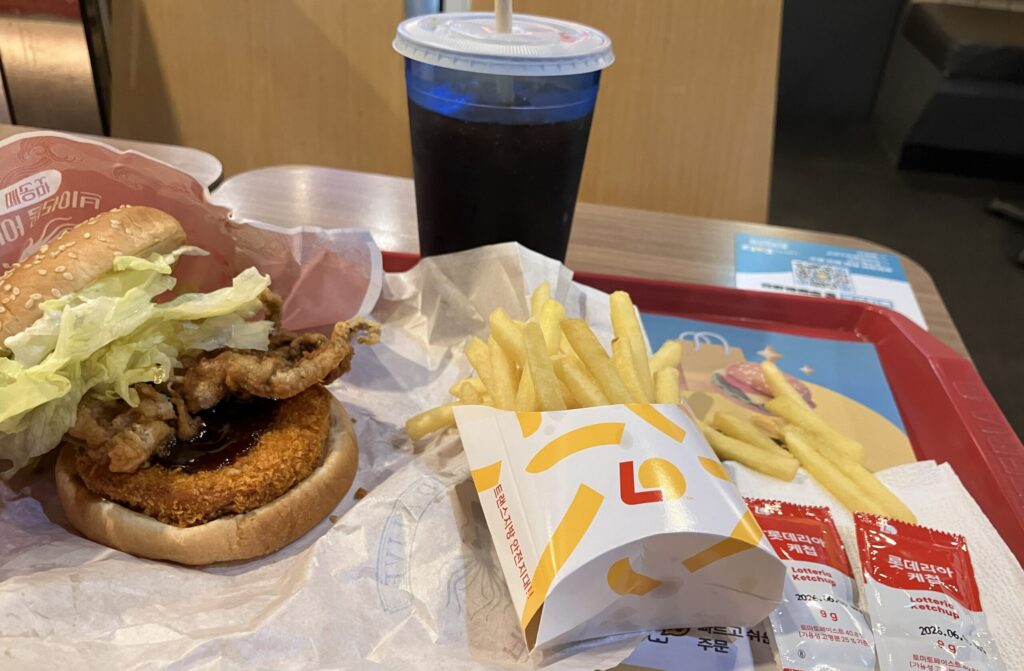
If McDonald’s and Burger King are mainly in the big cities, Lotteria is everywhere. Small towns, side streets, near schools—Lotte’s fast food chain fills in all the gaps. It is owned by the Lotte Group, the same conglomerate behind Lotte Department Stores, Lotte Hotels, and Lotte Rent-a-Car.
Lotteria leans hard into Korean collaborations and limited menus, which has made it popular with younger Koreans. The most recent example: a tie-in with Culinary Class Wars (흑백요리사), the Netflix reality show that pitted classically trained chefs against self-taught ones. Lotteria collaborated with winner Napoli Mafia to produce a mozzarella burger, a donkatsu burger, a kalbi burger, a black squid burger. The queues were real.
Mom’s Touch
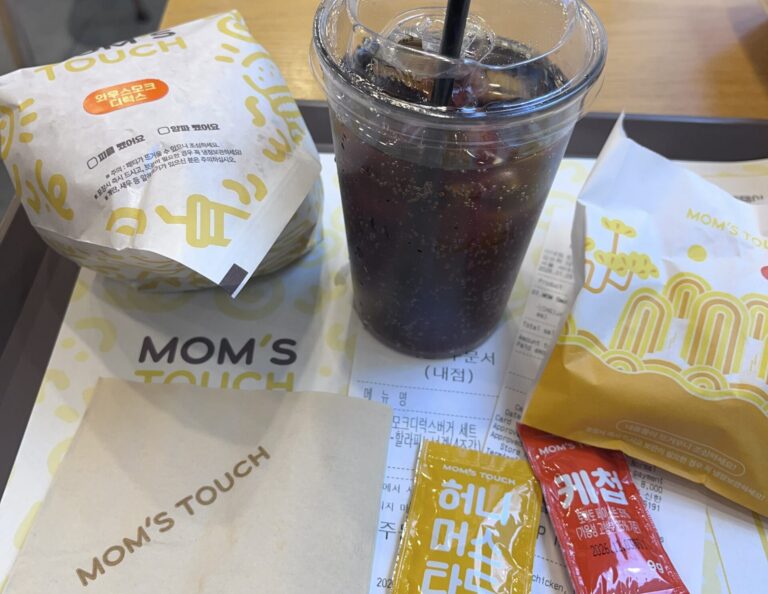
Less well known internationally but worth trying. Mom’s Touch is a Korean fried chicken and burger chain that sits somewhere between KFC and a local chicken joint. Popular near schools—middle schoolers and high schoolers are the core audience. There are over ten locations in Jeju alone.
KFC vs Korean Fried Chicken Chains
KFC exists in Korea and the chicken is decent. But it is operating in a country where fried chicken is taken seriously, which creates a comparison problem.
Korean fried chicken chains—Goobne Chicken, Gyochon, BHC, and others—offer a level of variation and sauce complexity that KFC simply does not. The frying technique produces a crispier result, and the sauces range from soy-garlic to intensely spicy to things like BHC’s Brinkel, which tops crispy fried chicken with cheese powder.
Korean chicken joints also serve beer, which KFC does not. The trade-off: they are primarily dinner and late-night operations, opening around 3 or 4 PM and running until 1 or 2 AM. If you are looking for fried chicken at noon, KFC is probably your option.
Subway
Subway is in Korea and has a following, but the ordering process—choose your bread, toast or not, protein, vegetables, sauce—is a genuine cultural mismatch. Koreans tend to prefer restaurants where the decision has already been made for you. A place with one dish is considered a specialist; too many choices signals a lack of focus.
The workaround that has emerged is very Korean: people follow Instagram posts that specify exactly what to order for the best result. You are not making a choice—you are executing someone else’s choice. It is social proof applied to sandwich construction.
BTW: One recent trend has been using a Subway salad bowl as the base for a DIY taco at home. Ordering specific ingredients as a takeaway bowl and assembling it yourself. Koreans do this kind of creative reframing of a foreign chain menu very well.
Isaac Toast (이삭토스트)
This one looks like a sandwich chain but deserves its own category. Isaac Toast shops—usually tiny, near universities and schools—have a large flat grill out front where they toast bread, pile on shredded cabbage, egg, and fillings, and hand it to you half-wrapped in paper. It is sweet and salty and very good. Sora’s favorite fast food chain. There are locations in Jeju.
Pizza
Korean pizza is its own category. Domino’s and Pizza Hut are present, but local chains like Pizza Alvolo and Pizza School offer Korean variations that go well beyond the standard toppings. Potato pizza. Bulgogi pizza. Sweet potato pizza. Corn pizza. Seafood pizza.
The default order at most Korean pizza chains is banban (반반)—half and half. Two different pizzas on one base. Committing to one full pizza’s worth of toppings is apparently less appealing than having two varieties.
Pizza School is the budget option, popular with students, and you will spot it near schools and universities.
The Korean Korean Fast Food: Bunsik (분식)
This is the category that matters more for understanding how Koreans actually eat quickly.
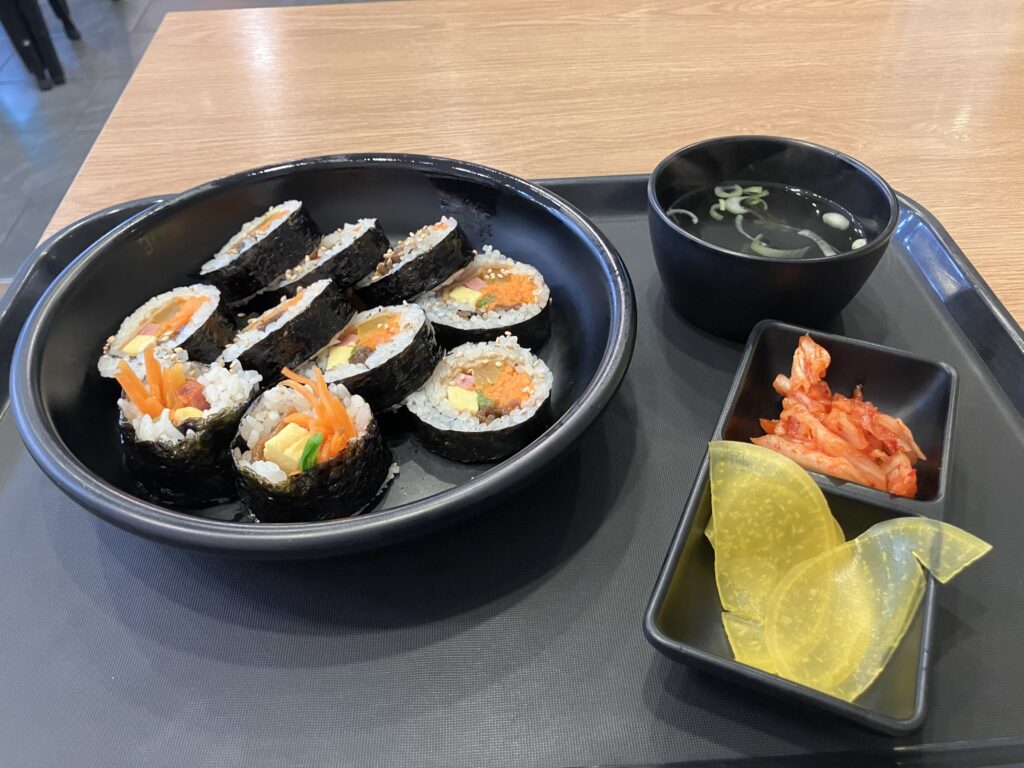
Bunsik refers to a category of small snack foods typically sold from dedicated bunsik shops—small, casual places often found near schools.
Tteokbokki 떡볶이 — Chewy rice cakes in a sweet, spicy sauce. The anchor item at any bunsik shop. Start here.
Gimbap 김밥 — Seaweed-wrapped rice rolls with various fillings: vegetables, tuna, kimchi, egg, beef, and more. The most portable food in Korea. Sora’s version of fast food on a busy day: grab one or two gimbap and eat them walking, or in the car, unwrapping from the foil one bite at a time.
Twigim 튀김 — Deep-fried items in a thick batter: mandu (dumplings), gochujeon (chili peppers), gimmari (glass noodles wrapped in seaweed), shrimp, sweet potato, vegetables. Closer in concept to tempura but with a heavier batter. Usually ordered as part of a set.
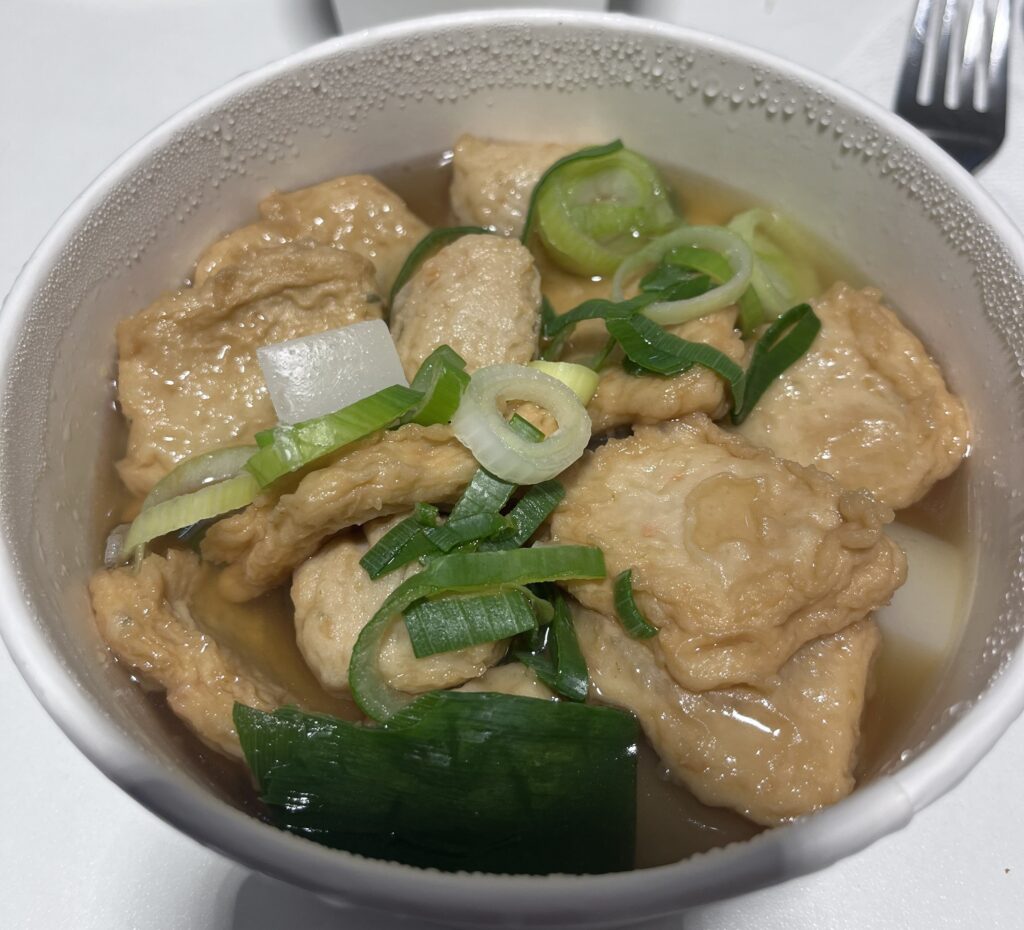
Eomukgochi 어묵꼬치 — Fish cake skewers simmered in a seafood broth. The broth is free and refillable, served in small cups. You can have one skewer and three cups of broth. Usually eaten standing.
Sundae 순대 — Korean blood sausage stuffed with glass noodles inside intestine casing. Not for everyone. If you see “sundae” listed on a Korean menu written in English, it is not ice cream. It is blood sausage. Now you know.
The standard combo order at a bunsik shop is Tteok-Twi-Sun (떡튀순): tteokbokki, twigim, and sundae as a set. It is the Korean equivalent of a combo meal.
The Real Fast Food: The Convenience Store
Sora’s actual answer when I asked about Korean fast food was the convenience store (편의점, pyeon-ui-jeom). And she is right.
CU, GS25, 7-Eleven, and Emart24 are everywhere in Korea, open 24 hours, and carry a full range of ready-to-eat food: triangle gimbap (삼각김밥), lunchboxes (도시락, dosirak), instant ramen you can make in the store, banana milk, steamed buns, and various hot foods at the counter.
The dosirak—a rice-based lunchbox with banchan (side dishes)—runs around 6,000 to 7,000 won and is a genuinely good meal. You can microwave it at the in-store counter and eat it there.
Triangle gimbap is the most portable of all: a single serving of rice with a filling, wrapped in seaweed, in a triangular plastic package designed so you can pull it open in three steps without the seaweed getting soggy. Before I climbed Hallasan, the only food available at 5:30 AM was from a convenience store near the trailhead. I ate several triangle gimbap and had no complaints.
One Thing Worth Knowing
Koreans treat choice differently from most Western cultures. A restaurant with one dish is considered a specialist—that is a good sign, not a limitation. Too many options suggests unfocused cooking. This is why Subway creates genuine anxiety, why banban pizza exists, and why the most popular Instagram food posts are essentially instructions telling you exactly what to order.
If you are visiting and feeling overwhelmed by a menu, narrow it down. Ask someone what they usually get. Order what the person next to you is having. In Korea, that is not indecisive. It is efficient.
