NORTHEAST COAST: Gimnyeong to Woljeongri
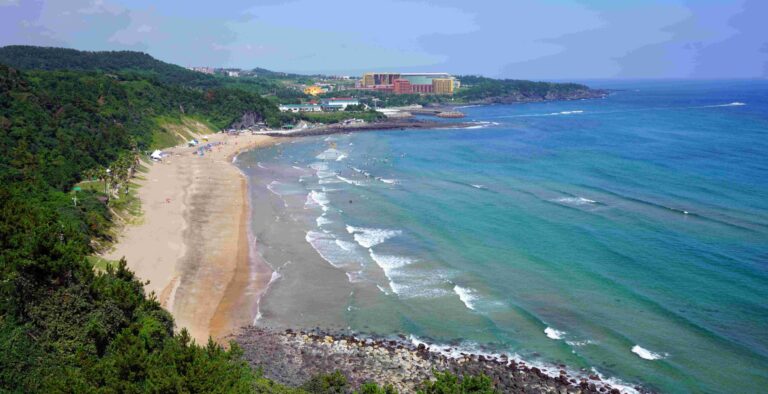
The northeast coast transitions from the busier north toward the more dramatic east. This stretch offers excellent beaches with slightly fewer crowds than Hamdeok.
Gimnyeong Seongsegi Beach (김녕성세기해변)
Location: Northeast coast, near Manjanggul Lava Tube
Sand type: White sand
Best for: Photography, combining with lava tube visit
What you can do: Photography (popular for wedding/couple photos), swimming. Manjanggul Cave is 10 minutes away by car.
The honest take: A pretty beach that works well as part of a day exploring the northeast. The cobalt blue water photographs beautifully. Not a destination beach on its own, but worth a stop if you’re visiting Manjanggul.
Woljeongri Beach (월정리해변) 
Location: Northeast coast
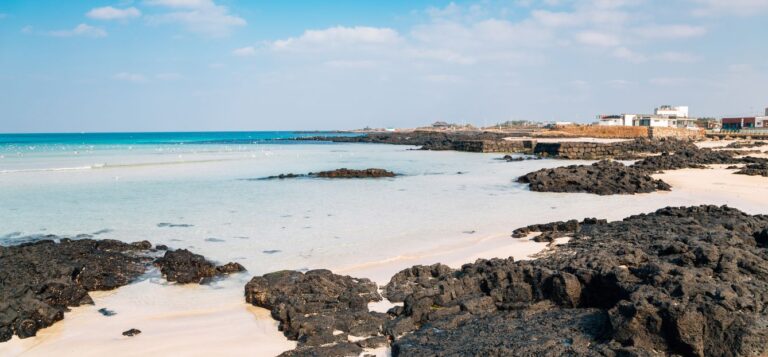
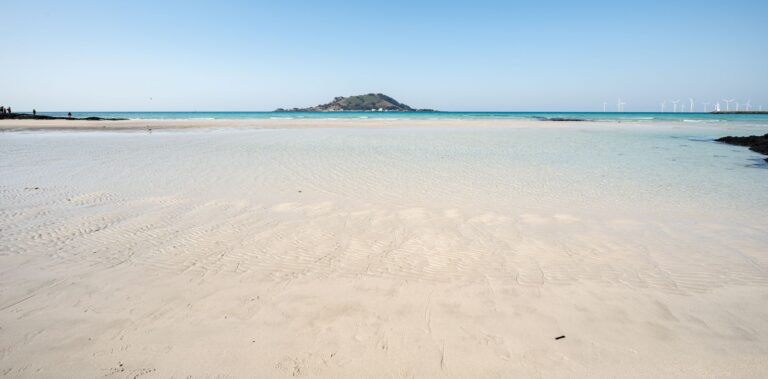
Sand type: White sand with volcanic rocks
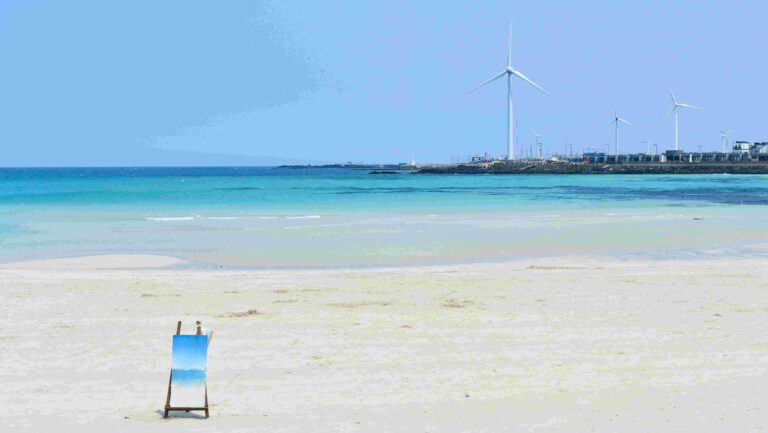
Best for: Cafe culture, photography, relaxed beach vibe, windmills
What you can do: Transparent kayaking (see-through kayaks let you view the ocean floor), swimming, and cafe hopping. The beachfront is lined with cafes and restaurants, photography with windmills in the background, watching sunset over drinks.
The honest take: Woljeongri has the best cafe scene of any Jeju beach. The water is crystal clear, the windmills add visual interest, and the vibe is relaxed. More spacious than Hamdeok, so even when it’s popular, you can find quiet spots.
EAST COAST: Sehwa to Seongsan
The east coast is where Jeju gets dramatic. Volcanic formations, views of Udo Island, and the iconic Seongsan Ilchulbong (Seongsan Sunrise Peak) define this stretch. The Jeju Haenyeo Museum is also located on the eastern coast.
Sehwa Beach (세화해변)
Location: East coast, near Haenyeo Museum
Sand type: White sand with extensive volcanic rocks
Best for: Photography, less-crowded alternative to popular beaches
What you can do: Photography (volcanic rock formations, windmills in distance), walking on rocks, cafe culture (similar to Woljeongri but quieter), combining with a Haenyeo Museum visit. If you time it right, the Sehwa 5-Day Market may even be in business. The Haenyeo Sumbisori-gil trail also goes through here.
The honest take: Sehwa is mostly covered in volcanic rocks, so it’s not great for swimming. But that’s exactly why it’s less crowded. If you want beach scenery without the crowds, Sehwa delivers. Great for photographs and contemplation.
Hado Beach (하도해변)
Location: East coast, views of Udo Island
Sand type: White sand
Best for: Water sports, views of Udo Island.
What you can do: Stand-up paddleboarding, kayaking, snorkeling, swimming in the Summer. You can also climb Jimibong (지미봉), whose trailhead is a short 10 minute drive away. The view of Seongsan Ilchulbong from the top is gorgeous.
The honest take: Hado is the water sports hub of the east coast. The water is clear and relatively calm, making it perfect for paddleboarding and kayaking. The views of Udo Island from the water are spectacular. Less famous than other beaches, which means fewer crowds.
Gwangchigi Beach (광치기해변)
Location: Near Seongsan Ilchulbong
Sand type: Black volcanic sand
Best for: Views of Seongsan Ilchulbong, horse riding
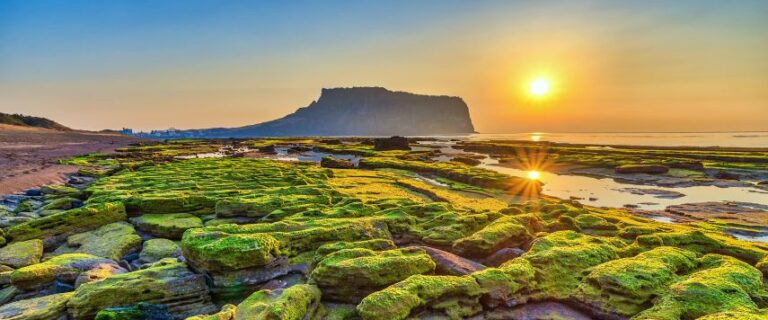
What you can do: Photography with Seongsan Ilchulbong in background, horse riding along the beach, walking on black sand, watching sunrise behind Seongsan.
The honest take: Swimming here is difficult due to rocks and currents, but that’s not why you come. Gwangchigi offers arguably the best views of Seongsan Ilchulbong from beach level. If you time it right and the tide is out, you see the rocky seabed, complete with tidepools.
Seopjikoji Coastal Hike (섭지코지)
Location: Southeast coast, just south of Seongsan Ilchulbong
Best for: Coastal walks, photography, K-drama filming locations, views of Seongsan. There is also a beach here.
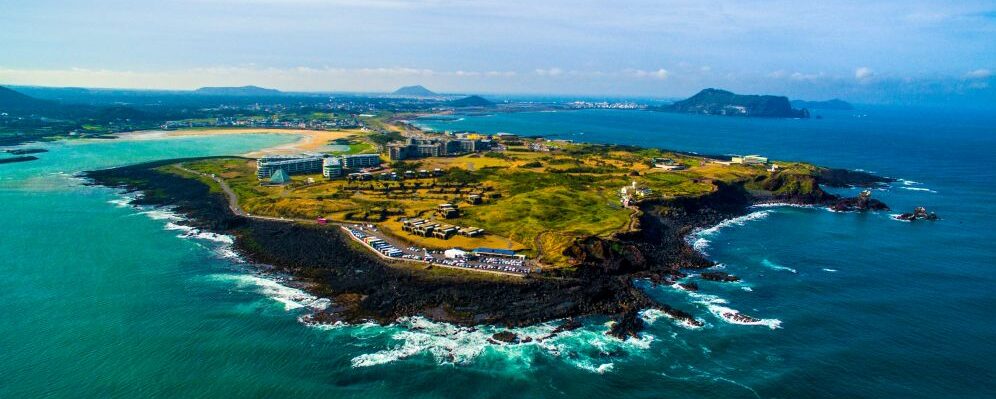
What you can do: Walk the 1.6 km paved coastal path from the parking lot to the lighthouse and Glass House (30-60 minutes round trip), climb to the lighthouse for panoramic views, visit the Tadao Ando-designed Glass House and Mint Restaurant, see Sinyang Beach at the entrance, photograph canola flowers (spring), spot Jeju ponies grazing on the hillside, explore unique rock formations at low tide including the legendary Seondolbawi Rock.
The honest take: Seopjikoji is where Jeju gets cinematic. It’s been featured in Korean dramas like “All In” and “My Girl,” so expect plenty of visitors. What makes it worth the crowds: uninterrupted views of Seongsan Ilchulbong from across the water, red volcanic scoria terrain unlike anywhere else on Jeju, and the contrast between traditional Jeju scenery (ponies, stone walls, canola fields) and modern architecture (the Glass House). Combine with a visit to Seongsan, it’s only a 10-minute drive. Visit at golden hour for the best photos.
SOUTHEAST COAST: Pyoseon
The southeast coast is quieter than the popular east, with one standout beach that’s perfect for families.
Pyoseon Beach (표선해수욕장)
Location: Southeast coast
Sand type: White sand
Best for: Families with young children, shallow wading
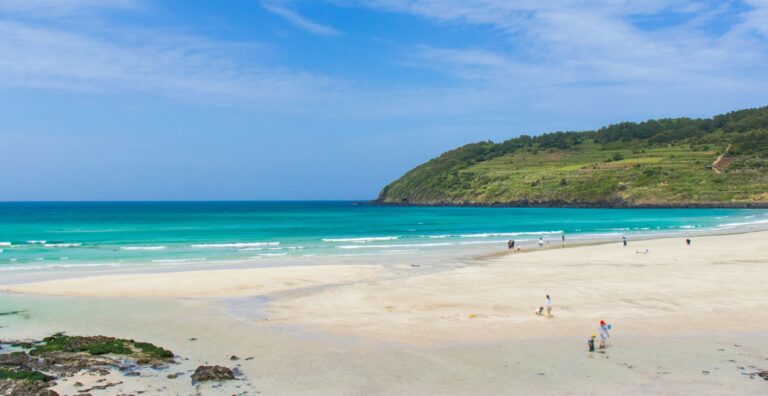
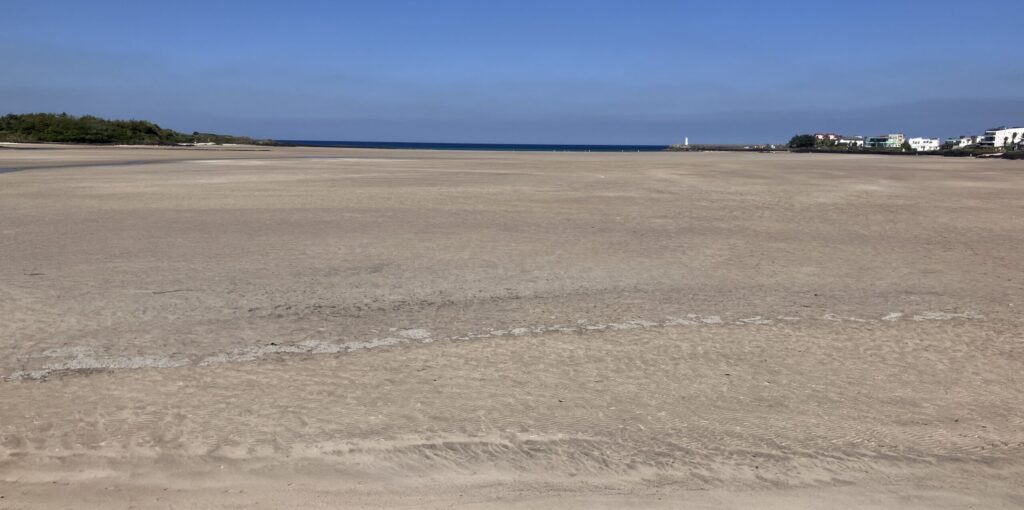
What you can do: Swimming in extremely shallow water, wading at low tide (the water recedes dramatically, creating a massive U-shaped sandy bay). Beach play for kids, nearby Jeju Folk Village, and kite and wind surfing when the tide is in.
The honest take: Pyoseon is one of Jeju’s most unusual beaches. At low tide, the water recedes so far that you can walk hundreds of meters into the bay on sand. This makes it perfect for families with small children. Check tide tables before visiting.
SOUTH COAST: Seogwipo Area
The south coast has Jeju’s warmest microclimate. Hallasan blocks cold northern winds, creating more tropical conditions. This is also where you’ll find Jeju’s best diving.
Namwon Keuneong Promenade (남원큰엉해안)
Location: South coast, east of Seogwipo
Best for: Cliff walks, photographs
What you can do: Walk the 1.5-2 km coastal trail along 30-meter cliffs, explore two natural sea caves, stop at the observatory and rest areas, fish from the rocky shores.
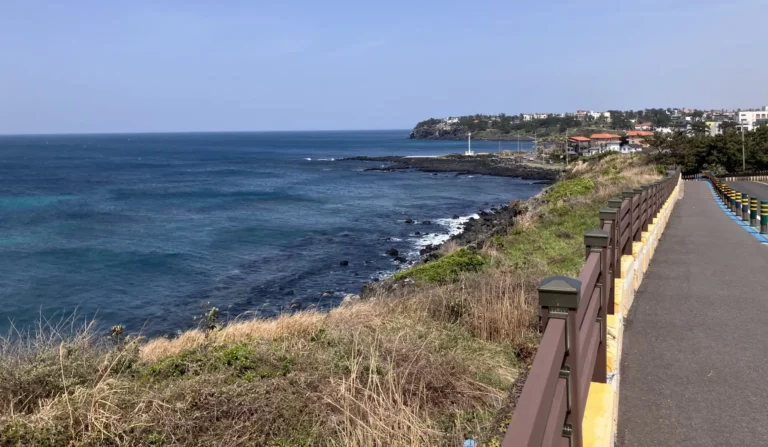
The honest take: Not a beach at all, but a fantastic rocky trail where you’re going to have to watch your step. “Eong” means hill in Jeju dialect, and “Keuneong” means a huge rock that looks like it’s opening its mouth to swallow the sea, which is exactly what the cliff formations look like. The white waves crashing on black basalt rock is genuinely spectacular. Part of Jeju Olle Trail Course 5. The Camellia Arboretum is a 10 minute drive away, and is worth checking out if the camellias are blooming.
Saesom Island and Saeyeongyo Bridge (새섬 새연교)
Location: Seogwipo Port area
Best for: Evening walks, sunset photography, nature escape near downtown Seogwipo
What you can do: Cross Saeyeongyo Bridge (Jeju’s longest pedestrian bridge at 169m, designed to look like a traditional Jeju “teu” fishing boat), walk the 1.2 km forest path around uninhabited Saeseom Island, photograph the bridge lit up at night (until 10pm), watch the musical fountain show near the harbor (twice daily), view Munseom Island from the bridge, see the massive fishing fleet in Seogwipo Port leave after dark.
The honest take: The bridge name means “creating new relationships,” and it’s become one of Seogwipo’s most photographed landmarks, especially at sunset when the sail-shaped structure is silhouetted against the sky. Most visitors stop at the bridge for photos and leave. Don’t. Cross over to Saeseom Island for a peaceful 30-minute forest walk with views of offshore islands. Perfect for burning off calories after Maeil Olle Market, or a relaxed evening stroll after dinner. Connects easily to Cheonjiyeon Waterfall via walking path.
Jungmun Saekdal Beach (중문색달해변)
Location: Jungmun Tourist Complex, south coast
Sand type: “Jinmosal”, a mix of black, white, red, and gray volcanic sand
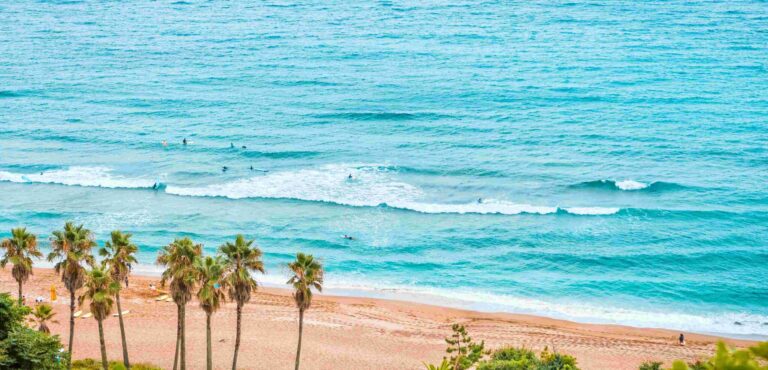
Best for: Surfing, resort atmosphere, unique sand
What you can do: Surfing (best waves on Jeju), jet skiing, parasailing, swimming, walking to nearby Cheonjeyeon Waterfall, visiting Jusangjeolli Cliffs (columnar joints).
The honest take: Jungmun is Jeju’s most developed beach area, complete with resort hotels, tourist facilities, the works. If you want serenity, this is not the place for you. The sand that changes color depending on sunlight is genuinely interesting. If you want to surf, this is the place. Waves are bigger and more consistent than other Jeju beaches.
Nearby: Jungmun is close to several major attractions such as Jusangjeolli Cliffs, Cheonjeyeon Waterfall, Yeomiji Botanical Garden. Good area for a full day.
Diving Around Seogwipo
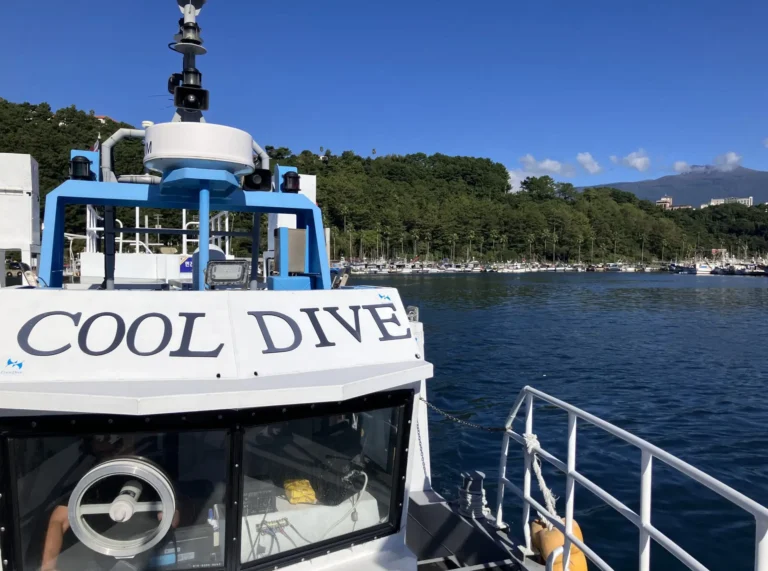
The south coast around Seogwipo has Jeju’s best scuba diving. If you’re a diver or want to try diving, this is where to do it.
Key dive sites: Munseom Island (문섬) has some of the best diving on Jeju with soft coral, kelp forests, diverse marine life, 5 minutes by boat from Seogwipo. Similarly, Beomseom Island (범섬) and Seopseom Island (섶섬), uninhabited islands with excellent diving.
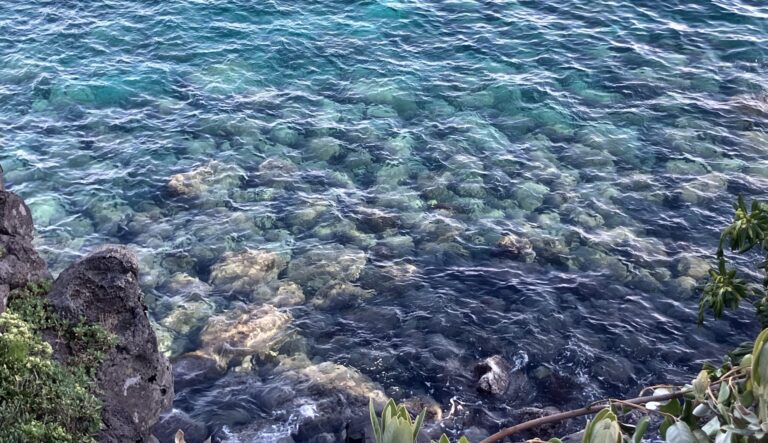
What you can experience: Soft coral walls, diverse fish species, water temperature 15-21°C year-round (wetsuit required), visibility varies seasonally (September-November best).
The honest take: Jeju diving isn’t tropical. Tge water can be cold, you need thick wetsuits, visibility can be limited depending on season. But the soft coral and kelp forests are genuinely beautiful, and the Haenyeo diving tradition adds cultural context you won’t find elsewhere.
SOUTHWEST COAST: Dolphins and Sunsets
The southwest coast is where Jeju feels most remote. This is dolphin-watching territory, home to the Noeul Sunset Coastal Road, and gateway to Jeju’s southernmost offshore islands.
Hwasun Golden Sand Beach (화순금모래해변)
Location: Southwest coast, near Sanbangsan Mountain
Sand type: Golden/white sand
Best for: Quieter beach experience, combining with Sanbangsan visit
What you can do: Swimming, sunbathing, views of offshore islands (Marado, Gapado, Hyeongjeseom).
The honest take: Hwasun is one of Jeju’s less-crowded beaches, partly because it’s further from the main tourist areas. It shares the bay with a port, so there’ll be vessels going in and out all day. Not the most scenic.
Yongmeori Coast (용머리해안)
Location: Southwest coast, below Sanbangsan Mountain
Best for: Geological formations, dramatic scenery, walking
What you can do: Walk along cliffs that look like a dragon’s head entering the sea, view volcanic rock layers showing geological history, photography of dramatic coastline, combine with Sanbangsan Mountain hike.
The honest take: Yongmeori isn’t at all a beach for swimming. It’s for appreciating Jeju’s volcanic geology. The layered cliff faces showing millions of years of volcanic activity are genuinely impressive. Sometimes closed due to high waves or tide conditions. Check before going.
Songaksan Mountain and Coastal Trail (송악산)
Location: Southwest coast, near Moseulpo
Best for: Coastal hiking, panoramic views, volcanic geology, historical sites
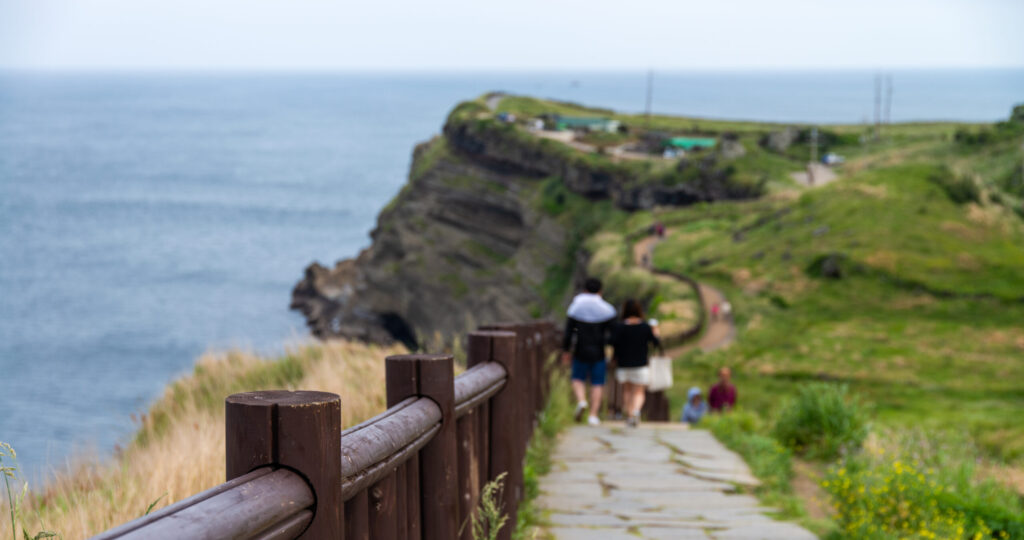
What you can do: Walk the 2.8 km loop trail around the volcanic cone (1-1.5 hours), photograph panoramic views of Sanbangsan, Hallasan, and offshore islands (Gapado, Marado, Hyeongjeseom) from the summit and coastal path, view the double crater from above, see WWII Japanese military cave fortifications built into the cliffs (17 caves used for kamikaze boats), spot Jeju ponies grazing on the grassy slopes, take the ferry to Marado (Korea’s southernmost point) from nearby port.
The honest take: Songaksan combines everything great about Jeju in one hike: volcanic geology, 360-degree coastal views, grazing horses, and sobering wartime history. The trail is mostly wooden boardwalk and gentle stairs and accessible for most fitness levels. The views of Sanbangsan across the water and Hallasan in the distance are arguably the best on Jeju. Go at sunset when the western sky lights up. Part of Olle Trail 10, and the ferry to Marado leaves from the nearby port. Can get very windy, so bring layers.
Noeul Sunset Coastal Road (노을해안도로)
Location: Southwest coast, between Hwasun and Moseulpo
Best for: Driving, sunset watching, dolphin spotting
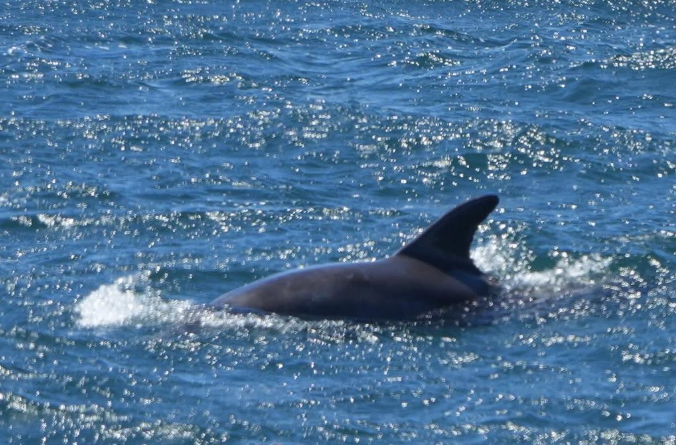
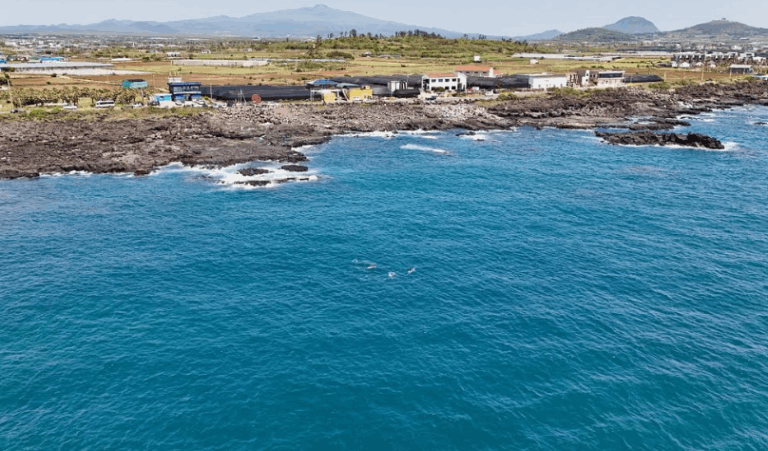
What you can do: Drive one of Jeju’s most scenic coastal roads, watch for Indo-Pacific bottlenose dolphins (resident population lives offshore), photograph dramatic sunset views, stop at viewpoints along the route.
The honest take: This isn’t a beach, it’s a coastal drive. But it’s one of the most beautiful stretches of road on Jeju, especially at sunset. The dolphins are a genuine bonus; Jeju has a resident population of about 120 Indo-Pacific bottlenose dolphins, and this coastline is one of the best places to spot them from shore.
WEST COAST: Sinchang to Chagwido
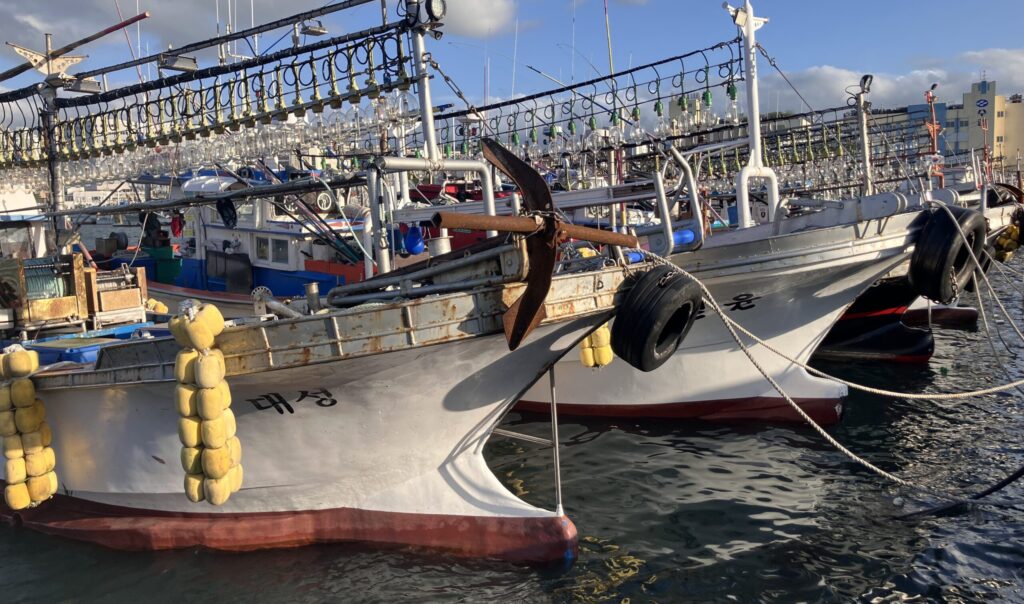
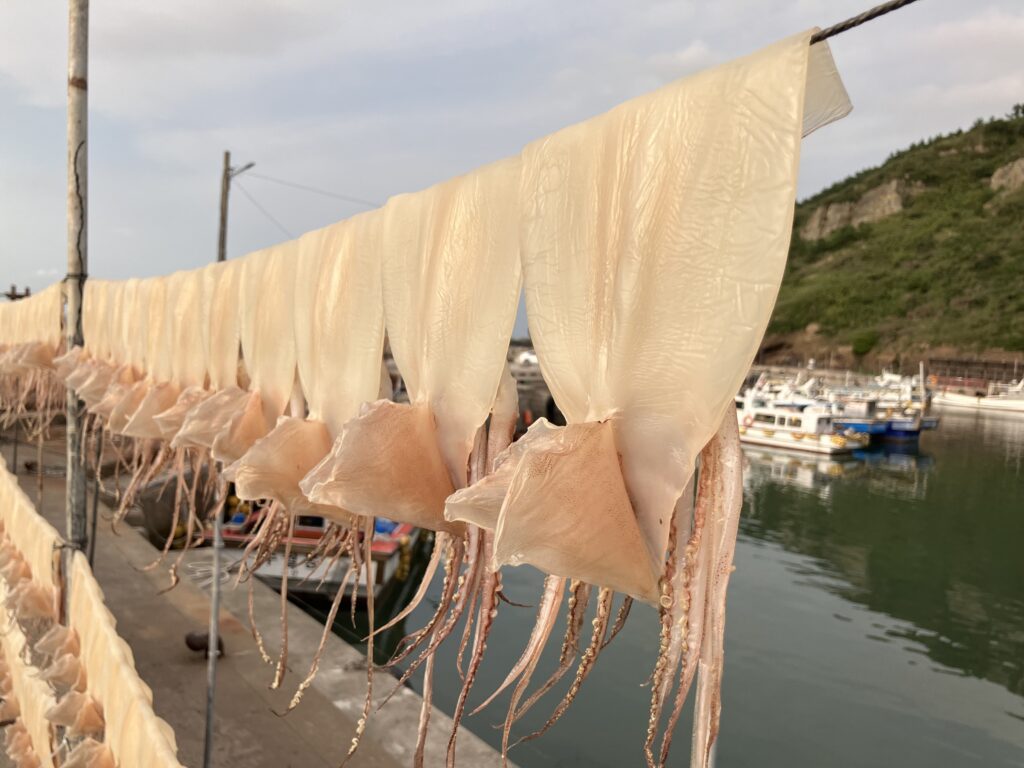
The west coast is Jeju’s least developed stretch. Windmills, quiet beaches, and dramatic sunsets define this area. Chagwido Port is a good place to see fresh squid being hung to dry in their hundreds.
Chagwido Port (차귀도항)
Location: West coast
Best for: Fresh squid, boat trips, sunset views
What you can do: Eat fresh squid at the port restaurants (this area is famous for it), take boat trips to Chagwido Island, watch sunset over the uninhabited island.
The honest take: Chagwido is a working fishing port with excellent seafood. If you want fresh squid prepared multiple ways (raw, grilled, dried), this is one of the best spots on Jeju. The views of Chagwido Island at sunset are a bonus.
Suwolbong Peak and Eongal Coast (수월봉 + 엉알해안)
Location: West coast, Gosan-ri (westernmost point of Jeju)
Best for: Geological trails, sunset views, volcanic education
What you can do: Climb to Suwoljeong Pavilion (77m) for panoramic views of Chagwido, Songaksan, and the ocean, walk the UNESCO Global Geopark trail along Eongal Coast’s dramatic cliff face (about 1 km from Jagunae Port to the peak), see exposed volcanic sediment layers that geologists call a “textbook of volcanology,” visit the Nokgomul mineral spring (legend says it’s the tears of a brother mourning his sister), watch the sunset from the pavilion (considered one of Jeju’s most beautiful).
The honest take: “Eong” means cliff and “al” means below in Jeju dialect. You’ll understand why when you see the steep coastal cliffs formed from 14,000-year-old volcanic deposits. This was named one of Jeju’s 31 Hidden Views, and while it’s becoming more popular, it’s still far less crowded than east coast attractions. The geo trail has multiple courses (A, B, C) that can be combined in one day. The weather station on top adds a quirky touch. Combine with Chagwido Port for a full west coast afternoon. The dried squid vendors are just down the road.
Sinchang Windmill Coast (신창풍차해안)
Location: West coast
Sand type: Rocky with some sand
Best for: Scenery, wind turbine photography
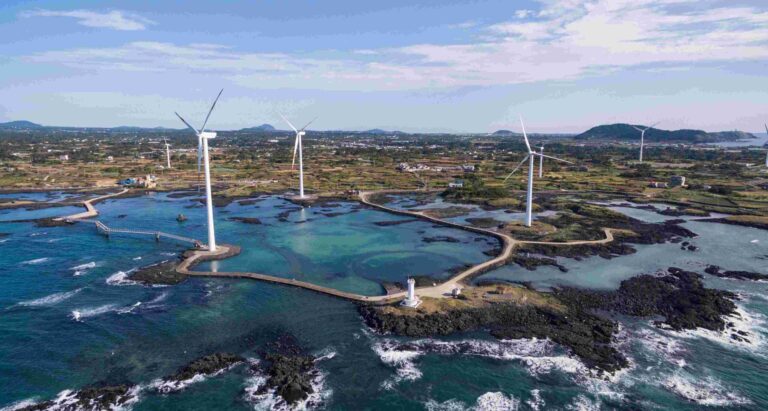
What you can do: Photography with wind turbines, driving/scootering along Sinchang Windmill Coastal Road, strolling along the walkways that connect a few windmills to the coast, sunset watching.
The honest take: The west coast windmills are genuinely photogenic – clean energy infrastructure against ocean backdrop. The Sinchang Windmill Coastal Road is one of Jeju’s best driving routes. Not a swimming beach, but excellent for the visual experience.
NORTHWEST COAST: Hallim to Aewol
The northwest coast has some of Jeju’s prettiest beaches, plus the popular Aewol cafe scene and Hallim Park area.
Geumneung Beach (금능해변)
Location: Adjacent to Hyeopjae Beach
Sand type: White sand
Best for: Sunset views, less crowded alternative to Hyeopjae
What you can do: Swimming, sunset watching (views of Biyangdo Island), beach lounging.
The honest take: Geumneung connects to Hyeopjae but has fewer facilities and fewer people. If Hyeopjae feels crowded, walk south to Geumneung. Same great water, more space.
Hyeopjae Beach (협재해수욕장)
Location: Northwest coast, Hallim area
Sand type: White sand
Best for: Swimming, views of Biyangdo Island, family beach day
What you can do: Swimming (shallow, calm, great for families), snorkeling, watching sunset over Biyangdo Island, walking to adjacent Geumneung Beach.
The honest take: Hyeopjae is one of Jeju’s prettiest beaches, with white sand, turquoise water, volcanic rocks for contrast, and views of Biyangdo Island offshore. Less crowded than Hamdeok on the north coast. The water is shallow and calm, making it excellent for families with children.
Nearby: Hallim Park, Hyeopjae Cave, Ssangyong Cave are all within walking distance.
Getting there: Bus 202 from Jeju City
Gwakji Beach (곽지해수욕장)
Location: Northwest coast, between Hallim and Aewol
Sand type: White/golden sand
Best for: Traditional experience, spring water baths
What you can do: Swimming, traditional stone spring water baths (one for men, one for women) where you can rinse off seawater with cold fresh spring water, transparent kayaking, water sports.
The honest take: Gwakji is underrated. The traditional spring water baths on the beach are unique to Jeju. After swimming in the ocean, wash off in these stone pools with natural spring water. The beach itself is spacious, less developed than others, and great for families.
Handam Coastal Trail
Location: Aewol area
Best for: Coastal walking, cafe culture
What you can do: Walk the Handam Coastal Trail (stunning path along black lava rocks), visit trendy cafes (including the famous ones along Aewol Cafe Street), photography of ocean views from rocky coastline.
The honest take: This is a coastal walking trail. But it’s one of the most beautiful walks on Jeju. Black lava rocks, crashing waves, views across the water. The trail connects to Aewol Cafe Street, which is photogenic but can be overpriced and crowded.
WATER ACTIVITIES SUMMARY
Here’s a quick reference for what you can do where:
Swimming (Best beaches): Hamdeok (north), Hyeopjae (northwest), Woljeongri (northeast), Jungmun (south), Pyoseon (southeast): huge U-shaped bay, extremely shallow, perfect for kids
Surfing: Jungmun Beach (best waves on Jeju)
Scuba Diving: Seogwipo area (Munseom, Beomseom, Seopseom islands). Water temp: 11-21°C year-round. Best visibility: September-November
Snorkeling: Hado Beach (east), Hamdeok Beach (north), Sinchang area (west), various rocky coastlines along Olleh Trail
Kayaking / SUP: Hado Beach (east), Woljeongri Beach (northeast with transparent kayaks), Gwakji Beach (northwest)
Jet Ski / Parasailing / Speedboats: Jungmun Beach (south), Hado Beach (east)
Swimming Season: June-September warm enough for most people. Other months too cold without wetsuit.