What You'll Find in This Article
If you like the idea of getting a great hotel deal in Korea right smack where the main attractions are, listen up, old Korean hotels are your friends.
They run ₩25,000-40,000 ($20-30) a night in prime locations near markets and city centers. But you need to understand one critical concept: the wet bathroom.
Wait, that sound like a warning? Oops. My bad. It isn’t. Think of that as an invitation instead.
Because once you get past the initial confusion, the wet bathroom unlocks access to clean, well-located budget accommodations that would otherwise cost you double or triple.
I’ve stayed in these hotels steps from Dongmun Market and near Jeju City Hall for $30 a night. The trade-off?
Embracing how Korean bathrooms work.
Everything Gets Wet. But That’s a Feature, Not a Bug.
In a Korean wet bathroom, there’s no shower stall. No glass partition. No shower curtain. The entire bathroom is designed to withstand a watery tornado.
The walls get wet. The toilet gets wet. The sink gets wet. The mirror gets wet. The door gets wet. This isn’t a flaw. It’s intentional. The whole room is waterproofed and drains from the floor, making it much easier to clean.
If you’re a “vigorous showerer” (and you know who you are), you’re going to drench everything. And that’s fine. The room is built for it.
The Details That Suddenly Make Sense
Once you understand the wet bathroom concept, you’ll notice the small adaptations everywhere:
Power outlets have flip-down lids to protect them from spray. The toilet paper holder has a cover to keep the roll dry. Everything in the bathroom is either waterproof or shielded.
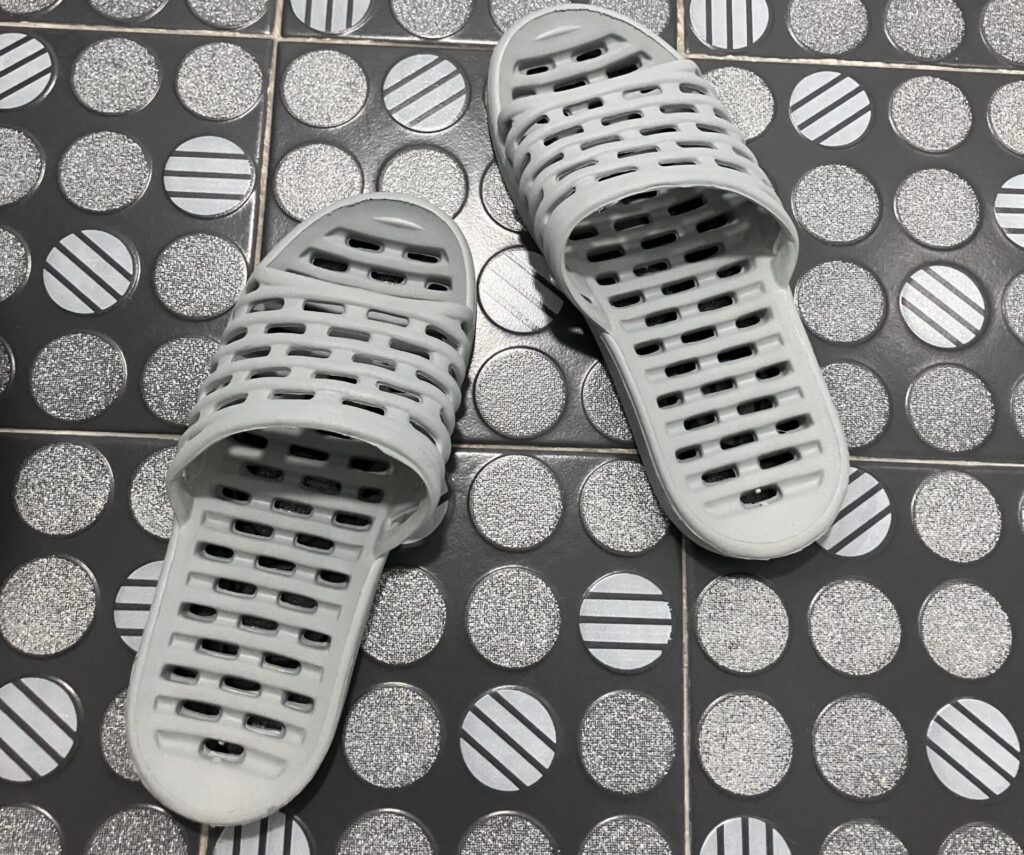
The hotel provides bathroom slippers, not the regular room slippers, but separate ones just for the wet bathroom floor. You’ll want to use them, especially after you shower.
The Faucet Switchback
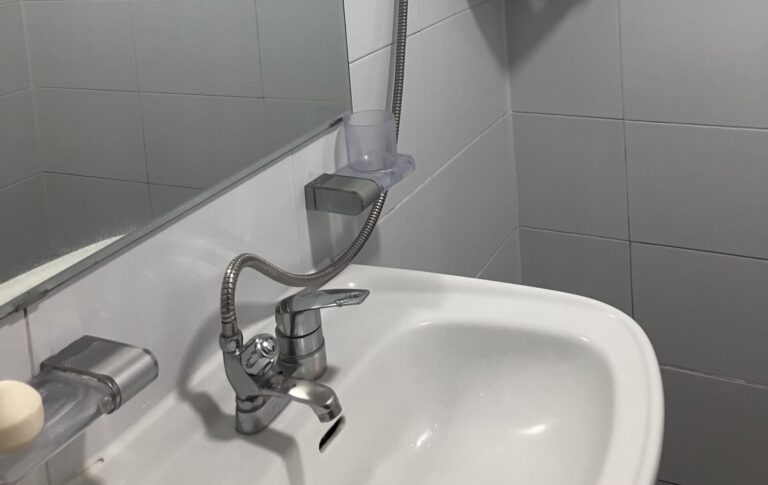
Here’s the thing that will get you exactly one time: many older Korean bathrooms share a single faucet for both the sink and the shower.
You turn on the water at the sink. If you want to shower, you flip a switch that diverts the water from the sink to the showerhead. Sounds simple enough.
The problem hits the next morning. You’ve showered. You’ve gone to bed. You wake up, stumble into the bathroom, and turn on the faucet to wash your face, except you forgot to switch the water back from shower mode.
I learned this lesson while bent over the sink. The shower turned on behind me. It took me a full two seconds to register what was happening before I could turn the water off.
The back of my T-shirt was soaked.
You only make this mistake once. After that, checking the switch becomes automatic.
The Towel Situation
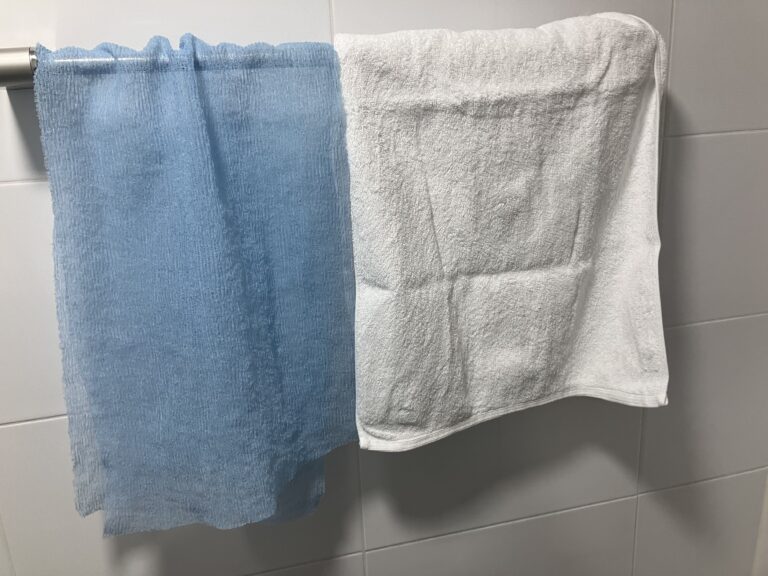
Korean hotels, even some newer ones, provide hand towels. At least to the visitor, they look like hand towels. But don’t bother trying to hunt down bigger towels for your shower, because those small ones are it.
If you’re expecting a full-size bath towel to wrap around yourself, you’re going to be disappointed.
Koreans use one or two hand towels to dry off after showering. It works, but it takes some adjustment if you’re used to a large towel. If this sounds unworkable, bring your own bath towel. Problem solved.
BTW: You’ll also find another cloth in the bathroom that looks like it might be a towel. It’s not. It’s a scrubbing cloth designed for exfoliating your back in the shower. You could try and use it to dry off, but only if you think using sandpaper is a good alternative to toweling off!
The Wet Bathroom Unlocks The Best Hotel Deals
The wet bathroom is the primary barrier between foreign travelers and Korea’s excellent budget hotel infrastructure. Most guidebooks either skip these places entirely or warn you away from them. But if you’re willing to adapt, you unlock clean rooms in fantastic locations for $25-40 a night, for up to 2-3 people.
I’m too old for hostel bunk beds, but I’m also a budget traveler. The wet bathroom lets me stay near Jeju’s best neighborhoods without paying ₩100,000 for a modern hotel.
Once you get used to it, it’s not a problem. It’s just different.
The bathroom gets wet. You wear slippers. You remember to switch the faucet back. You use a hand towel. That’s it. In exchange, you get a good deal on a decent budget accommodation in the middle of where you actually want to be.
Now that you’re caught up on traditional Korean wet bathrooms, it’s time to customize your own trip to Jeju.
BTW: You may also see these older hotels referred to as “motels”. They’re not. Most do not even have a parking spot! It’s one of those things that have been lost in translation.
