
What You'll Find in This Article
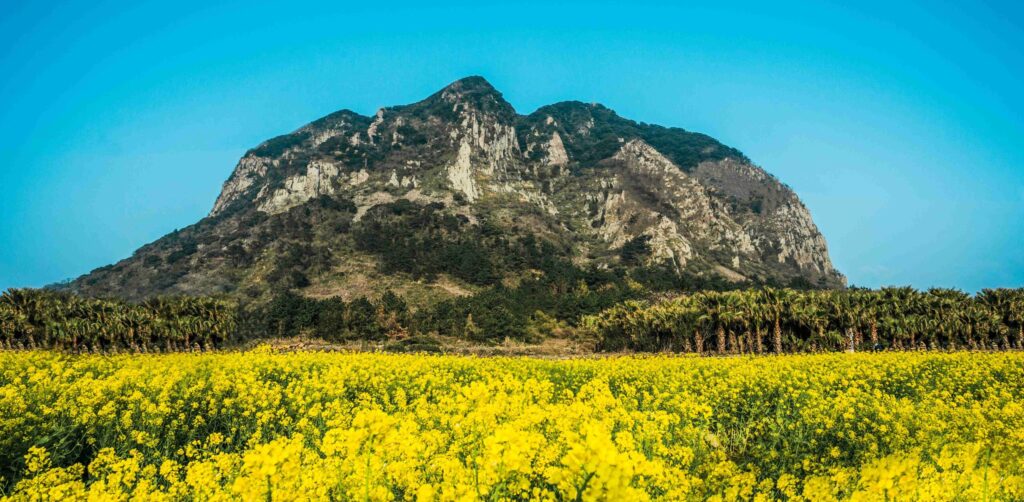
Jeju has 368 oreums 오름. That is 368 small volcanic cones scattered across the island, each one a distinct hill with its own character, view, and trail. Most of them take 20 to 40 minutes to climb. Most times, you’ll be the only climber at the summit. And most visitors to Jeju have never heard of any of them except the famous one: Seongsan Ilchulbong 성산일출봉, the UNESCO-designated sunrise peak that draws large tour groups every morning.
The other 367 are out there waiting.
This post is about what an oreum actually is, why they are worth climbing, and which ones to start with depending on where you are on the island.

What Is an Oreum?
An oreum is a small volcanic cone, geologically distinct from a mountain. For a long time, they were described as parasitic cones of Hallasan 한라산, meaning secondary volcanic features produced by the same underground activity that built the main mountain. More recent research, as of 2024, suggests that some oreums are actually older than Hallasan itself. The term parasitic cone is no longer the scientific consensus.
What they are, practically speaking: smaller hills that rise above the surrounding landscape, formed entirely by volcanic activity, covered in grass or forest, and climbable on maintained trails. Unlike Hallasan, which requires a full-day commitment and pre-registration, most oreums require nothing more than showing up.
Why Climb One?
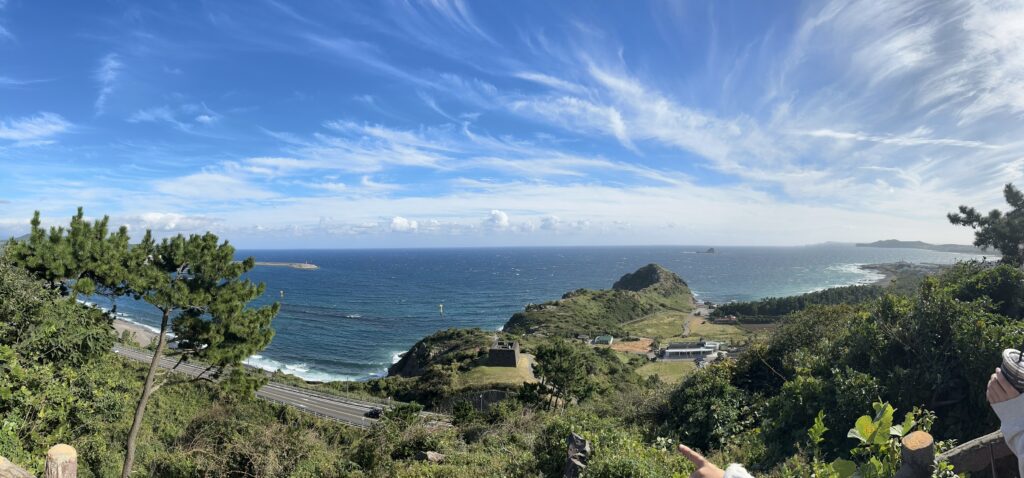
The view. Even a modest oreum puts you above the surrounding countryside in a way that changes the entire picture. Depending on where on the island you are, from the top of an oreum, you can see the coastlines, farmlands, harbors, offshore islands, and on a clear day, Hallasan.
The quiet. With very few exceptions, oreums are used almost entirely by locals: elderly residents doing their morning exercise, parents with small children, the occasional hiker. You are unlikely to encounter tour groups, bus crowds, or lines for the summit photo.
The access. If Hallasan is too long and Seongsan is too crowded, oreums offer a genuine outdoor experience that takes 30 to 60 minutes total, requires no gear, and costs nothing.
Oreums Near Jeju City
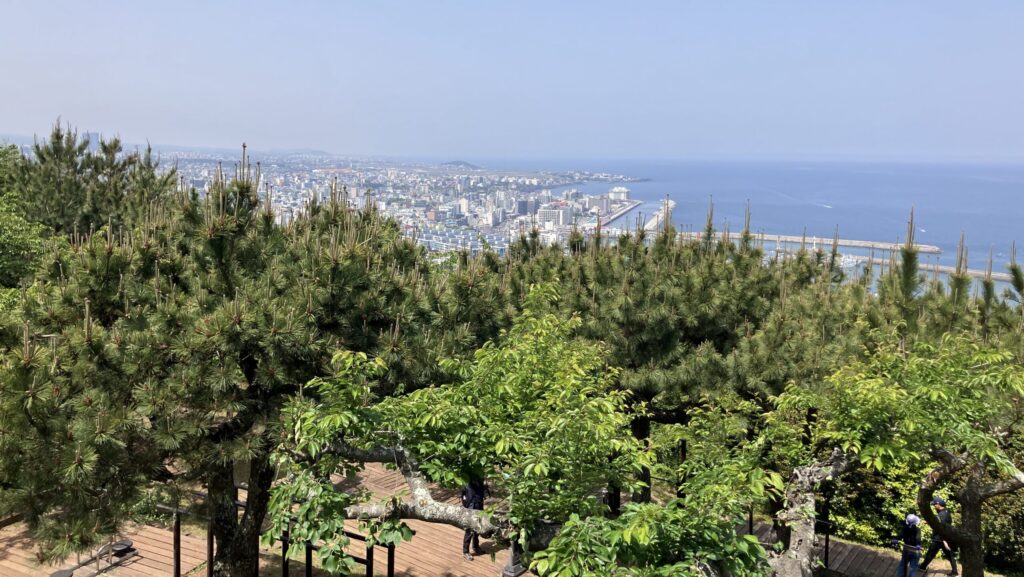
Sarabong 사라봉 is the most accessible oreum for anyone staying in or near Jeju City. It sits close to the harbor and the climb to the top takes about 15 minutes. From the summit, you get a full view of the old city, the harbor, and the sea. The ferry crossings to the mainland are visible from here.
What you will find on Sarabong: kindergartners on school outings, elderly locals doing their morning exercise circuits, reportedly at least one wild rabbit, and cherry blossoms in spring. The spring blossoms at Sarabong are a local secret of sorts. Visitors tend to go to the cherry blossom street downtown, but residents know to come here. If you are on Jeju during bloom season and want to see cherry blossoms alongside local families rather than tour groups, Sarabong is the place.
Byeoldobong 별도봉 is connected to Sarabong and offers views of the north coast and the harbor from a different angle. The two oreums can be combined into a single loop walk.
Dodubong 도두봉 sits near the Rainbow Coastal Road and is another short climb with a view that takes in both Jeju City and the airport. Several K-dramas have filmed scenes here specifically because it offers an aerial-style view of the city and the runways. If you like watching planes land and take off, this is a comfortable place to sit and do exactly that.
An Oreum Worth the Drive: Yongnuni
Yongnuni Oreum 용눈이오름 is on the eastern side of the island. It is known for its sunrise views, and its trail passes through horse paddocks. The trail has several gate-style openings designed to let hikers through while keeping the horses in. At the top, you can see Seongsan Ilchulbong to the east and the island of Udo 우도 offshore.
A practical note: Yongnuni has become significantly more popular due to social media attention, and the government periodically closes oreums for nature recovery periods. Check current access before you plan around it.
The Queen of the Oreums: Darangshui
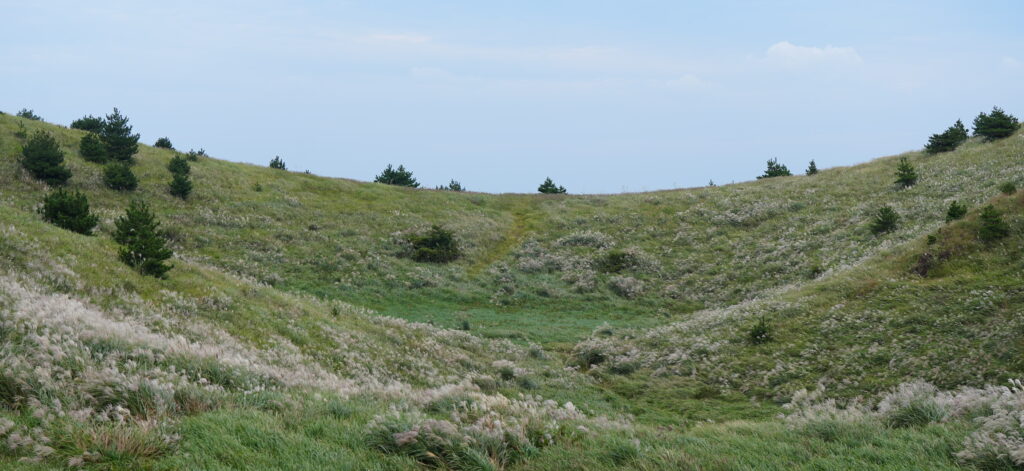
If Sarabong is the oreum for newcomers, Darangshui Oreum 다랑쉬오름 is the one for people who want to earn the view. Located on the eastern side of the island, the climb takes roughly 30 minutes up and 30 minutes back down. That is modest by mountain standards, but Darangshui climbs steeply enough to feel like a real hike. Unlike the easier city oreums, parts of the trail are unpaved, and the terrain is more varied.
The path itself is part of the appeal. In winter, the trees along the trail have shed their leaves, leaving bare trunks and branches that create an unexpectedly atmospheric forest. Think less manicured trail, more somewhere genuinely wild.
The payoff at the top: a panoramic view that takes in Seongsan Ilchulbong, the island of Udo offshore, and an arc of smaller volcanic cones stretching across the eastern landscape. Locals call Darangshui the queen of the oreums. The view makes a case for it.
For comparison with Seongsan Ilchulbong: Darangshui is slightly longer and has a mix of paved and unpaved trail versus Seongsan’s mostly staircase approach. Neither is technically difficult, but Darangshui is less crowded and more varied underfoot. Both deliver views of the same eastern coastline, from different angles.
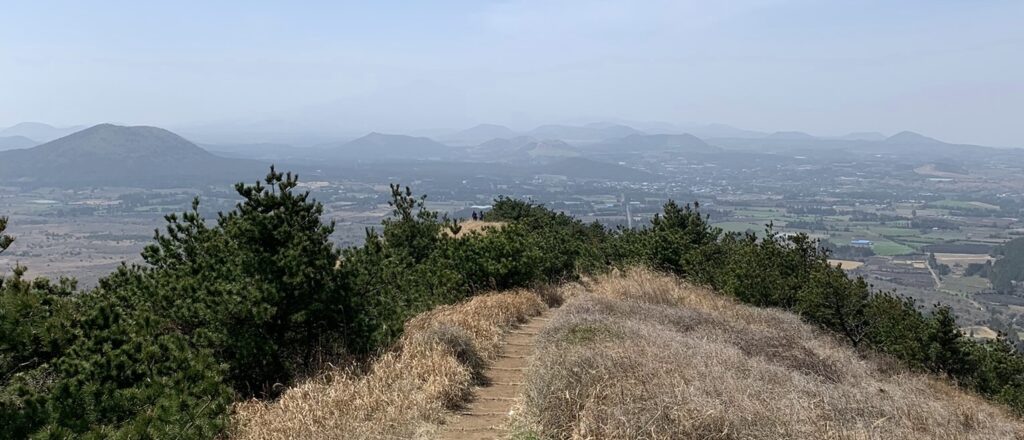
A Personal Favorite: Gunsan Oreum
Gunsan Oreum 군산오름 is on the southern side of the island. It is accessible by car, with a parking lot near the summit about a five-minute walk away.
The alternate approach is through a forest trail that is part of the Jeju Olle Trail 올레길. That is a real climb through a significant forest path. The reason it makes the list: the forest climb is long enough that you lose sight of everything around you and focus entirely on the path ahead. Then the forest opens up at the summit and the entire southern coastline of Jeju appears. It is an unexpectedly dramatic payoff. The sunset from Gunsan is excellent.
Wrapping Up
The Jeju government periodically closes individual oreums for nature recovery. A recently closed oreum may be off limits for a year or two. When it reopens, it often becomes temporarily popular before settling back into its usual quiet rhythm. Before building an itinerary around a specific oreum, do a quick check to confirm it is currently accessible.
Jeju built its tourism identity on a short list: Hallasan, Seongsan Ilchulbong, tangerines, the haenyeo, the beaches.
All worth seeing.
But Hallasan is a full-day commitment and Seongsan means sharing the staircase with tour groups.
Oreums give you the views, the silence, and the photo moments without either of those trade-offs.
You have 368 options. Start with one, and also begin planning now with the Jeju Trip Planner!
