
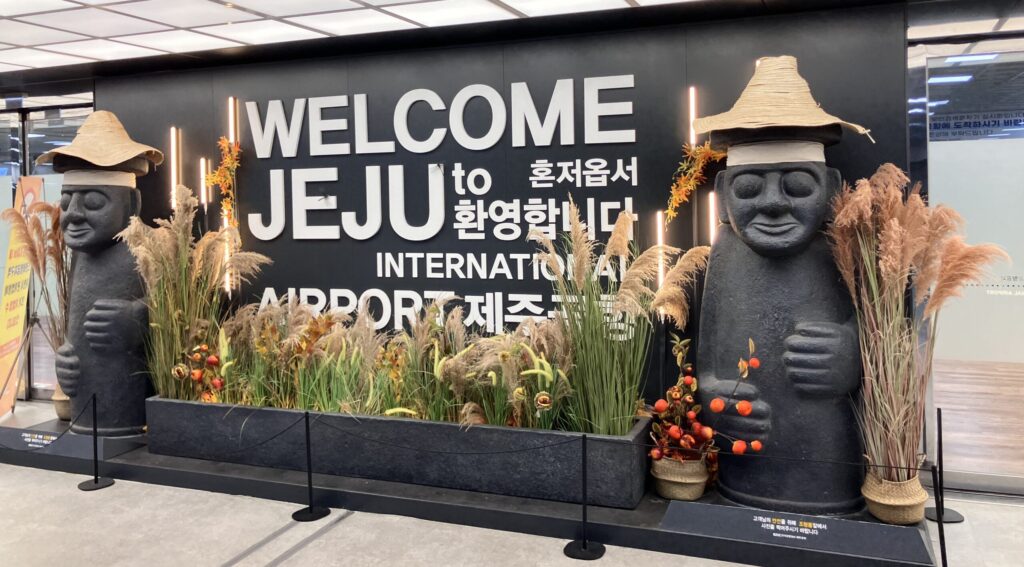
What You'll Find in This Article
Most international visitors to Korea land in Seoul, see the palaces, eat incredible food, maybe take a day trip to Busan, then fly home thinking they’ve seen Korea.
But they’ve seen half of it, at best.
I know this to be true, because that was precisely what my wife and I did for our first 2 trips to Korea as part of our post-Covid, revenge travel blitz.
The on our third trip back to Korea, we discovered Jeju.
And I got hooked.
Even more so, this affinity for the island is becoming dangerously close to being a lifetime affliction for me.
Seoul is Not All of Korea
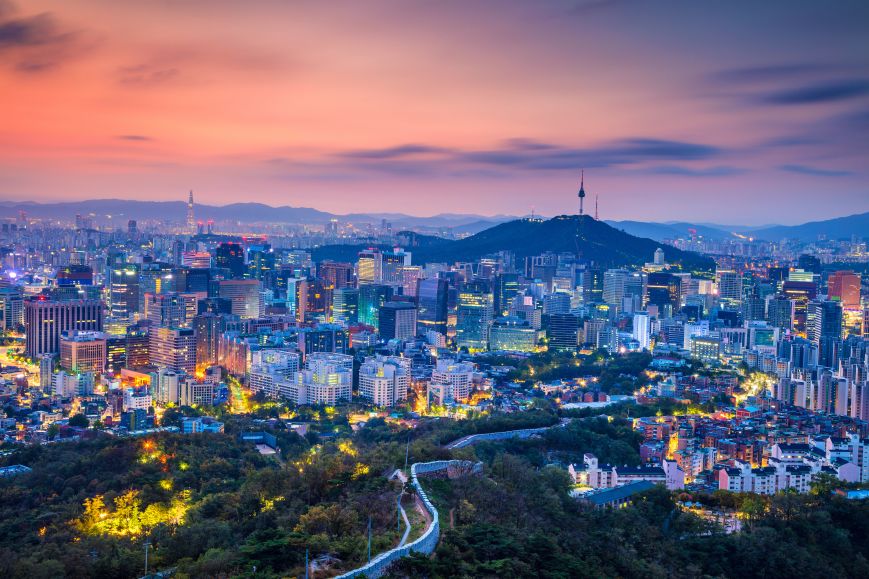
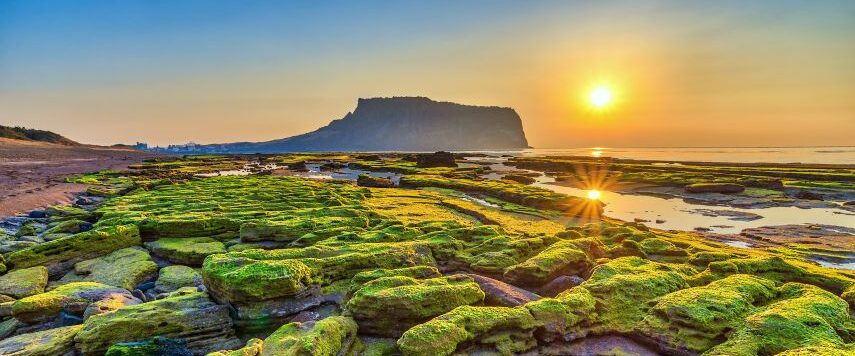
Look, Seoul is wonderful.
The high-tech metropolis thing, the palaces and the past, the K-wave culture and the future, the fashion, the food scene—all of it is real and worth experiencing.
I’m not a K-pop or K-drama fan, but even I enjoyed Seoul so much, we went back to live there for 3 months after our first visit.
But if you want to understand why Koreans themselves vacation on Jeju Island, why K-dramas film there constantly, you need to go see it for yourself.
Visiting Korea without seeing Jeju is like visiting the US and only seeing New York. Sure, you’ve technically been to the United States. But you’ve missed a lot.
The good news? Jeju is stupidly easy to add to your Korea trip.
One hour from Seoul’s Gimpo Airport by air, with flights leaving just about every 30 minutes. It’s no surprise that the Seoul to Jeju City route is the most busy in the world! Soraya used to commute to graduate school this way almost weekly.
Despite the sheer volume of flights, Jeju is a complete contrast to the urban intensity of the capital.
This guide will show you how to do it, with practical itineraries for 2-4 days depending on how much time you can spare from Seoul.
I want to be clear though. We think that Jeju deserves at least a week, but we also know that not every one has that kind of time.
With that “Some Jeju is better than no Jeju” mentality in mind, lets dive in!
Why You Need To Go To Jeju
The Nature is Mindblowingly Gorgeous
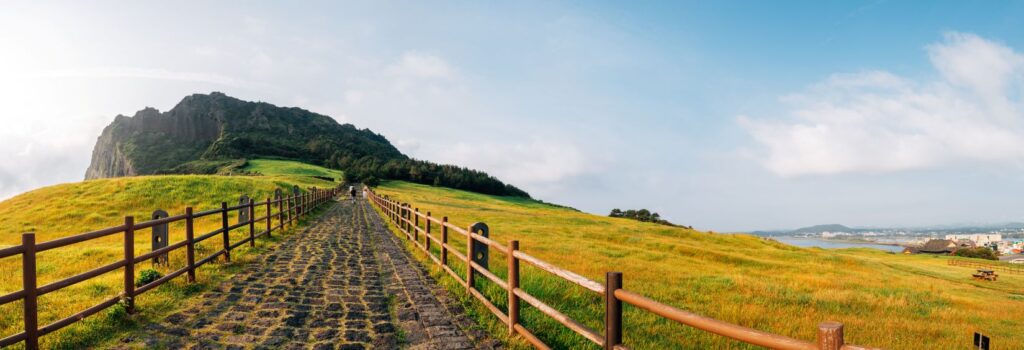
Seoul gives you modern Korea—technology, fashion, entertainment, that fast-paced urban energy that has made Korean culture a global heavyweight.
Jeju gives you nature’s Korea: volcanic landscapes, black sand beaches, lush forests, dramatic coastlines.
It’s a completely different vibe.
Hallasan Mountain (1,947 meters, Korea’s highest peak) dominates the center of the island.
It’s a UNESCO World Heritage Site, and for good reason—we’re talking a shield volcano with 360+ parasitic cones (called oreum), lava tube caves including Manjanggul (one of the world’s longest), and microclimates that range from subtropical coast to alpine summit. If you appreciate landscapes shaped by fire and time, the geology alone is worth the trip.
Not to be outdone is the 437-km Jeju Olleh Trail that spans 27 routes covering the coasts, beaches, islands, small villages, farms, oreums and forests of the entire island.
The entire Olleh Trail lets you experience the sheer beauty of the island up close.
Some Koreans fly in for a weekend from the mainland and tackle just one route. Then there are fanboys like me who attempt the entire route in 2 1/2 weeks.
Whether your idea of experiencing nature is hopping out of a rental car for a stunning selfie, or climbing South Korea’s tallest mountain, Nature’s Korea will take your breath away.
The Culture Runs Deep
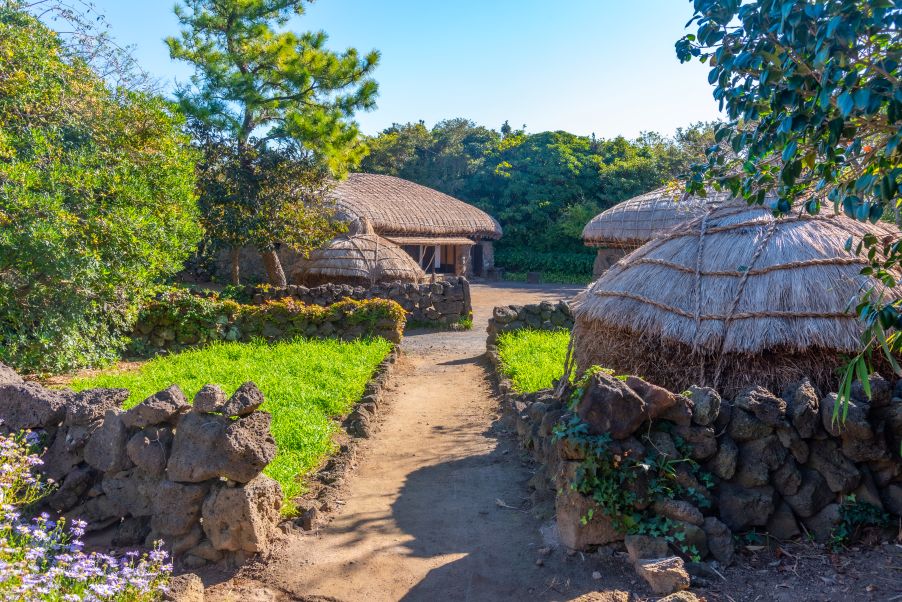
Here’s something most tourists don’t realize: Jeju preserves cultural elements that have largely disappeared from the mainland. We’re talking about:
- The Haenyeo: Women who free-dive 5-20 meters deep without breathing equipment to harvest seafood. This practice dates back centuries, but the tradition is dying, with most of the younger divers being over 60.
- Living Shamanism: Jeju is called the ‘Island of 18,000 Gods.’ Shamanic practices that were suppressed on the mainland still thrive here. You can witness actual rituals (not tourist performances) if you’re respectful and lucky with timing.
- Jeju-eo Language: This Korean dialect is critically endangered and mutually unintelligible with standard Korean. The last fluent speakers are elderly, but you’ll still hear it among older residents especially in the villages. It’s a living linguistic time capsule.
Matriarchal Heritage: Unlike mainland Korea’s Confucian patriarchy, Jeju historically had women as primary breadwinners (through haenyeo work), with distinct gender dynamics that persist today. It’s a fascinating contrast.
It's Easy and Affordable
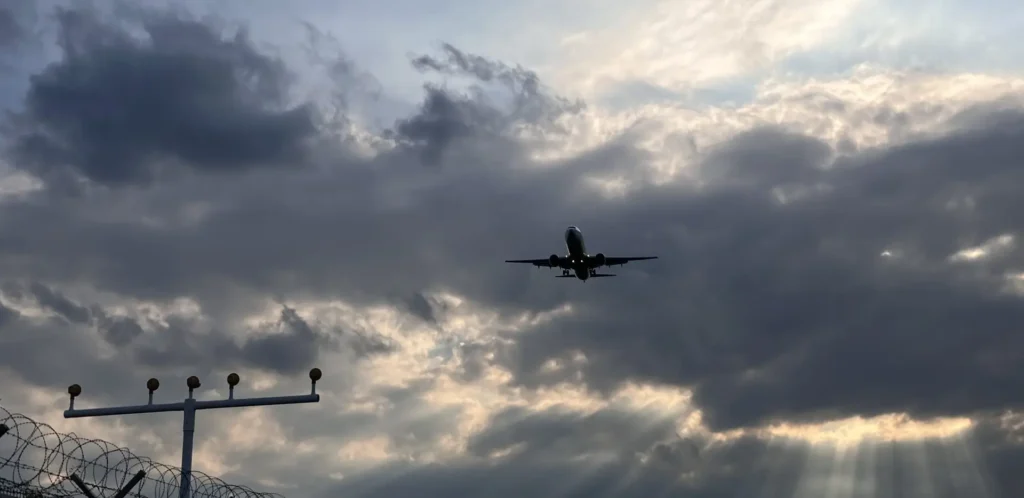
Convenience: One hour flight from Seoul, multiple flights a day. Seoul’s Gimpo Airport is easy to get to by subway from the city, and Jeju Airport is just 10 minutes by from Jeju City. Because it’s domestic travel, you can actually bring bottles filled with liquids on board. But as a visitor, you still need your passport!
Cost: Comparable to or cheaper than Seoul. Average daily budget around $79 (vs. $121 in Seoul). Accommodation ranges from $17 hostels to fancy resorts if that’s your thing.
DIY-Friendly: Comprehensive and frequent bus system that takes the same T-money card as in Seoul. The Blue and Red buses serving the main tourist routes have free WiFi on board and USB chargers, with English announcements for most lines. Green buses that serve locals to towns and villages are less frequent and require some planning. If you prefer flexibility and have an international driver’s license, you can rent a car for $28-70 day.
Weather: Subtropical climate. Even in winter, temperatures rarely drop below 0°C at the coast. Four distinct seasons, but generally milder than Seoul year-round.
The Hawaii Comparison
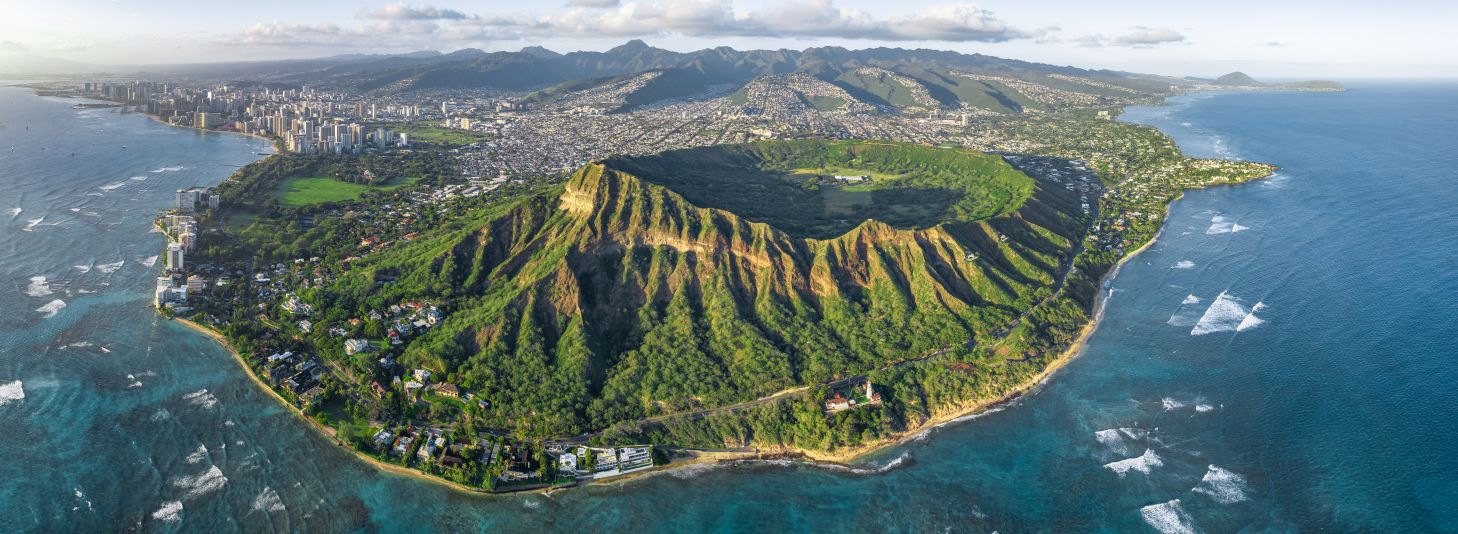
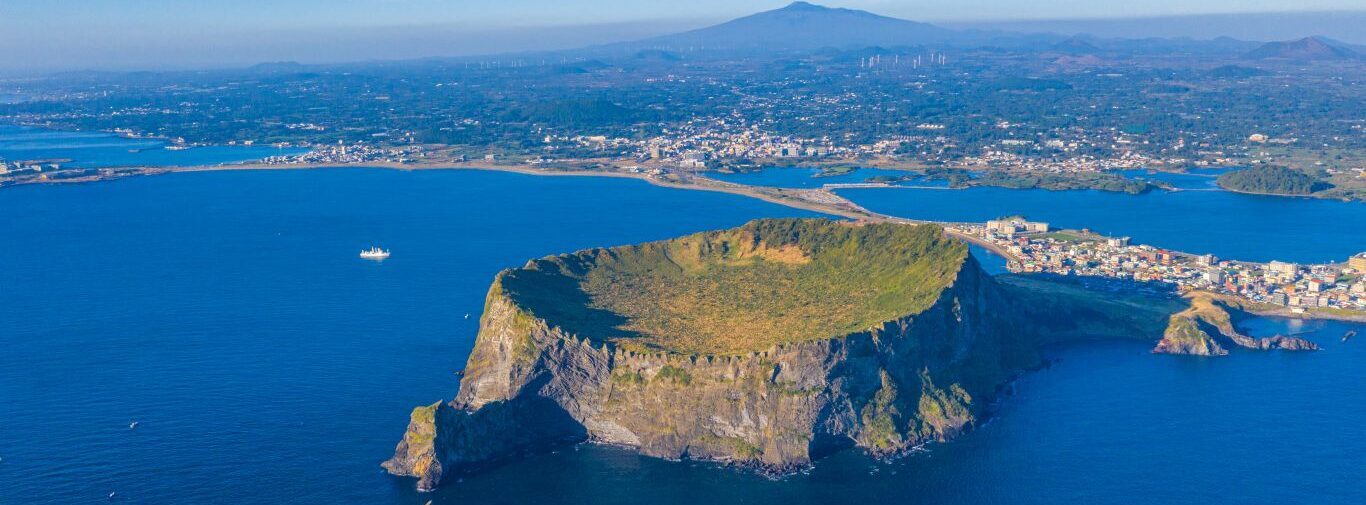
People always compare Jeju to Hawaii, and honestly? It’s not a bad comparison. Same volcanic origins (shield volcano), similar landscapes (black sand beaches, lava rock formations, dramatic coastlines), comparable ecosystems (subtropical to temperate). The difference is you get about 80% of Hawaii’s experience for maybe 30% of the cost, and it’s one hour from a major international city instead of six hours from anywhere.
The island is 73km east-west, 31km north-south. Small enough to explore thoroughly in a few days, large enough that you won’t feel crowded (outside major tourist sites). From Jeju City in the north, you’re 20-30 minutes from countryside, beaches, forests, or oreum by bus.
The pace is slower than Seoul—islanders call it ‘island time.’ If Seoul is New York, Jeju is Hawaii. Both are essential to understanding the country.
Getting There: Logistics from Seoul
From Seoul
By Air (this is what you should do):
- Flight time: ~1 hour
- Airports: Gimpo (domestic, closer to Seoul) or Incheon (international hub, slightly further)
- Frequency: Every 15-30 minutes during peak times
- Airlines: Korean Air, Asiana, Jin Air, Jeju Air, Air Busan
- Cost: 40,000-150,000 KRW depending on timing and airline (budget carriers vs. full-service)
Getting Around Jeju
Option 1: Public Buses (Our Recommendation for Independent Travelers)
Jeju’s bus system is surprisingly comprehensive and tourist-friendly. Here’s the color-coding system:
- Red Express buses (100s): Fast routes between major cities and airport
- Blue Intercity buses (200s/300s/500s): Connect towns and tourist sites
- Green buses (400s/600s/700s): Reach rural areas
- Tourist shuttles (810/820): 3,000 KRW day pass
All buses have free WiFi, English announcements, and real-time tracking via KakaoMap or Naver Map apps. Fares run 1,200-5,500 KRW. Use a T-money card (same one you use in Seoul) for transfers and convenience.
Option 2: Rental Car
Cost runs $28-70/day depending on vehicle class. You’ll need an International Driving Permit (IDP) for non-Korean licenses. The advantage is flexibility to explore remote areas, beaches, and trails not served by buses. Fair warning though: traffic can be heavy around Jeju City and major tourist sites. And because Hallasan sits in the middle of the island, there’s no highway cutting through the center—all routes loop around the perimeter.
Short on Time, But Don't Trust Instagrammer itineraries?
Each itinerary assumes you’re arriving by air from Seoul or Busan. All can be done by public transportation, though car rental offers more flexibility. These are frameworks, not rigid schedules—adjust based on what interests you.
The Essentials: 2 Days
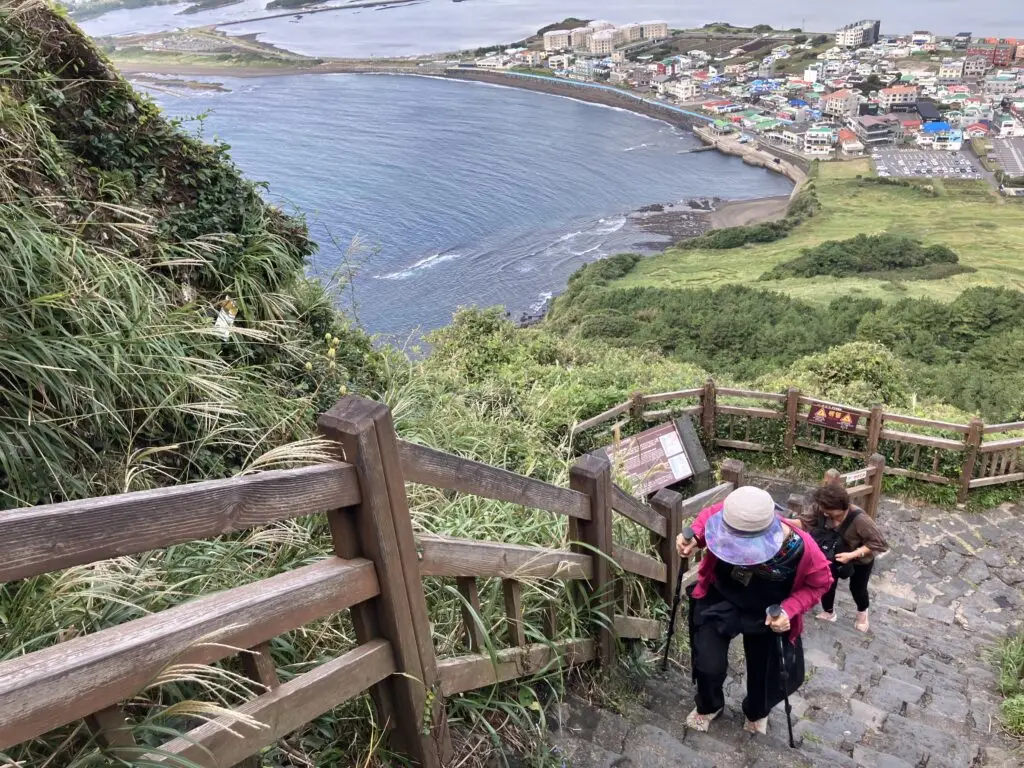
Best for: First-time visitors with limited time who want to see the highlights without rushing. Focuses on nature and iconic sites. Soraya does this kind of quick turnarounds often, going from Jeju to Seoul and back.
We think of this as your FIRST visit and know you’re going to want to come back!
Day 1: East Coast & Volcanic Wonders
Morning: Seongsan Ilchulbong (Sunrise Peak) — This is the UNESCO World Heritage tuff cone formed by an underwater volcanic explosion. 179m high with a 570m diameter crater. The climb takes 20-30 minutes. It’s called ‘Sunrise Peak’ for a reason—best at sunrise—but honestly it’s impressive anytime. If you’re there at 1:30pm or 3pm, watch for haenyeo diving demonstrations at the base.
Lunch: Haenyeo Restaurant (near Seongsan) — Fresh seafood caught by haenyeo that morning. Order the haemul jjim (spicy seafood stew) or grilled abalone. You’re eating what was swimming a few hours ago.
Afternoon: Manjanggul Lava Tube (when open) — One of the world’s longest lava tubes (7.4km total, 1km open to public). UNESCO World Heritage Site. You walk through a tube formed 200,000-300,000 years ago when lava drained from an underground channel. It’s 11-21°C year-round inside, so bring a light jacket even in summer. Bus 111 or 112 from Jeju City, or drive.
Afternoon: Jeju Haenyeo Museum — Essential for understanding haenyeo culture. Exhibitions on diving history, techniques, tools, social structure. There’s a haenyeo singing performance Saturdays 3-4pm. Adults 1,100 KRW (~$1). Tours at 10am, 11am, 1pm, 2pm, 5pm in Korean.
Evening: Beach Time — Sehwa Beach is right near the Haenyeo Museum—white sand with windmills in the distance. Or head to Hamdeok (family-friendly, shallow water) or Woljeongri (cafes and restaurants with ocean views). Watch sunset, have dinner, return to Jeju City for accommodation.
Day 2: Hallasan & Southern Coast
Morning: Hallasan Hike (Choose Your Level) — If you only have 2 days, I’d recommend skipping the summit trails and doing a partial hike instead. Here’s your options:
Summit trails (8-9 hours round trip, strenuous): Seongpanak Trail (9.6km each way, easier gradient) or Gwaneumsa Trail (8.7km each way, steeper, more challenging). Check out our article on Hallasan here.
Partial trails (2-4 hours, moderate): Eorimok Trail (6.8km round trip) or Yeongsil Trail (5.8km round trip)
Note: Always check weather and trail status before attempting. Bring layers—temperature drops significantly with elevation.
Lunch: Seogwipo City — What everyone does: Black pork barbecue (Jeju’s specialty) or fresh seafood at Seogwipo Maeil Olle Market. What you could do instead: Duruchigi at Yongi Sikdang—raw pork served seconds after you order. You cook it up with julienned radish, soybean sprouts, green onion and scoff it all down. Or hit up Kookmininsaeng Matjip (국민인생 맛집) for braised beef ribs (갈비짐)—you can customize the spice level—or the stir-fried pork with wrap (제육볶음).
Afternoon: Choose One.
Option A: Jusangjeolli Cliffs — Spectacular hexagonal basalt columns formed by rapid lava cooling. 30-40m tall, extending 1km along coast. Dramatic waves crash against geometric rock formations. 15 minutes from Seogwipo. Fair warning though: this becomes a tourist trap with loads of tour buses for much of the day. If you choose to come here, pack plenty of patience and forgiveness. Or come super early, buy your ticket, and be the first to enter the moment it opens.
Option B: Yongmeori Coast — Coastal walking path with volcanic rock formations and ocean views. Less crowded than Jusangjeolli. But heads up—it can be closed with little notice due to strong winds and tides.
Option C: Songaksan — Either the summit or the coastal trail (which is part of Olle Trail Course 10).
Option D: Gunsan Summit — Another solid oreum option with good views.
Evening: Departure or Extra Night — If catching a late flight, head to Jeju Airport (1 hour from Seogwipo). If staying another night, explore Seogwipo’s downtown area, Lee Jung-seop Art Street, or Cheonjiyeon Waterfall (it’s actually pretty at night when they light it up).
The Sweet Spot: 3 Days
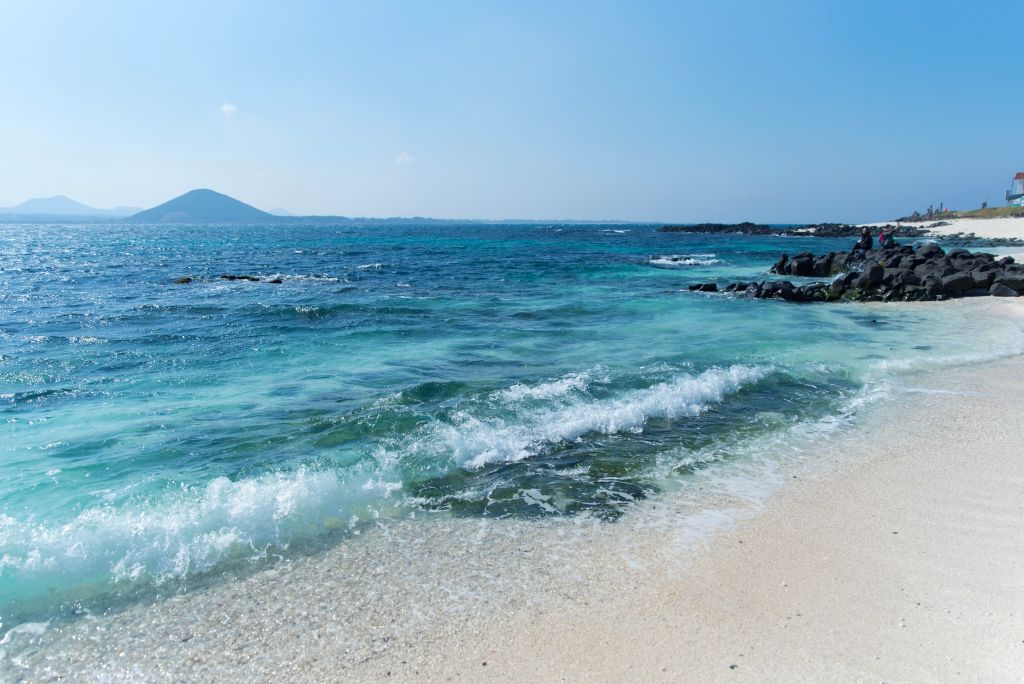
Best for: Travelers who want depth without exhaustion. Adds western Jeju exploration and cultural experiences to the essentials.
Days 1-2: Follow the 2-Day Itinerary Above
Day 3: West Jeju & Culture
Morning: Choose One
Option A: Hyeopjae Beach or Hallim Park — Hyeopjae Beach has white sand, turquoise water, and a view of Biyangdo Island (the youngest volcano in Jeju, only ~1,000 years old). Hallim Park offers botanical gardens with lava tube caves (Hyeopjaegul, Ssangyonggul), a bonsai garden, and subtropical plants. Choose based on weather and what you’re in the mood for.
Option B: Aewol or Handam Coastal Area — Real talk: Aewol is a trendy tourist trap with cafes that can be expensive and crowded. If you’re going to go, head there earlier in the morning before the crowds swarm. Handam Coastal Walk and Gwakji Beach is less known—beautiful sunset spot, stone walls, traditional Jeju village atmosphere. Consider walking a small part of Olle Trail 15 through Aewol and Handam Coast Walk to Gwakji.
Lunch: West Jeju Local Restaurant — The west coast is less developed, which means fewer tourist traps and more authentic local spots. Ask around or just wander until something looks good.
Early Afternoon: Jeju Olle Trail Section — Route 12 is a great choice—beautiful ocean views, lava coast, relatively easy until you get to Dangsanbong.
Late Afternoon: Choose One
Option A: Dolphin watching and sunset on the southwest coast.
Option B: Sinchang Windmill and sunset on the west coast.
The Deep Dive: 4 Days
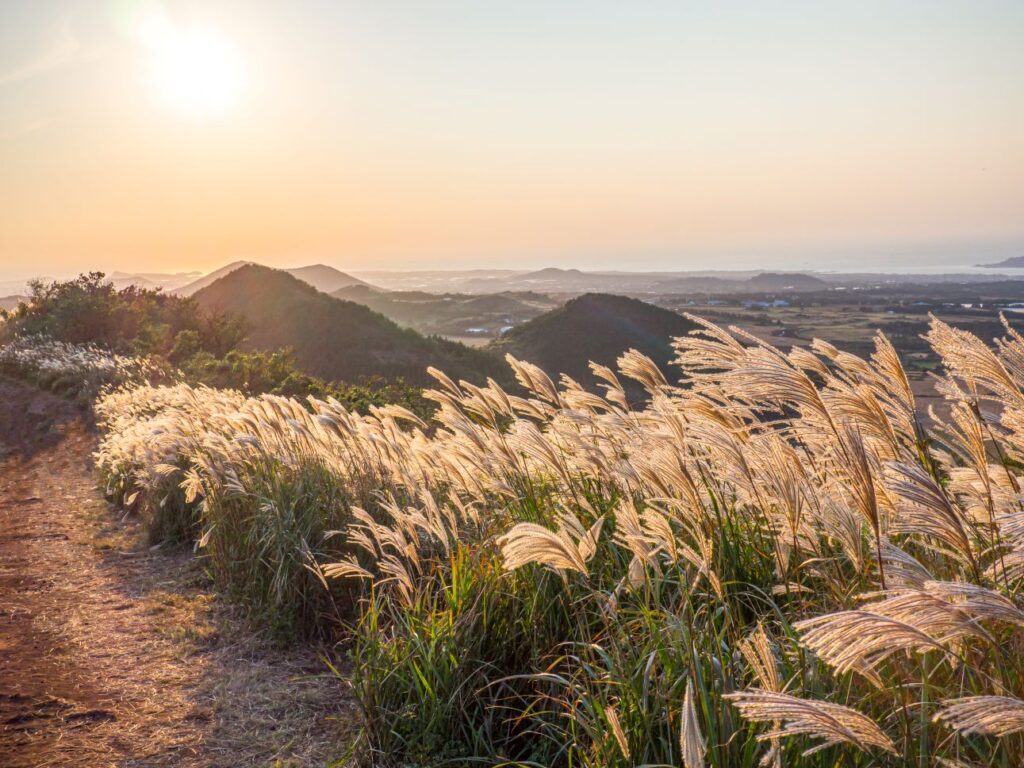
Best for: Travelers who want to experience Jeju at a slower pace, with time for hidden gems, cultural depth, and personal discovery. This itinerary assumes you’re comfortable with independent travel.
Days 1-3: Follow the 3-Day Itinerary Above
Day 4: Choose Your Adventure
By day four, you’ll have a sense of what resonates with you. Here are your options:
Option A: History & Memory
Jeju 4.3 Peace Park (2-3 hours minimum) — This is a memorial to 30,000+ civilians killed during the 1948-1954 uprising and government suppression. Essential for understanding modern Jeju. There’s a memorial tower with 14,373 verified names, a historical center, and meditation spaces. It’s emotionally heavy, but important.
Jeju Folk Village or Seongeup Folk Village — Traditional village layouts, stone walls, thatched roofs. Seongeup is more authentic but can be very touristy. Jeju Folk Village (outdoor museum) is more educational and shows historical Jeju life.
Option B: Nature Immersion
Full Hallasan Summit Hike — If you did a partial trail on Day 2, now’s your chance to commit to the full thing. Start early (6-7am). 8-9 hours round trip. Baengnokdam crater at summit (when open—sometimes closes for ecological protection). Pack lunch, bring layers. Challenging but rewarding.
Gotjawal Forest Exploration — Gotjawal = lava forest, a unique ecosystem covering 12% of Jeju. Primeval forest growing on ‘a’a lava, uncultivated until the 21st century. Multiple locations: Dongbaek Dongsan, Gimnyeong Maze Park area. Cool microclimate, unusual plants, otherworldly atmosphere.
Option C: Beach Day & Relaxation
Jungmun Beach for surfing/boogie boarding. Gimnyeong Beach for snorkeling. Hidden beach exploration (ask locals or search Naver Maps for ‘해변’). Or just a spa/resort day at one of Jeju’s many facilities. By day four, you might simply need to slow down and recharge before returning to Seoul’s intensity. No shame in that.
Option D: Oreum (Volcanic Cone) Hunting
Yongnuni Oreum (easiest, most accessible). Darangswi Oreum (360° views from summit). Saebyeol Oreum (dramatic, featured in K-dramas). These smaller volcanic cones (150-250m typically) offer unique perspectives on Jeju’s volcanic geology. Less crowded than Hallasan, easier to hike, each has its own distinct character. You can do 2-3 in a day if you’re feeling energetic.
Option E: Explore Jeju City
Practical Tips & Considerations
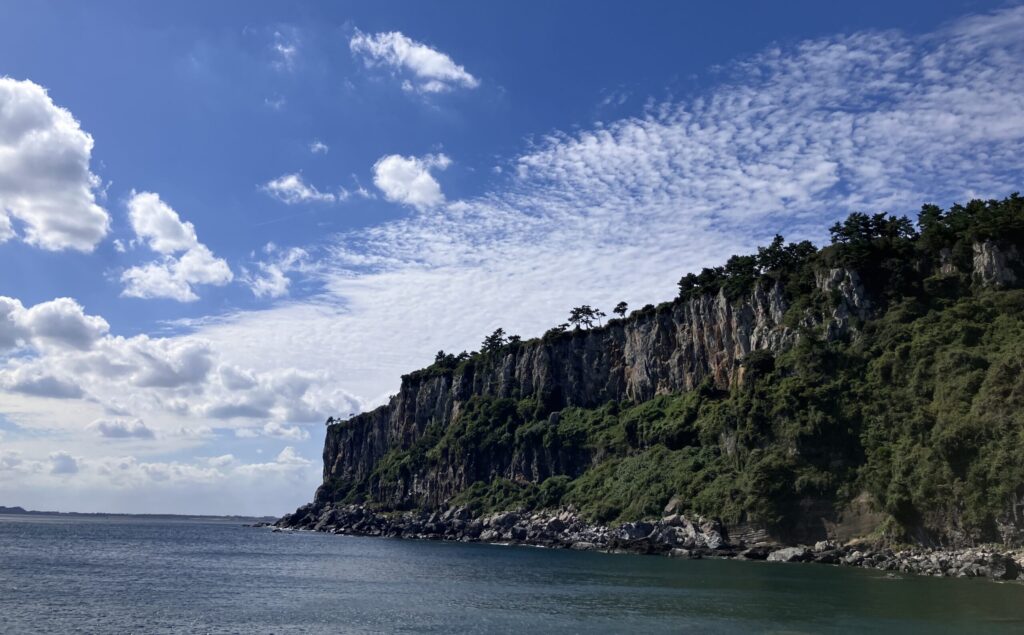
When to Visit
Best seasons: April-June (spring) and September-November (autumn)
Mild weather, fewer crowds, lower prices. Cherry blossoms in early April, fall colors in November. All attractions open and accessible.
Summer (July-August):
Hot and humid, peak tourist season (especially Chinese tourists). Higher prices, crowded attractions, traffic congestion. Typhoon season (but Hallasan provides some protection).
Winter (December-February):
Cool but rarely freezing at coast (0-10°C typical). Hallasan summit trails often closed due to ice/snow. Fewest tourists, lowest prices. Strong winds common—Jeju is called ‘Island of Wind’ for a reason.
Where to Stay
Jeju City (North): Best transport hub, near airport. More urban, less scenic. Range: $17-35 hostels, $32-56 guesthouses, $80+ hotels.
Seogwipo (South): More scenic, warmer in winter. Better for nature-focused itineraries. Similar price range to Jeju City.
Coastal villages (Handam, Aewol, Woljeongri, Pyoseon, etc.): More authentic, quieter, but less convenient for transport. Consider if you have a rental car and want that ‘island life’ experience.
What to Avoid (Tourist Traps)
Not everything famous in Jeju is worth your limited time. Here’s what I’d skip:
- Mysterious Road: An optical illusion of a car rolling uphill. 30 seconds of interest, not worth a special trip.
- Yongduam/Oedolgae Rocks: They’re just rocks. Fine if you’re nearby, not worth driving hours for.
- South Jeju waterfalls (Cheonjiyeon, Jeongbang): Small, cute, but honestly disappointing if you’ve seen major waterfalls elsewhere.
- Udo Island: Beautiful but overrun with tourists. Consider skipping unless you have 4+ days.
Language & Communication
- English is limited outside major tourist areas, but improving
- Download Google Translate or DeepL with Korean offline dictionary before you go
- Naver Maps or KakaoMap is better than Google Maps in Korea—learn to use it
- Taxi translation hotline available: 080-840-0505 (Spanish is option #5 if needed)
- Many restaurants have photo menus or can use translation apps
You Need Jeju to Complete Your Korea Adventure!
If you visit Korea and see only Seoul, you’ll experience modern Korea—technology, K-pop, urban sophistication, the economic miracle. All of this is real and impressive. But you’ll miss the other half of Korea’s story.
You’ll miss the volcanic island where women have dived for seafood for centuries, where shamanism still thrives, where a language older than Middle English is dying with its last elderly speakers. You’ll miss the landscapes that Koreans themselves escape to, the UNESCO World Heritage volcanic formations, the black sand beaches and lava tubes that remind you this island was born from fire.
You’ll miss the slower pace, the island time, the sense of a place that has maintained its distinctiveness for thousands of years despite pressure to conform to mainland norms.
Jeju is not just a beach destination or a nature escape. It’s a different Korea—not better or worse than Seoul, but different.
Essential for a complete understanding of the country. And remarkably accessible: one hour by air, affordable, DIY-friendly, with infrastructure that welcomes independent travelers.
The itineraries above give you frameworks, but Jeju rewards wandering, curiosity, willingness to get off the beaten path. The best experiences might be stumbling onto a haenyeo preparing her gear at dawn, finding a hidden beach with no one else around, sharing makgeolli with locals at a seaside restaurant, or simply sitting on an oreum watching the clouds move across Hallasan.
Two days gives you the highlights. Three days allows depth. Four days lets you breathe. Any of these is better than skipping Jeju entirely.
So when you’re planning your Korea trip, yes, see Seoul. See the palaces, eat the Korean BBQ, experience the urban energy. But then add those 2-4 days on Jeju. Your understanding of Korea will be broader for it.
