
What You'll Find in This Article
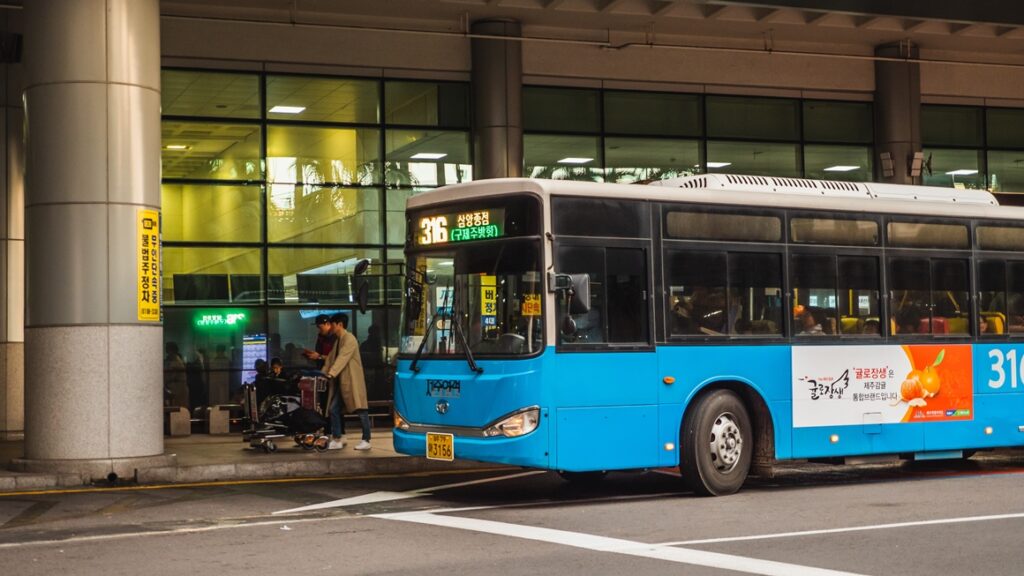
People often say you absolutely need to rent a car to explore Jeju – I’m looking at you, Instagrammers. The same people troll the Jeju bus system for being hard to figure out.
I have to disagree. The bus system in Jeju not just works, it rocks!
Sure, it won’t always be the most convenient option, and it’s not always the fastest. But it works very well, spares you from having to deal with parking in the cities. and it can save you quite a chunk of change.
I walked every single meter of the Jeju Olleh Trail (올레길) over 3 weeks, all 437 kilometers, and relied on public buses.
Every morning, I’d take a bus from my lodging to the starting point of a trail. And hours later, after I find myself stumbling to the trail’s end, I would catch a bus from the endpoint back to my accommodation. And deeply, deeply grateful for being able to sit and rest quietly on the bus back.
If I had been driving, I would first have had to figure out how to get back to my car, then navigate and drive to my lodging.
I’m not saying buses are better than renting a car. If you have an international driver’s license and the budget, and you are short on time, renting a car gives you way more flexibility.
But if you’re like me and prefer slow travel, or you don’t have an IDP, or you just want to save money, buses are absolutely a viable option.
Here’s how to make the most of the buses of Jeju!
How to Pay for Buses

You have two options to pay for buses on Jeju:
Option 1: T-money Card (티머니)
This is the standard Korean transportation card. You can use it on buses, taxis, subways (not that Jeju has subways), and even at convenience stores. The card itself costs around 3,000-5,000 won depending on the design, and you load it with cash at any convenience store like CU, GS25, or 7-Eleven.
One T-money card can be used by multiple people on the same trip. When you board, just tell the driver how many people. For example, “2명 해주세요” (dool myeong haejuseyo / 2 people, please). Or just hold up the right number of fingers and end with “haejuseyo”. The driver will charge the card accordingly. When you exit, you only need to tap out once.
The catch? On Jeju, you can only reload with Korean won in cash at convenience stores like CU, GS25, and 7-Eleven. No credit cards for reloads. So if you’re planning to use buses a lot, you’ll need to hit up convenience stores periodically to top up.
Bus fare with T-money: 1,150 won for regular buses.
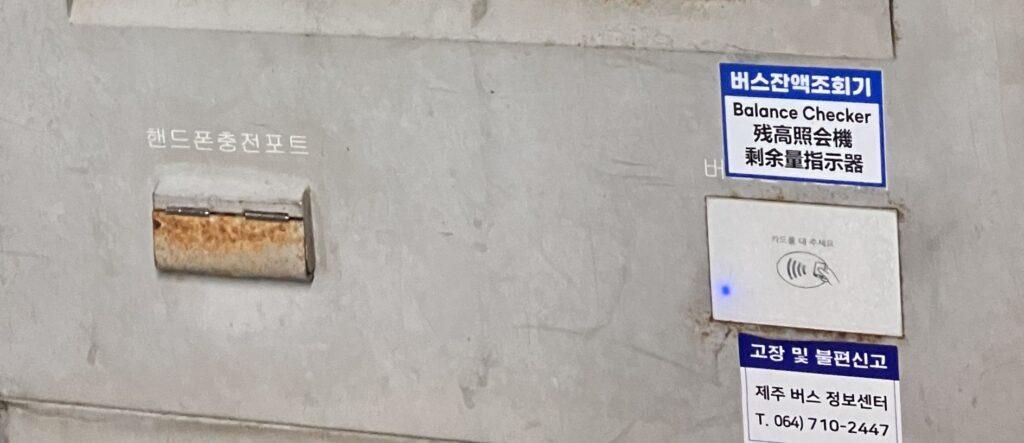
Pro Tip: Many bus-stops in Jeju City have a scanner for you to check your T-Money balance. These are usually found on the lower part of digital signboards that display what time the next buses are coming.
Option 2: Tap Your Visa Card Directly (New in 2025)
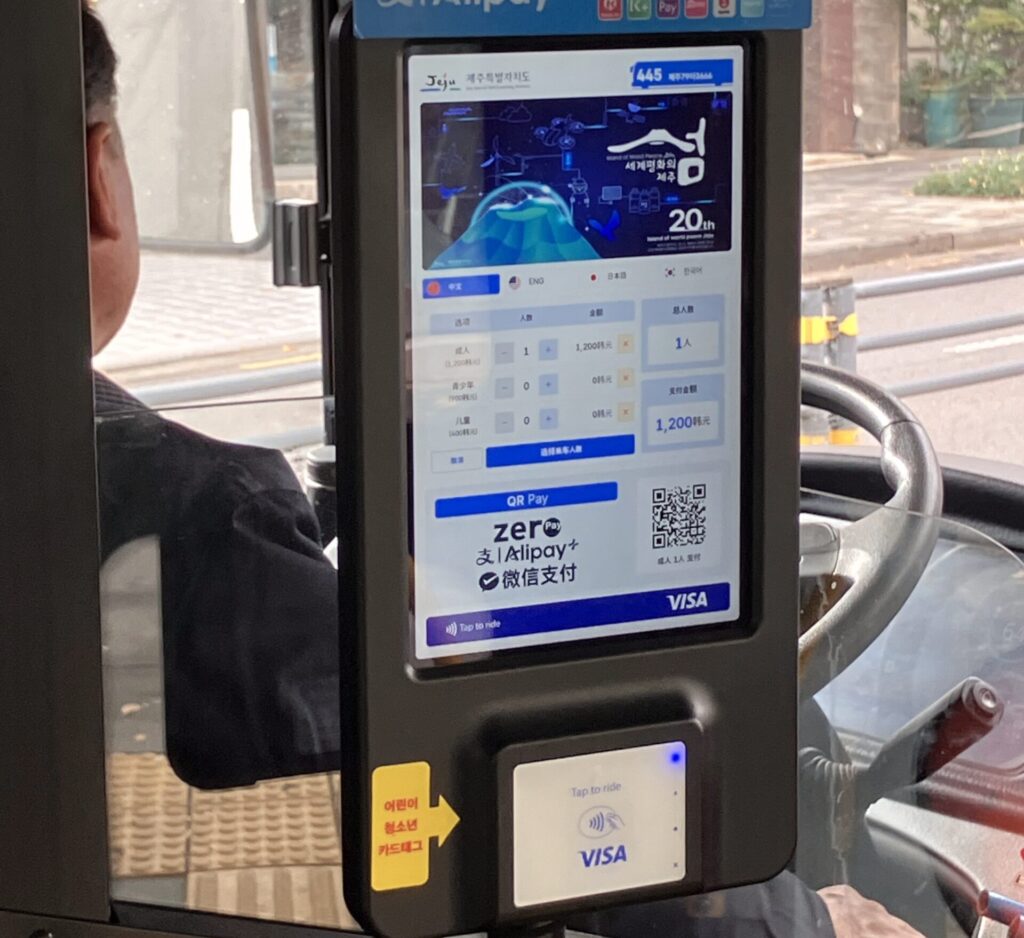
As of 2025, all Jeju buses accept contactless Visa, Mastercard, and UnionPay cards. You literally just tap your credit card or phone (Apple Pay, Samsung Pay, Google Pay) on the reader when you board and when you exit.
This is huge for tourists because you don’t need to worry about buying and reloading a T-money card. Just tap and go.
Pro tip: If you’re only in Jeju for a few days and you have a contactless Visa or Mastercard, skip the T-money card and just use your credit card. But if you’re staying longer or traveling to other parts of Korea, get a T-money card because it works nationwide and gives you transfer discounts.
Transfer Discounts: Free Connections Within 40 Minutes
One of the best things about using a transportation card (T-money or contactless credit card) is the transfer discount. If you tap off one bus and tap on another within 40 minutes, you don’t pay a second fare. You can do this up to two times per original fare.
Important limitations:
- You can’t transfer to the same bus number
- If 2-3 people are sharing one T-money card, the transfer discount only applies to one person
- The 40-minute window is strict. If you’re at 41 minutes, you pay full fare again
This transfer discount is actually really useful. For example, I used it all the time to get from remote Olleh trail endpoints back to my accommodation. Bus to the nearest town, transfer to another bus to Jeju City, sometimes transfer again to get to my specific neighborhood. Total cost: one bus fare if I timed it right.
Understanding Bus Types and Numbers
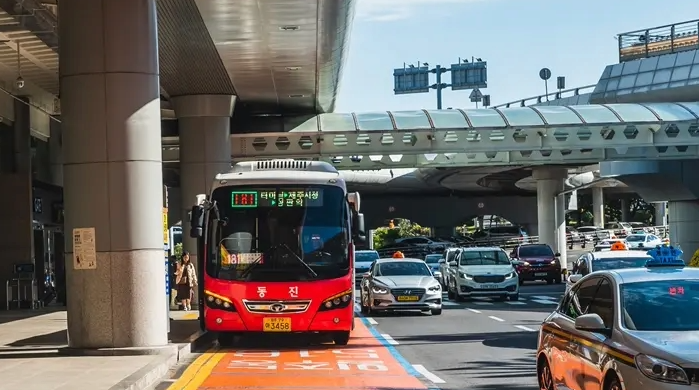
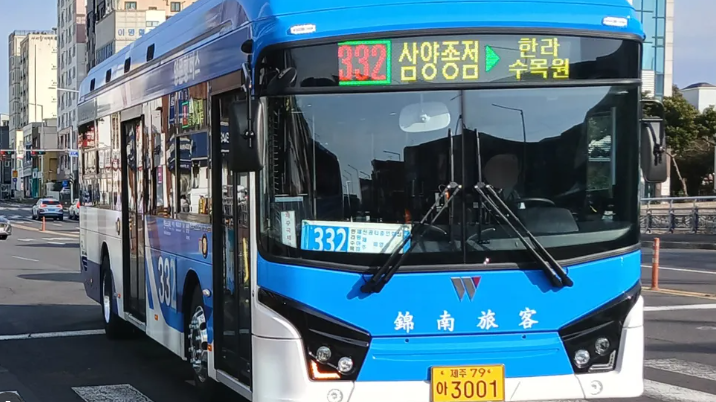
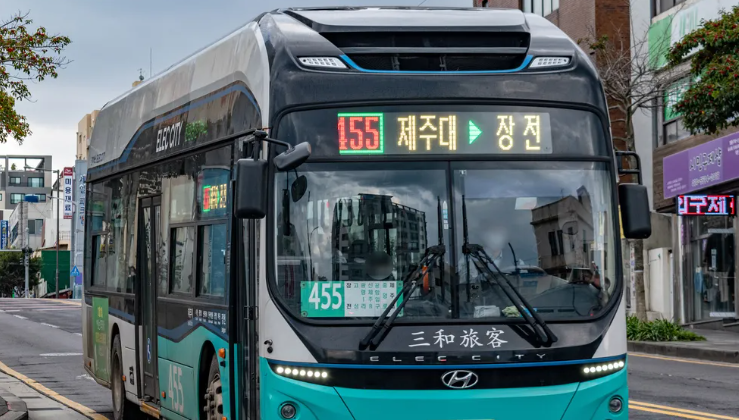
Jeju buses are color-coded and numbered by type. Once you understand the system, it’s actually pretty logical.
Red Buses (100s): Express Routes These are the fastest buses connecting major points. They make fewer stops than regular buses.
- Bus 101, 102: Airport to Seogwipo via east and west coasts
- Bus 111, 112: Airport to Seongsan area (eastern Jeju)
- Bus 121, 122: Airport to Pyoseon area
- Bus 131, 132: Airport to Namwon area
- Bus 181, 182: Complete loops around the island
Fare: 2,000-3,000 won with transportation card
Blue Buses (200s and 300s): Main Lines These are your workhorses for getting around Jeju. They connect major destinations across the island and cover way more than just the two coastal routes.
Key routes include:
- Bus 201: Jeju City → Seongsan Ilchulbong (성산일출봉) → Seogwipo (east coast, every 15-30 minutes)
- Bus 202: Jeju City → Gosan → Seogwipo (west coast, every 15-25 minutes)
- Bus 281: Runs through the middle of the island, just east of Hallasan, connecting Jeju City to Seogwipo. This route takes you to the Seongpanak (성판악) trailhead for Hallasan and is equipped as a coach bus with luggage storage under the seats.
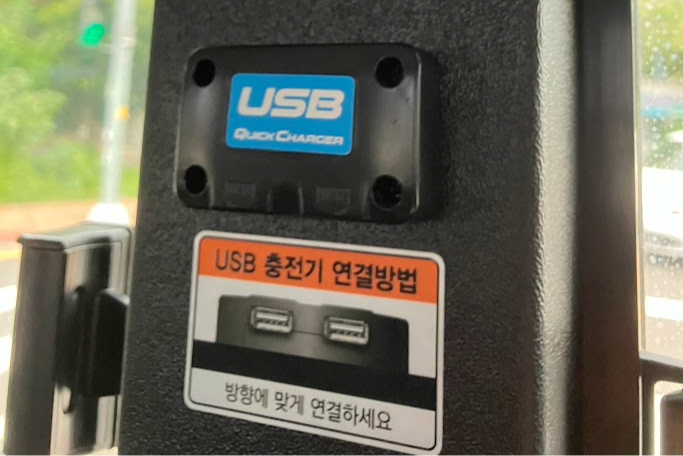
Many blue buses have USB charging ports and wifi on board. The 281, in particular, is set up like a coach bus, which means you can stow larger bags in storage bays accessible from the roadside. Super helpful if you’re changing accommodations.
These blue buses will get you to most places visitors want to go. If you’re planning your itinerary and a blue bus route serves your destination, you’re in good shape.
Green Buses (400s, 600s, 700s): Local and Rural Routes These cover smaller towns and villages. Frequency varies wildly. Some run every 30 minutes, others only 3-4 times a day.
- 400s: Jeju City local buses
- 600s: Seogwipo local buses
- 700s: Rural village routes
Airport Limousine Buses (600, 800, 801) These are technically “limousine” buses, though don’t expect actual luxury. They’re just express buses with slightly more comfortable seats.
- Bus 600/601: Airport → Jungmun Resort → Seogwipo (every 18-20 minutes)
- Bus 800/801: Airport → Seogwipo via Innovation City (faster than 600 and 500 won cheaper)
The 600 takes about 80 minutes from the airport to Seogwipo KAL Hotel. It’s reliable, runs frequently, and stops at most of the major hotels in Jungmun.
Getting to Hallasan and Seongsan Ilchulbong: The Two Big Ones
Let me break down the two destinations where specific bus knowledge really matters.
Hallasan Trailheads:
For Seongpanak (성판악) trailhead:
- Bus 281 from Jeju City (this is your main option)
- Much better bus frequency, every 30-40 minutes
For Gwaneumsa (관음사) trailhead:
- Bus 475 (green bus)
- Buses run only about once per hour
BTW: I did the Hallasan summit hike ascending via Seongpanak and descending via Gwaneumsa. The infrequent Bus 475 service at Gwaneumsa meant I had to time everything carefully. If you miss that bus, you’re waiting an hour. Plan accordingly.
Seongsan Ilchulbong (성산일출봉):
- Bus 201 from Jeju City or Seogwipo
- Express buses 111/112 from the airport
- Multiple options, well-served
The Apps and Tools You Actually Need
For everything else, such as beaches, museums, other attractions, use Kakao Map or Naver Map to find the right bus, because Google Maps doesn’t work well in Korea.
Kakao Map (English available) This is the one I used most. It shows bus routes, real-time arrival times, and walking directions. The interface is intuitive even if your Korean is minimal. Download this before you arrive.
Naver Map (English, Japanese, Chinese available) Also excellent. Some people prefer Naver over Kakao. Try both and use whichever you like better. However, be wary of reviews for restaurants and cafes if you use Naver Map, because most of those are the result of “leave a good review, get free stuff” promos run by business owners. The reviews on the less popular KakaoMap are more reliable.
Jeju Bus Information System (https://bus.jeju.go.kr/?lang=en) The official Jeju bus website has an English language option that works most of the time. If you add the Google Translate Chrome extension to your browser, you get an extra layer of translation within the site without having to copy and paste into a separate translation app.
Here’s the critical thing about using these apps: When Kakao Map or Naver Map plots out a route and recommends a bus number, it may sometimes say “check bus schedule” or “check the bus route.” For rural buses especially, this is not a suggestion. It’s a requirement. The apps are telling you that the schedule is unreliable or infrequent enough that you need to verify before committing to that route.
All of these apps and the website show you when the next bus is coming. This is crucial because bus frequency varies so much. Don’t just show up at a bus stop and hope. Check the schedule first.
Reminder: Even though many bus stops and buses have USB ports for you to charge your phone, a backup battery is a good idea if you are exploring Jeju by bus. On top of taking photos and updating your socials, you’ll be using your phone constantly for maps, schedules, and translations. You don’t want to be stranded with a dead phone trying to figure out which bus to catch.
Practical Realities: What To Look Out For
Buses Stop Early Last buses are usually around 10-11 PM. If you’re planning a late dinner or evening activity, make absolutely sure you can get back. Check the last bus time for your route before you head out.
Rural Routes Are Infrequent Some village buses run only 3-4 times per day. If you’re going somewhere off the beaten path, you might arrive and then be stuck there for hours waiting for the return bus. Always check the full schedule both ways before committing to a destination.
Luggage Can Be an Issue If you’re traveling with a large suitcase, buses during busy times might not have space. Small carry-ons are fine. The exception are the coach-like mainline buses with only one entrance and exit at the front. Those actually have storage bays that are accessible from the side of the bus.
Bus Stops and Announcements
Most bus stops now have English on the signs, plus many of the digital displays let you switch to English so you will know which buses are coming and when. On the mainline buses, major stops are announced in English on the bus.
That said, you’ll still encounter plenty of stops where everything is in Korean. This is where the apps become essential. You can type in your destination in English on Kakao or Naver Map, and it’ll tell you exactly where to get off.
Pro tip: Take a screenshot of your bus route on the app before you board, in case you lose signal. Cell service can be spotty in rural areas.
When Buses Work and When They Don't
Buses work great for:
- Getting between major tourist destinations (Jeju City, Seogwipo, Seongsan)
- Reaching Hallasan trailheads
- Airport connections
- Accessing many Olleh Trail sections (though be aware that some trail start and endpoints require a 15-30 minute walk to reach the nearest bus stop)
- Solo travelers on a budget
Buses are challenging for:
- Very remote beaches or attractions
- Tight schedules (you’ll spend a lot of time waiting)
- Groups of 3-4 people (at that point, a rental car or taxi might cost less)
- Traveling with small children or lots of luggage
I spent months using only buses, and it was absolutely doable. But I also had a flexible schedule and didn’t mind waiting 30-60 minutes for the next bus. If you’re trying to cram 8 attractions into one day, buses will drive you crazy.
Final Thoughts
Jeju’s bus system has improved massively in the past few years. The addition of English announcements, contactless credit card payments, and better apps makes it way more accessible to foreign travelers than it used to be.
Is it as convenient as having a car? No. Will you spend more time waiting at bus stops than you’d like? Probably. But can you see Jeju’s major attractions using only buses? Absolutely yes.
I completed the entire Olleh Trail relying on buses to get to trailheads and from endpoints. I accessed Hallasan’s summit trails by bus. I got to beaches, waterfalls, museums, and restaurants by bus. It’s doable. It just requires patience and planning.
If you’re the type of traveler who’s okay with a slower pace, who doesn’t mind waiting, and who sees the journey as part of the experience, buses are a great option. You’ll save a ton of money, you’ll interact more with locals (even if it’s just nodding awkwardly at the bus driver), and you’ll have a different experience of Jeju than the rental car crowd.
Just remember: check the schedule, download Kakao Map, get your payment method sorted (T-money or contactless card), and build in buffer time. The buses will get you where you need to go.
