
What You'll Find in This Article
So far you’ve learned about:
- Seongsan (volcanic crater you can climb)
- Butcher BBQ (how locals eat)
- Dolphins & Coast (natural beauty)
- Hallasan (the volcano that created everything)
- Haenyeo (disappearing sea women tradition)
- Manjanggul (walk inside the volcano)
- Green Tea (tea culture and plantations)
- Seasonal Attractions (when to visit)
- Oreum Hunting (368 small volcanic cones)
- 5-Day Markets (where locals shop)
- K-Drama Filming Locations (walk through the stories you watched)
Today: Walks you can actually enjoy, even if you hate hiking.
PART 1: Why You Shouldn’t Miss This
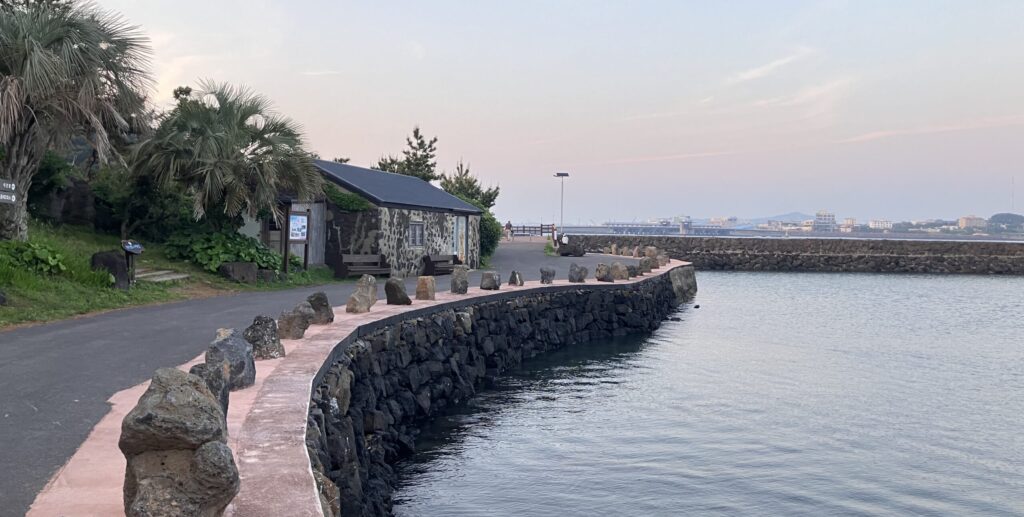
Jeju Is One of the Most Walkable Places on Earth
But nobody told the hike-haters.
You don’t need trail boots, walking poles, or protein bars. You need comfortable shoes and a willingness to stop at a cafe halfway.
Most travel content about Jeju hiking assumes you either want to summit Hallasan (five hours of elevation gain) or walk the entire Jeju Olleh Trail (437 kilometers across all 27 routes). That’s like saying the only way to visit Paris is to climb the Eiffel Tower or walk from Notre-Dame to Versailles.
What about the rest of us?
What about people who want beautiful scenery without gasping for air? Who prefer an hour of pleasant walking over six hours of suffering? Who think the best part of a hike is the food you eat afterward?
Good news: Jeju has you covered.
The island offers dozens of walks that deliver stunning views, interesting landscapes, and actual enjoyment without requiring technical hiking skills, expensive gear, or masochistic determination.
I’m talking about urban cherry blossom tunnels where cafes outnumber trail markers. Beach walks where you stop for raw fish and makgeolli at the halfway point. Coastal loops with windmills and lighthouses. Tea plantation strolls where the cafe serves better views than the trail.
These are walks. Pleasant, scenic, rewarding walks that happen to be in beautiful places.
And what makes them brilliant: they all have escape routes. Get tired? Cafes everywhere. Need a break? Benches with ocean views. Want to bail? Buses run regularly.
What Makes a Walk Hike-Hater Friendly
After years of exploring Jeju on foot, I’ve developed criteria for walks that regular humans can actually enjoy:
About an hour, give or take: Not 20 minutes (too short to feel like you did anything). Not three hours (that’s actual hiking). Roughly 60-90 minutes of pleasant movement.
Mild elevation or easy places to rest: If you’re gasping for breath, something went wrong. Gentle slopes are fine. Short uphill sections are fine. Continuous steep climbing is not.
Something worth looking at along the way, not just at the end: The view from the top is nice. But what about the 45 minutes it takes to get there? If the journey is boring, it’s not hike-hater friendly.
A cafe, restaurant, or snack stop somewhere in the equation: Before, during, or after. Ideally during. Food makes everything better.
These criteria eliminate 90% of what travel blogs call “easy hikes on Jeju.” What’s left are walks that non-hikers genuinely enjoy.
What Kinds of Walks Work?
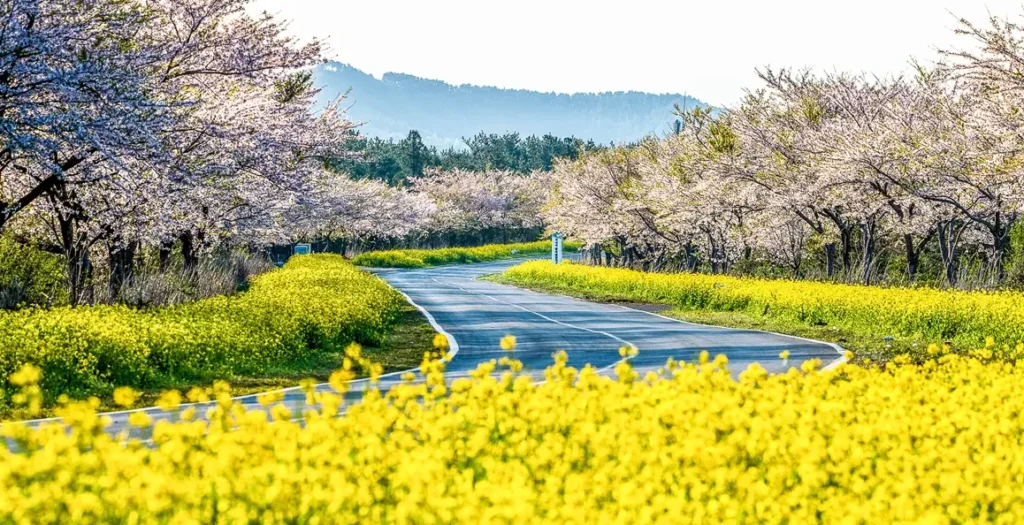
Urban walks: Cherry blossom tunnels in Jeju City with 100+ murals and cafes every block. Art streets in Seogwipo connecting markets to the waterfront.
Easy oreums: 15-minute climbs to harbor views from Sarabong or plane-spotting from Dodubong. Local exercise spots, not tourist attractions.
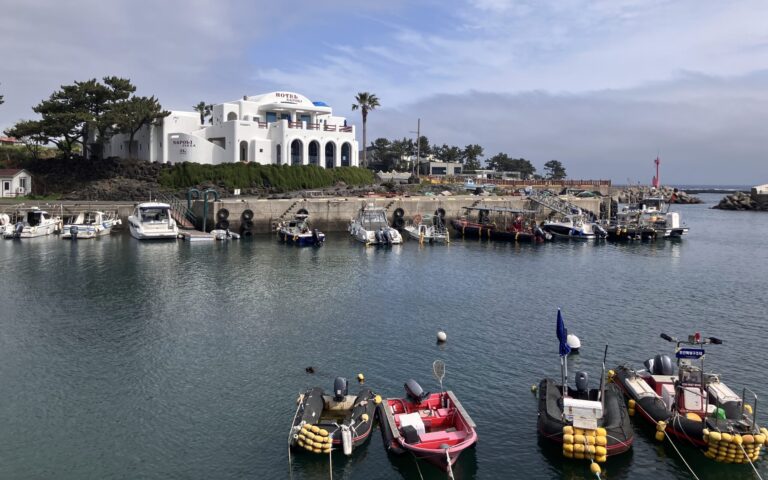
Coastal loops: Dramatic headlands like Seopjikoji (same scenery as Seongsan without the stairs) or Songaksan’s crater rim walk with ocean views.
Beach walks: Low-tide explorations at Pyoseon where golden sand extends far into the ocean, or Gwangchigi’s black and white sand mixing beneath volcanic cliffs.
Windmill coastal roads: Western Jeju’s Sinchang loop with wind turbines silhouetting against sunset, or northeast coast Woljeongri with cafe strips.
Walks with meaning: Sumbisori-gil connecting the Haenyeo Museum to Hado village along paths sea women have used for generations. Altteureu Airfield’s quiet, windswept plain holding heavy 4.3 history.
Tea plantation strolls: Osulloc’s green fields with rows of tea bushes, free museum, and multiple break points.
Waterfall viewpoints: Paved paths to Jeongbang Falls dropping directly into the sea.
For the complete guide with 15+ walks organized by category, detailed directions, timing recommendations, cafe stops, and Korean phrases you’ll actually use, see our full blog post.
PART 2: How to Make it Happen
What Makes These Work
These walks share key features that make them genuinely enjoyable for non-hikers:
Escape routes everywhere: Get tired? Buses run regularly. Need a break? Cafes line most routes. Want to bail? You’re never far from civilization. No shame in cutting a walk short.
Built-in rest stops: Urban walks have cafes every few blocks. Coastal walks have benches with ocean views. Tea plantations have museums and shops. You’re encouraged to stop, not punished for it.
Interesting the whole way: The view from the top is nice. But what about the 45 minutes it takes to get there? These walks offer something worth looking at continuously. Cherry blossoms overhead. Ocean views beside you. Windmills in the distance. Tea fields stretching away. The journey rewards you, not just the destination.
Food culture integration: Korean walking culture includes food. Stop for tangerine juice. Buy hotteok from a street vendor. Sit at a cafe with ocean views. The walk and the eating are equally important parts of the experience.
Practical Walking Tips
Timing matters: Cherry blossoms bloom late March to mid-April. Beach walks work best at low tide. Sunset walks need afternoon timing. Check conditions before going.
Comfortable shoes: Not hiking boots. Just comfortable walking shoes or sneakers. You’re walking on paved paths, wooden decks, and maintained trails.
Bring water but don’t overpack: You’ll pass convenience stores and cafes. No need to carry supplies for a week-long expedition.
Check the weather: Jeju’s weather changes quickly. Bring a light jacket even on sunny days. Wind on coastal walks can be strong.
Bus schedules: Download Kakao Maps or Naver Maps. Check bus routes and schedules before heading out. Last buses from remote areas leave around 8-9 PM.
Escape without shame: If you get tired, stop. Find a cafe. Catch a bus. Nobody’s judging. The point is enjoyment, not suffering.
Transportation
Most walks are accessible by public bus from Jeju City or Seogwipo. Some remote coastal walks work better with a car or taxi.
Urban walks (Jeonnongro, Lee Jung Seop Street, Sarabong): Walk or short bus ride from city centers.
Coastal walks (Sinchang Windmill Road, Seopjikoji): Bus accessible but car gives more flexibility.
Tea plantations (Osulloc): Bus accessible from Jeju City.
PART 3: Korean You’ll Actually Use
Asking About Trail Conditions
Is this trail easy?: “이 길 쉬워요?” Romanization: I gil shwi-wo-yo?
How long does it take?: “얼마나 걸려요?” Romanization: Eol-ma-na geol-lyeo-yo?
Finding Cafes & Rest Stops
Where is a cafe?: “카페 어디 있어요?” Romanization: Ka-pe eo-di i-sseo-yo?
Is there a place to rest?: “쉴 곳 있어요?” Romanization: Shwil got i-sseo-yo?
Is there a convenience store?: “편의점 있어요?” Romanization: Pyeon-ui-jeom i-sseo-yo?
Getting Help
I’m tired: “피곤해요” Romanization: Pi-gon-hae-yo
Can I take a taxi from here?: “여기서 택시 탈 수 있어요?” Romanization: Yeo-gi-seo taek-si tal su i-sseo-yo?
Where is the bus stop?: “버스 정류장 어디 있어요?” Romanization: Beo-seu jeong-nyu-jang eo-di i-sseo-yo?
Useful Walking Vocabulary
길 (Gil) = Road, path, way
해변 (Hae-byeon) = Beach
오름 (Oreum) = Small volcanic cone
등대 (Deung-dae) = Lighthouse
카페 (Ka-pe) = Cafe
화장실 (Hwa-jang-shil) = Restroom/bathroom
Why We Reccomend These Walks
Most Jeju hiking guides assume you either want extreme challenge or you’re not serious about exploring the island. That’s nonsense.
Beautiful scenery doesn’t require suffering. Cultural immersion doesn’t demand technical skills. Memorable experiences can happen on flat ground.
These walks deliver everything that makes Jeju special—volcanic landscapes, ocean views, cultural sites, local atmosphere—without requiring you to pretend you’re training for Everest.
You can enjoy cherry blossom tunnels in Jeju City without climbing mountains. You can walk coastal paths without gasping for air. You can explore tea plantations without breaking a sweat. You can experience haenyeo culture by walking the paths they’ve used for generations.
And what makes it better: you’ll actually remember these walks fondly instead of blocking them out like traumatic memories.
Jeju rewards walkers just as much as it rewards hikers. Maybe more, because walkers actually enjoy the experience.
What’s Next?
Tomorrow, Email 13 goes deep on the Jeju Olleh Trail. 437 kilometers across 27 routes circling the entire island. The complete guide to Korea’s most famous long-distance hiking trail—including which sections work for regular humans who just want a taste without the full commitment.
But first: pick one of these walks and actually do it. Start with the easiest one near wherever you’re staying. See how it feels. Build from there.
Walking Jeju doesn’t require hiking Jeju. The island welcomes everyone willing to move at a human pace and stop for coffee.
— Ed
