Play Episode
Episode Summary
Ed and Sora kick off the “Hidden Jeju” series with green tea. Despite being coffee people (Sora quotes the Korean phrase 얼죽아 — “I’d freeze to death before giving up iced Americano”), they’ve grown to appreciate Jeju’s tea culture.
Jeju’s volcanic soil, clean filtered water, and humid climate make it ideal for tea cultivation, now rivaling Japan’s famous Uji region.
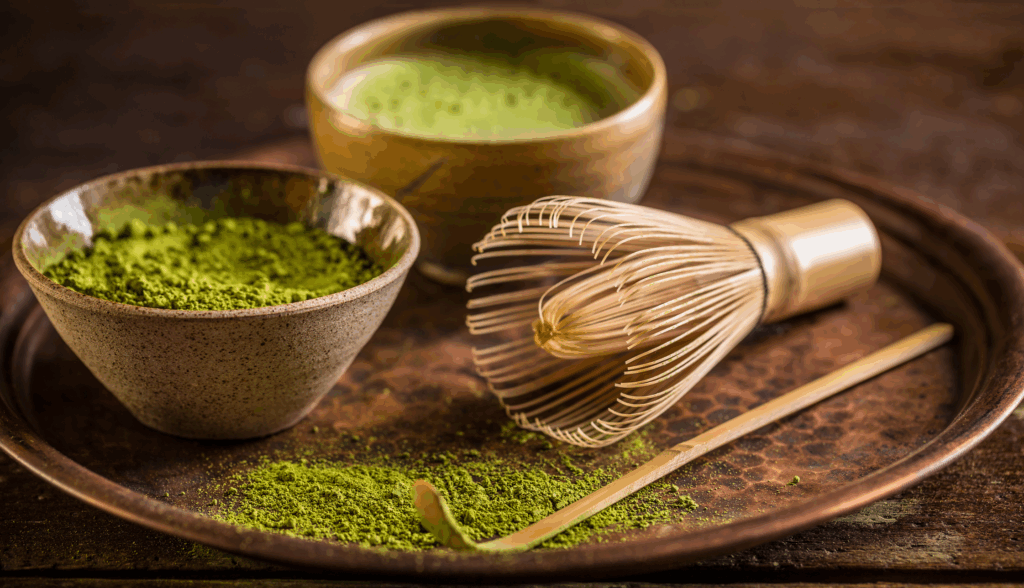
They discuss the difference between green tea (brewed leaves) and matcha (ground whole leaf), and recommend several tea plantations:
- Osulloc (biggest, but crowded — go early)
- Seogwi Dawon (small, 80-year-old grandma serves tea, no tour groups)
- Orteas (reservation-only tea ceremony)
- Onulun (lava cave underneath, green tea foot bath).
Key Takeaways
- Jeju tea rivals Japan’s Uji region; volcanic soil, filtered water, and humid climate are ideal for cultivation
- 말차 (malcha) = matcha in Korean; 녹차 (nokcha) = green tea
- Matcha = ground whole leaf (more caffeine, more nutrients); green tea = brewed extract
- Harvest season: April-June; early harvest (April) is smoother and more expensive; June harvest is stronger
- Osulloc Tea Museum: Biggest, free entry, beautiful fields — but crowded (tour buses, food court vibe); go early morning
- Seogwi Dawon: Small, tranquil, 80-year-old grandma owner, 5,000 won entry includes 2 teas, views of Hallasan peak, no large tour groups
- Orteas: Reservation-only, Airbnb experience, 4-tea ceremony (green, black, hojicha, matcha) — no random tourists
- Onoren Green Tea House: Lava cave underneath tea fields, green tea foot bath (~$10)
- Aewol area: Matcha bingsu, matcha ice cream, croiffle
Handy Korean with Sora Ssaem (쌤)
마실래요 (mashillaeyo) = Would you like to drink? / I would like to drink
- 뭐 마실래요? (mwo mashillaeyo?) — What would you like to drink?
- 말차 마실래요 (malcha mashillaeyo) — I’d like to drink matcha
- 녹차 마실래요 (nokcha mashillaeyo) — I’d like to drink green tea
Tea vocabulary:
- 녹차 (nokcha) — green tea
- 말차 (malcha) — matcha
- 홍차 (hongcha) — black tea
- 생강차 (saenggang-cha) — ginger tea
- 유자차 (yuja-cha) — citron tea
- 한라봉차 (hallabong-cha) — Hallabong tangerine tea
Next Steps
- Green tea blog post: vamosajeju.com/tea
- Plan your Jeju trip at vamosajeju.com/trip
- Sign up for the 14-part email series at vamosajeju.com/start
- Follow Vamos a Jeju on Instagram, TikTok, or YouTube.
- Share the episode with friends to help the podcast grow
- Visit vamosajeju.com for articles, videos, and resources
Episode Transcript
Korea's Iced Americano Obsession & the Matcha Craze
Ed (00:18) Hey everybody, welcome to today’s episode of the Vamos a Jeju podcast. My name is Ed and as always, I have the fabulous, fabulous, Sora. Say hi, Sora!
Soraya (00:28) Hello! Hello!
Ed (00:31) Today we are going to kick off our mini series on hidden Jeju. These will be the off the beaten path locations in Jeju that may not be on everybody’s top five list of places to go, but are places that both Sora and I love going and love bringing people to. So over the next few episodes, we’re just going to be focusing on these hidden gems and we call them hidden Jeju.
We’re going to kick off the first of this series and it’s going to be about green tea. So, Sora, like how do you feel about green tea? I know you’re a coffee drinker, but what’s your stand on tea?
Soraya (01:12) As a Korean you know we always love iced Americano so I always drink iced Americano but since I moved to Jeju we start going to like many different tea farms and also my partner, he really loved drinking tea. So I start drinking tea here in Jeju.
Ed (01:34) Yeah, I just want to seize upon something that you said earlier about how you always drink iced Americano and I said oh my god because I remember one time we met up near your mom’s place in Paju that’s like north of Seoul it was freezing cold and you’re like oh it’s so cold it’s so cold!
Soraya (01:48) So cold!
Ed (02:04) And so then I think you told me that there’s an expression that Koreans use which translates to… Well, you say the Korean version and I’ll say the English version. Go!
Soraya (02:14) We say 얼죽아 (eoljuga). It’s a shortened sentence from 얼어 죽어도 아이스 아메리카노 (eoreo jugeodo aiseu amerikano).
Ed (02:26) Which translates to, if I freeze my ass off to death, I want an iced Americano. There is no ass in the Korean version, but it’s the same meaning. Like they can be freezing cold and still do an iced Americano. It just blows my mind. Koreans are just crazy about iced Americano even in the winter.
But there is another craze that has seized the imagination of much of the world. And that is the craze about matcha. In the last six months, I’ve heard of some really ridiculous things like matcha on pizza and matcha on burgers and matcha cola, matcha beer. I’m like, what is up with all this matcha stuff? And so I don’t know. Have you ever had any of these with matcha? So not in Korea. It’s over here in the US.
Soraya (03:09) Really? No, no, no, no, no, this is really like matcha pizza, matcha burger, cola, beer. It’s so weird. I mean, we do have some like variation like matcha noodle, which is like noodle, but they put matcha a little bit in the noodle for the noodle itself.
Ed (03:32) Yeah, I mean for me, like matcha with chocolate or ice cream or snacks like guazza, like that sounds okay, you know, but burgers?
Soraya (03:39) By the way, you know that yesterday, Michelle sent me a posting on Instagram that it was like in the United States. They are starting to sell matcha from Jeju. Did you see that?
Ed (04:03) No, it’s kind of funny that my wife talks to you so much and she doesn’t tell me anything about it. So she found Jeju matcha in Trader Joe’s, huh?
Soraya (04:16) Mm-hmm. So you didn’t know that.
Ed (04:18) Well, I’m not surprised. Yeah, I didn’t know that. And I’m not surprised because like Jeju is really starting to rival Japan’s Uji region as a premier source of matcha. So it’s great that we are actually talking about this in today’s episode.
So matcha is a Japanese word that has been now used in much of the English-speaking world. Matcha is known as matcha and it’s Japanese but in Korea it’s called something else. What is it called in Korea?
Soraya (04:46) So in Korean we call it 말차 (malcha).
Ed (04:50) What is it about Jeju that makes its tea so good?
Soraya (04:55) I think it’s because we have the volcanic soil which has like lots of nutrients for the tea plants and also the climate. It’s kind of warmer than the mainland and also we have water filtered through the volcanic rock. So the waters are clean, the soils are like nutrients and also we have like gentle rains, the right humidification. I think all of these climate things is perfect for like tea growing in Jeju.
Usually we start harvesting the green tea from April to June so from like at the end of March or April the green tea from that early period is kind of smoother. The green tea harvested in June, that’s stronger. And actually the one from April is a lot more expensive for Korean. And Koreans love the smoothest taste, so it’s a lot more expensive. And then the strong one is cheaper, but actually the foreigners, they prefer the strong taste.
Ed (05:59) So when someone gives me like matcha or someone gives me like green tea, it’s like what’s the difference?
Soraya (06:12) For malcha, you’re drinking the whole leaf, like all of the leaf grinding to a powder. And the green tea, you’re drinking the extract of the green tea leaf brewed in the water. That’s why the malcha has more nutrients and lot more caffeine as well.
Ed (06:36) Gotcha. Okay. So which do you prefer?
Soraya (06:41) For me, I prefer green tea. I don’t like too strong taste. So actually I drink more green tea or like hojicha or like different kind of tea.
Ed (06:55) And I guess matcha feels like it’s more troublesome. Like you got to put in the water and you got like beat it with this brush or something and then make it all bubbly and then drink it. Like wow, this is something that maybe we’ll do with friends just for the experience but if I’m just alone, I’m reading a book, whatever, I’m not gonna do that, I’m just going to drink, well coffee or if I had to I’ll drink like green tea I guess, like just in the tea bag. And to all the people who love tea out there, I apologize if I offended you.
Soraya (07:07) Yeah. I mean for matcha, I think not many Koreans do that at home. We just go to the tea place and then order a matcha so the expert can do that for us.
Osulloc — The Famous One
Ed (07:45) We’ve spent quite a bit of time talking about Jeju tea and all that so let’s get to the point where people really care about is like how do they go to these tea places, these plantations and all that. So where do you usually bring people Sora?
Soraya (08:03) So the most popular destination for tea plantation is Osulloc. Ed doesn’t like this place. But because Osulloc is the biggest tea company in Korea and they have like huge tea plantation in Jeju. So they have so-called tea museum. But it’s not actually museum.
Ed (08:23) And for those of you, because this is a podcast and no one’s going to be able to see this, sorry, I just used air quotes, “tea museum,” quote unquote.
Soraya (08:35) So tea museum and like a cafe, like tea house. This place is beautiful. You can take photo of tea, and there’s also Innisfree the cosmetic shop and big tea house. But the reason why Ed and I don’t really like this place because it’s so crowded. So many people come here because you know there’s no entrance fee so lots of like tour company buses are coming to these places so you cannot actually enjoy the tranquility of the tea house. That’s the problem but still I think it’s worth to visit for a while to have a look.
Ed (09:17) Yeah, like if you really want to go to Osulloc then like go early in the day like before the tour groups get there. Like get there, I don’t know what time they open but if they open at nine o’clock try to get there like at 8:55, be very Korean about it and be there early and then by the time you’re about to leave at about 10 o’clock or whatever then that’s maybe that’s when all the other tourists get there. So if you do it that way then you will still get the tranquility and the nice vibe and the nice beautiful views. I’m gonna say it is actually very nice when there’s no crowds but if you go at a time when everybody is there then you’re gonna, we mentioned this before, it’s gonna be like a food court vibe.
Soraya (09:51) Right.
Ed (10:00) Busy, crowded, noisy, messy tables if some people don’t clear the tables. Yeah so I guess as long as you know what you’re getting into then sure go to Osulloc.
Orteas — Reservation Only
Ed (10:11) So one of the tea plantations that I brought Michelle to was called Orteas. And while Osulloc was on the west part of the island, Orteas is on the towards the eastern part of the island. It’s in the mid mountain region and that’s a small operation. You only can go there by reservation and for us we were able to reserve on Airbnb as an Airbnb experience.
The English language experience had been sold out and there were only the Korean language ones and so because we were both learning Korean we were like, we can do this. And so we showed up for the Korean language tea experience with like seven other Korean people from the mainland and yeah let’s just say that we didn’t understand everything that was being said during the experience. We still had a great experience because the tea was that good.
Yeah, so to me, Orteas is the exact opposite of Osulloc because it is not crowded at all. Like it’s reservation only and you have to pay to experience the tea so there are no random tourists walking around taking photos. And still you have the beautiful tea fields and then you have like oreums in the background.
Even as an Americano coffee drinker, I do recommend the experience in Orteas. It’s like a four tea ceremony. We got green tea, black tea, hojicha and matcha. It’s awesome. How about you Sora? Where do you go when you hang out with Jaden?
Seogwidawon
Soraya (11:38) One recommendation I have is Seokwidawon, which is in the southern part of Jeju. It’s at the bottom of Hallasan Mountain, so you can actually see the peak of the Hallasan Mountain from the tea plantation. So you can take photo with the green tea farm and then the top of the mountain. It’s beautiful.
And the reason why I really like this place is that the owner is like 80 years old grandma. She’s so nice. She’s so kind. And she’s always there brewing her teas for the people. And she’s so warm. Whenever I get there, she talked to me like say hello and then how is your tea and then do you want more tea. Like other grandma she’s always like offering like more tea, drink more, drink more, drink more.
So this place, we actually need to pay for the entrance and then the entrance includes two different kinds of tea. And the entrance fee is like 5,000 won, which is like $3. And then you get like two different types of tea. And also a beautiful view from the tea house. And it’s quite a small place, the tea house. So the big tour group cannot come in. I mean, I sometimes bring my guests there. But when I have like small group, then I go there. So yeah, it’s not gonna be as crowded as Osulloc.
Ed (13:20) Gotcha. I had a question about the experience with the Halmoni or the Halmang. I imagine that she’s talking to you in Korean. How about foreigners, visitors who go there and who, if we speak no Korean, I assume we’re not going to have as good an experience?
Soraya (13:31) I took many like foreign guests to that tea place and then like lots of people really love the vibe of the grandma. They like to take photo with her, just talk to her in, you know, with body language, you know. You know that like the warmth from the grandma. They don’t need language.
Ed (13:58) Yes, gotcha. Yeah. Halmoni slash Halmang’s vibe transcends all languages.
Onoreun Green Tea House
Soraya (14:16) And one more recommendation is like 오늘은 (Onoreun) Green Tea House. This green tea plantation, we have like bigger tea plantation here. And they also have like lava cave in the tea plantation so you can like walk around the tea plantation and also the lava cave underneath. This place they have a foot bath, green tea bath which I really like. Yeah if you pay a few like I think less than ten dollars you get the foot bath with the green tea.
Ed (14:42) Okay.
Soraya (14:53) And then you will get some drink. Ha! Foot bath.
Ed (14:57) Do you drink the foot bath after you soak your feet in it?
Soraya (15:00) No, no, no, no way. You can go to the cafe and then order another drink, of course. No, no way.
Ed (15:04) Okay, so what is the reason for soaking your feet in green tea?
Soraya (15:15) Why? Because it feels good. And have you done that foot bath before? No? Never?
Ed (15:24) Like, I think I’ve done it once or twice in hot water, but not in tea.
Soraya (15:28) Yeah, it’s hot water, but we just put green tea there. It has more nutrients. It’s good for your skin. It’s good for your fatigue. After like walking a long way, you can, you know, relax, massage, and yeah, it feels really good. That’s kind of Korean thing.
Ed (15:47) I mean, I totally get soaking the feet in hot water and maybe with some salt. I get that. I don’t understand the green tea part. And I just feel like maybe it’s just one of those trendy things that Koreans do. I don’t know.
Soraya (15:57) Yeah, because it’s a green tea plantation so they just put green tea. They have like plenty of green tea, so why not?
Ed (16:13) The lava cave that’s just below the green tea fields, I’ve seen a lot of photos on Insta. So I guess that is one of those must go places to do your Instagram. But I guess it is not too crowded. I’ve never been there. So you tell me, like, is it very crowded all the time?
Soraya (16:24) It’s less crowded than Osulloc.
More Tea Houses & Recommendations
Soraya (16:24) And there are a lot more tea houses in Jeju. There’s a tea house that I really like. One is near Aewol, like near the airport. They also have green tea fields and they have the best malcha bingsu and then malcha ice cream.
Ed (16:36) Mmm.
Soraya (16:55) Croiffle. So I always take my croiffle.
Ed (16:57) A croiffle?
Soraya (16:59) It was actually started from New York.
Ed (17:01) Okay, yeah, so to that point, coming back full circle, all the stuff that I was talking about, like matcha in pizza, matcha in burgers, it’s all in New York too. So yeah, so who knows? Maybe you have matcha burgers in Korea.
Soraya (17:11) And the other one is Sumandawang, which is also located in the southern part. And it’s very small tea cafe. And they don’t allow tour groups. Because I asked, I called them like, can I bring my tour group? And she said, no, we don’t accept tour group. So it’s always very peaceful and tranquil. You can enjoy the atmosphere there.
Ed (17:45) Even though I’m a coffee person, I do appreciate the teas in Jeju. I think they compare very favorably to the ones in Japan and for what it’s worth, if you’re going to be in Jeju and you have some time, three to four days, I definitely think you should check out one of the tea places.
If you are able to go early then I guess Osulloc which is the most famous and the biggest is not a bad place to try if you’re early in the day. But if you’re not able to go early in the day then I guess any of the others like Orteas or Seokwidawon or Onoreun Green Tea House, all those would be a great option. And Aewol matcha place which also has green tea fields.
We actually wrote a blog post on our website, all about green tea. The article is called “Green Tea on the Green Island” and you can access it with this link. It is vamosajeju.com/tte. So yeah, have a look and we’ll cover most of what Soraya and I just talked about in today’s episode.
Handy Korean with Sora Ssaem (쌤)
Ed (17:45) Here’s the part of the show where Sora is gonna teach us all some useful Korean especially when we go to the tea fields. We call this segment Handy Korean with Sora Ssaem.
Soraya (19:07) Okay.
Ed (19:18) It is getting to the point where I have to remind her to cheer for herself. It is getting sad. Okay, Sora what are some of the handy Korean phrases that we are going to help our listeners learn today?
Soraya (19:34) So today we prepare some grammar and a verb. So since we talk about the tea today, we’re going to talk about like, will you drink? Like would you like to drink? So “would you like to” would be like ~ㄹ래요 (llaeyo) in Korean at the end. So after verb we put ~ㄹ래요. It’s getting difficult but so the verb “to drink” is 마시다 (masida). Maybe you have heard like 마셔 (mashyeo) from K-drama, 마셔 like “drink.” So 마시다 to drink and then ~ㄹ래요. So we put those two together. It’s gonna be 마실래요 (mashillaeyo)? It’s like, would you like to drink?
And so to make sentence, I think I need to explain a little more grammar. Because in English, you do like subject, verb and object, right? But in Korean, we put subject, object and then verb at the end. And you don’t really need to talk about the subject, just the object and verb at the end. So for example you can just say “would you like to drink matcha?” So it can be actually a question and also like affirmative. Like 말차 마실래요 (malcha mashillaeyo). It’s like, I would like to drink matcha.
Ed (21:14) So, I mean, literally in English, the literal translation of 말차 마실래요 is like “matcha, drink, wanna?”
Soraya (21:23) So easy, so much easier, no? So much easier.
So in Korean, 뭐 (mwo) can be “what.” So I can ask you like 뭐 마실래요 (mwo mashillaeyo)? It’s like “what drink wanna?” 뭐 마실래요?
Ed (21:38) 녹차 마실래요 (Nokcha mashillaeyo). Actually what I want to say is 아메리카노 마실래요 (Amerikano mashillaeyo).
Soraya (21:46) So as we mentioned, matcha is actually 말차 (malcha) in Korean. And the green tea is 녹차 (nokcha). And then the black tea, the regular tea you drink is 홍차 (hongcha). And then in Korea actually we drink like many different kinds of tea. This is not from the tea leaf but we make lots of ginger tea like 생강차 (saenggang-cha) which is really good for like your throat. And the other one is 유자차 (yuja-cha), it’s more like citron tea. And lastly 한라봉차 (hallabong-cha) which is a kind of different mandarin in Jeju.
Ed (22:32) If you guys want to find out more about the phrases and the different kinds of tea, check out our show notes.
So if today’s episode has got you thinking, boy, I really want to go get me some green tea in Jeju, we’ve got great news for you. You just need to sign up for our 14 day email series.
Soraya (22:56) So to get that email series sent straight to your inbox, just sign up at vamosajeju.com/start. Also for the latest update, you can follow vamosajeju on Instagram, TikTok and Facebook group. And finally, the best way for a new podcast to grow is organically. So if you found this episode helpful, you can share with your friends and family. And who knows, maybe we will Vamos a Jeju together.
Ed (23:27) And so all that’s left for us to say is Annyeong! Let me do the hand thing like Sora does.
Soraya (23:33) Bye!
